The true artistry of a smile transformation doesn’t end when you leave the dental chair; it actually begins the moment you return to your daily life. You’ve likely invested time and thought into achieving that perfect, polished finish, so it’s only natural to feel a touch protective of your new look. Whether you’re looking for clear composite bonding aftercare instructions or just want to know if your morning coffee is still on the menu, these initial questions are completely normal. We believe that professional care should feel like a supportive partnership, ensuring you have the knowledge to keep your results looking pristine.
Discover the essential steps to preserve the brilliance and durability of your composite bonding for years to come. We’ll outline the specific rules for those vital first 48 hours, clarify which toothbrushes and pastes will keep your smile bright without causing wear, and help you navigate your favourite foods with total peace of mind. By following these simple, expert-led steps, you can protect your investment and enjoy a radiant, long-lasting smile that feels as beautiful as it looks.
Key Takeaways
- Master the “White Diet” rules for the first 48 hours to protect your new bonding whilst the resin material finishes its curing process.
- Implement our comprehensive composite bonding aftercare instructions to safeguard your smile against common stains from tea, coffee, and red wine.
- Identify the specific toothbrushes and non-abrasive toothpastes that maintain your resin’s integrity without scratching the polished surface.
- Learn how professional EMS hygiene appointments provide a gentle, pain-free way to restore the “wet-look” shine of your composite.
- Use the “Tongue Test” to monitor your dental health and recognise exactly when it’s time to visit us for a quick maintenance check.
The First 48 Hours: Critical Care for Your New Bonding
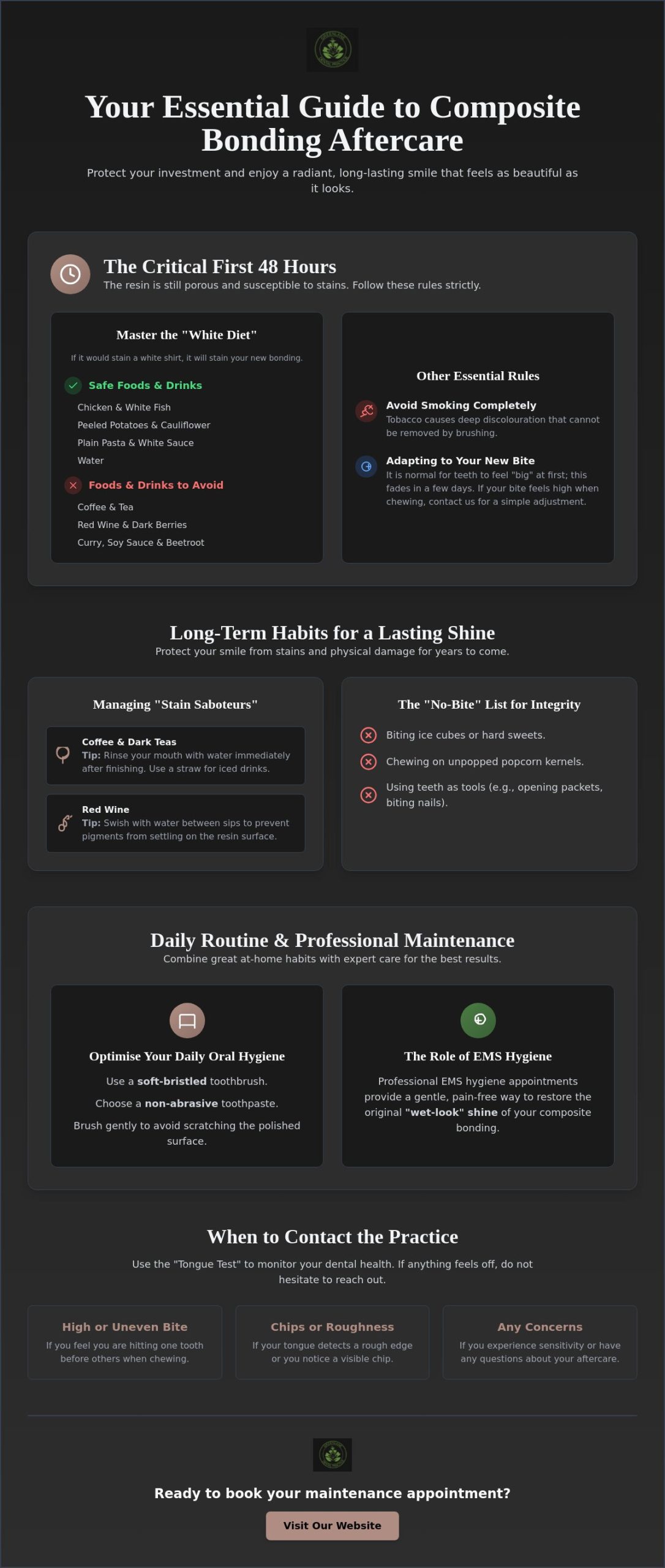
Your new smile is a work of art, but like any fresh masterpiece, it needs a little time to set properly. The first 48 hours represent the most critical window for your results. During this brief period, the dental composite resin used to sculpt your teeth is technically “cured” by our specialised light, yet it remains microscopically porous. This means the material acts like a sponge for pigments and can be susceptible to structural stress before it fully matures. Following specific composite bonding aftercare instructions during this time isn’t just a helpful tip; it’s the foundation of your smile’s longevity.
It’s also vital to avoid smoking entirely during these first two days. The chemical byproducts in tobacco smoke can penetrate the fresh resin, causing deep discolouration that regular brushing cannot remove. You might also notice a slight increase in sensitivity to temperature. This is a normal part of the bonding process as your teeth adjust to the new material. If you feel a slight ache, it usually settles quickly as the bond fully stabilises against your natural enamel.
The White Diet: Safe Foods for 48 Hours
To keep your teeth looking their brightest, we recommend adhering to the “White Diet” for the first 48 hours. The White Diet is the essential protocol for preventing early pigment absorption by only consuming foods and drinks that lack strong artificial or natural colours. If a food item would leave a stubborn stain on a white silk shirt, it will likely stain your new bonding during this vulnerable phase.
- Safe options: White fish, chicken, plain pasta with white sauce, peeled potatoes, cauliflower, and water.
- Foods to avoid: Curry, beetroot, red wine, soy sauce, and dark berries like blueberries or blackberries.
Adapting to Your New Bite
It’s completely normal for your tongue to feel like your teeth are “too big” or shaped strangely at first. Your brain has spent years memorising the exact contours of your mouth, and even a fraction of a millimetre of change can feel significant. This “foreign” sensation usually fades within a few days as your oral muscles and brain adjust to the new landscape. However, if your bite feels “high” or uneven when you chew, or if you feel you’re hitting one tooth before the others, please reach out to us. A quick, painless adjustment is often all that’s needed to ensure your bite is perfectly balanced and comfortable.
Long-Term Dietary Habits to Prevent Staining and Chipping
Once you pass the initial curing phase, your focus shifts to maintaining that high-gloss finish for the years ahead. Unlike natural enamel, which is remarkably hard but still subject to wear, composite resin is a lifestyle-dependent material. Identifying the “Stain Saboteurs” is your first line of defence. Coffee, dark teas, and red wine are the primary culprits that can dull the lustre of your smile over time. These liquids don’t just sit on the surface; they can slowly seep into the microscopic texture of the resin if left to linger. Following long-term composite bonding aftercare instructions means being mindful of these pigments without necessarily giving up the things you love.
Managing Your Favourite Drinks
You don’t have to abandon your morning brew to keep your results. It’s more about how you consume it. If you’re a coffee lover, consider using a straw for iced drinks to bypass the front teeth entirely. For hot drinks, a simple water rinse immediately after finishing your cup can wash away pigments before they settle. If you’re a tea drinker, opting for “milky” tea rather than a strong “builder’s” brew reduces the concentration of tannins. These small adjustments help you enjoy your lifestyle whilst protecting your teeth whitening Leigh results and bonding alike.
The “No-Bite” List for Physical Integrity
Physical damage is often the result of a single moment of pressure rather than gradual wear. Hard foods like ice cubes, unpopped popcorn kernels, and very crusty bread can exert enough force to chip the edges of your bonding. We also advise against using your teeth as tools. Opening packaging, biting your nails, or holding pins in your mouth are habits that must be left behind. Natural enamel is the hardest substance in the human body, yet even it can break. Composite resin is slightly more flexible, as noted by the Cleveland Clinic on dental bonding, which makes it more prone to specific types of chipping if mistreated under heavy pressure.
When it comes to healthy snacks like apples or raw carrots, the “bite and pull” motion is risky for bonded front teeth. Instead, simply slice these foods into smaller pieces to chew with your back molars. It’s a minor change that significantly reduces the mechanical stress on the bonded surfaces. By incorporating these habits into your daily routine, you ensure your smile remains both functional and flawless. If you’re ever unsure about a specific food or habit, our team is always here to offer personalised advice during your next visit.
Optimising Your Daily Oral Hygiene Routine
Maintaining your new look is about consistency, not intensity. Whilst your bonding is durable, it requires a gentle touch to remain flawless for the long term. Your daily routine is the most effective tool you have for preserving that initial sparkle. Following your composite bonding aftercare instructions means re-evaluating the tools in your bathroom cabinet. A soft-bristled electric toothbrush is often the best choice, provided it has a pressure sensor. This ensures you’re cleaning effectively without applying the kind of force that could prematurely dull the resin’s surface polish.
Mouthwash is another area where a small change makes a big difference. Many high-street brands contain alcohol, which can actually soften the composite material over time. This leads to a loss of shine and makes the resin more susceptible to wear. Always choose an alcohol-free, fluoride-enriched rinse. It provides the protection your natural teeth need without compromising the chemical integrity of your bonding. Check the label carefully; it’s a simple switch that pays dividends in the years to come.
Choosing the Right Toothpaste
Many people reach for whitening toothpastes to keep their smile bright, but these are often too abrasive for composite resin. They contain tiny grit that can create microscopic scratches, making the bonding more prone to picking up stains. Look for toothpastes with a low Relative Dentin Abrasivity (RDA) score, ideally below 70. Avoid charcoal or “smokers” varieties entirely. Instead, opt for a high-fluoride, sensitive-style paste that focuses on enamel health whilst being kind to your restoration. This keeps the surface smooth and reflective.
Flossing Without Fear
It’s a common worry that flossing might “pop” the bonding off, but the opposite is true. Regular flossing is vital to prevent “margin staining,” which is discolouration at the point where the resin meets your natural tooth. If plaque is allowed to sit at this join, it can create a dark line that ruins the seamless aesthetic. Use the “slide and pull” method for the best results.
- Slide the floss gently between the teeth.
- Clean the area thoroughly as usual.
- Instead of snapping the floss back up, release one end and pull it through sideways.
This removes the risk of catching the edge of the bond. For those with slightly larger gaps, interdental brushes are a fantastic alternative. They clear away debris without the need for vertical pressure, keeping the margins clean and invisible. By refining these simple daily habits, you’re not just cleaning your teeth; you’re actively protecting your investment.
Professional Maintenance: The Role of EMS Hygiene
While your daily routine is the bedrock of care, professional maintenance provides the finishing touch that keeps your smile looking brand new. Over time, even the most meticulous brushing cannot prevent the gradual build-up of biofilm or minor surface dullness. This is where professional intervention becomes essential. Standard composite bonding aftercare instructions always include a non-negotiable six-monthly check-up. These visits allow us to identify microscopic signs of wear or “leakage,” which is where the seal between the resin and your tooth begins to weaken, before they develop into visible problems.
Professional polishing is about more than just aesthetics; it’s about structural integrity. By smoothing out any minor surface roughness, we reduce the areas where plaque can cling, making your home care even more effective. We take a proactive approach to your dental health, ensuring that any small adjustments are made early to extend the lifespan of your bonding. This collaborative effort between your home routine and our clinical expertise is what guarantees a long-lasting, radiant result.
Why EMS Airflow is Better for Bonding
Traditional scaling methods often involve metal instruments that can be a little too aggressive for resin surfaces. We prefer a much gentler, high-tech approach. The EMS hygiene treatment uses a fine, warmed powder spray to lift away stains and plaque without ever touching the tooth surface directly. This “no-touch” technology is incredibly comfortable, making it ideal for those with sensitive teeth. Quite simply, EMS hygiene is the safest way to maintain composite bonding Leigh without the risk of abrasive scratching or surface damage. It restores that signature “wet-look” shine that makes your smile look so vibrant.
The Importance of Night Guards
Many people are unaware that they grind or clench their teeth whilst they sleep. This nocturnal bruxism is one of the leading causes of premature chipping or “flat” edges on bonded teeth. To protect your investment, we often recommend a custom-made night guard. Unlike bulky, shop-bought versions, a guard from Greenlane is precision-moulded to your bite, comfortably distributing pressure and acting as a shock absorber. If you wake up with a dull ache in your jaw or notice that the edges of your bonding look slightly less sharp than they used to, it’s a clear sign that your smile needs this extra layer of protection.
We take great pride in seeing our patients’ confidence grow after a transformation, and we’re just as invested in keeping that smile perfect as you are. Regular professional polishing doesn’t just clean; it rejuvenates the material itself. If it’s been more than six months since your last visit, book your professional hygiene appointment with our friendly team today to ensure your bonding remains in peak condition.
When to Contact Greenlane Dental Practice
Your journey toward a radiant smile doesn’t end when you leave our clinic. It’s perfectly normal to spend the first few days getting used to the new contours and feel of your teeth. However, understanding the difference between this natural adaptation and a genuine clinical issue is a vital part of your composite bonding aftercare instructions. We want you to feel empowered and informed, knowing that our team is always here to support you as you settle into your new look.
We recommend all our patients perform a simple “Tongue Test” once a week. Run your tongue over the bonded surfaces; they should feel smooth, polished, and continuous with your natural tooth. If you suddenly detect a sharp edge, a snag, or a rough patch that wasn’t there before, it’s usually a sign that the resin needs a quick professional polish. Catching these minor texture changes early prevents them from becoming sites for plaque build-up or further wear.
Signs of a Chipped or Loose Bond
If you feel a piece of resin has come away whilst eating or if a tooth feels suddenly “different” to the touch, don’t worry. While composite is strong, it can occasionally experience minor fractures if subjected to unexpected pressure. It’s crucial that you never attempt to “file down” or smooth a rough spot at home using any DIY tools, as this can cause irreversible damage to the bond and your underlying enamel. As a dedicated emergency dentist Leigh, we prioritise urgent repairs for our patients. Most minor chips can be seamlessly patched or smoothed in a single, short visit to restore your confidence.
Refreshing Your Smile
Composite resin is a versatile material, but it does age over time. After several years, you might notice the material losing some of its initial sparkle or developing minor stains around the edges. The beauty of this treatment is its flexibility; bonding can often be “topped up” or re-polished to bring back that original shine without the need for a full replacement. For those in Greater Manchester looking to take their smile transformation even further, we can also discuss how your bonding fits into a broader plan, such as combining it with Invisalign Leigh for a perfectly aligned and shaped result.
Your smile is a lifetime investment, and we are here to protect it. Whether you need a routine polish or have a specific concern about your bonding, our door is always open. We take great pride in being a reliable pillar of the Leigh community, ensuring every patient feels cared for long after their initial treatment. If you have any questions about your results or simply feel it’s time for a professional refresh, please don’t hesitate to get in touch with our friendly team.
Your Radiant Smile, Our Shared Commitment
Your smile transformation is a significant step toward renewed confidence, and we’re here to ensure that sparkle lasts for years. By following these composite bonding aftercare instructions, you’ve already taken the most important steps toward protecting your investment. From mastering the initial “White Diet” to refining your daily flossing technique, these small adjustments in your routine create a foundation for long-term brilliance. Remember that your bonding thrives on a gentle touch and consistent, mindful care.
At Greenlane Dental Practice, we’ve spent decades serving the Leigh community with a blend of advanced technology and personal warmth. Our bespoke aftercare plans are designed to fit your unique lifestyle, ensuring your dental health remains a priority without feeling like a chore. With our advanced EMS Airflow technology, we provide a pain-free way to maintain that signature high-gloss finish whilst keeping your natural teeth healthy. We don’t just want you to love your smile today; we want you to feel proud of it for a lifetime.
Book your maintenance check-up or EMS hygiene appointment at Greenlane Dental Practice today. We look forward to welcoming you back into our supportive community and helping you keep your new smile in peak condition.
Frequently Asked Questions
Can I drink tea or coffee after composite bonding?
You can still enjoy your favourite brews, but we recommend waiting at least 48 hours before consuming dark liquids like tea or coffee. During this initial window, the resin is more porous and prone to picking up pigments. Once this period has passed, try rinsing your mouth with water after drinking or using a straw to keep your smile bright and prevent surface staining.
How long do I have to wait to eat after the procedure?
You are free to eat as soon as you leave the practice, though we suggest waiting until any local anaesthetic has completely worn off. This prevents accidental biting of your lip or cheek whilst your mouth is numb. For the first two days, stick to softer foods and avoid anything with strong dyes, such as turmeric or beetroot, to protect the fresh resin.
What is the best toothpaste for composite bonding?
The ideal choice is a non-abrasive fluoride toothpaste with a low Relative Dentin Abrasivity (RDA) score, typically below 70. Avoid whitening toothpastes or charcoal-based products, as these contain gritty particles that can scratch the polished surface of the bonding. A smooth, gentle paste keeps the material reflective and resistant to staining, which is a key part of your composite bonding aftercare instructions.
Will composite bonding stain over time?
Composite resin can pick up stains over time because it is slightly more porous than natural tooth enamel. However, following your composite bonding aftercare instructions diligently will significantly slow this process. Regular professional polishing during your hygiene visits can effectively lift surface discolouration and restore the original lustre of your smile, keeping it looking fresh for years.
Can I use an electric toothbrush on my bonded teeth?
Yes, an electric toothbrush is a fantastic tool for maintaining your bonding, provided you use it correctly. We recommend using a soft brush head and ensuring your toothbrush has a pressure sensor. This helps you clean effectively without applying excessive force that could wear down the polished finish of the resin or irritate the gum line where the bonding meets the tooth.
What happens if my composite bonding chips?
If you notice a chip, please contact us as soon as possible so we can assess the damage and provide a quick fix. Most minor chips are simple to repair; we can often add a small amount of new resin to patch the area seamlessly in a single visit. Don’t try to smooth it yourself at home, as we have the specialised tools to restore the shape safely.
Is composite bonding reversible if I change my mind?
Composite bonding is generally considered a reversible treatment because we rarely need to remove any of your natural tooth enamel during the application. If you decide to have it removed, the resin can be gently buffed away by a professional. Your natural teeth will typically return to their original appearance after a thorough polish to remove any remaining bonding agent from the surface.
How often should I have my bonding polished by a professional?
We suggest a professional polish every six months to keep the material looking its absolute best. This is usually performed during your routine hygiene appointment. Using advanced technology like EMS hygiene allows us to clean and brighten the bonding gently, ensuring the signature “wet-look” shine remains a permanent feature of your smile whilst protecting the health of your gums.