Your new smile is a masterpiece of modern dentistry and a significant investment in your personal confidence. It’s perfectly normal to feel a sense of protective caution once you leave the clinical environment. You might find yourself hesitating before biting into an apple or feeling confused by the endless rows of abrasive toothpastes that promise results but could actually dull your finish. Caring for porcelain veneers is about more than just avoiding hard foods; it’s about adopting a gentle, sophisticated routine that respects the precision of the porcelain.
We understand that you want your investment to remain flawless, and the good news is that with the right approach, these restorations can beautifully serve you for 15 to 20 years. This guide will walk you through the essential daily habits and professional secrets needed to protect your smile from chips and edge staining. We’ll explore the best products for your home routine and explain how advanced hygiene technology plays a vital role in ensuring your veneers stay as radiant as the day they were fitted.
Key Takeaways
- Understand why preserving the margin where the ceramic meets your natural tooth is the secret to preventing hidden decay and staining.
- Learn the specific tools and techniques for caring for porcelain veneers, including why soft-bristled brushes are essential for protecting your gum health.
- Discover which high-impact foods to avoid to prevent accidental chipping and how to protect the delicate bonding resin from discolouration.
- Find out why advanced EMS hygiene technology offers a gentler, more effective alternative to traditional cleaning for delicate cosmetic restorations.
- Gain the confidence to enjoy your favourite meals whilst maximising the 15-20 year lifespan of your smile investment.
Why Caring for Porcelain Veneers is Essential for Your Smile’s Longevity
Your new smile is more than just a cosmetic upgrade; it’s a partnership between advanced ceramic artistry and your natural biology. Whilst the porcelain itself is incredibly durable and impervious to decay, the tooth structure supporting it remains susceptible to the same challenges as any other tooth. Caring for porcelain veneers isn’t just about polishing the surface. It’s about preserving the delicate bond between the restoration and your enamel. When you commit to a meticulous maintenance routine, you aren’t just cleaning your teeth. You’re protecting a life-changing investment.
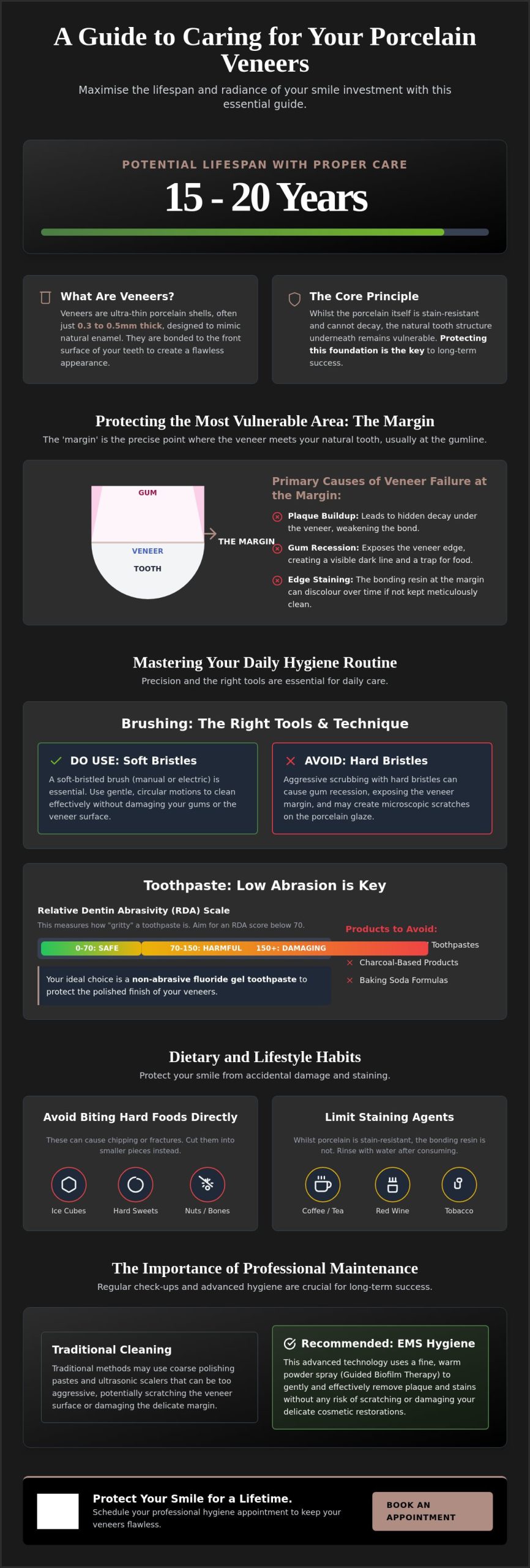
To understand the maintenance required, we first need to look at what are porcelain veneers? in a clinical context. These ultra-thin shells, often only 0.3 to 0.5 millimetres thick, are designed to mimic the light-reflecting properties of natural enamel. Research indicates that with proper care, these restorations can last between 15 and 20 years. This impressive lifespan isn’t guaranteed by the material alone. It’s the result of consistent, daily habits that prevent the underlying tooth from weakening. If the foundation fails, the veneer fails with it.
The Anatomy of a Veneer Margin
The most critical area for your long-term success is the “margin.” This is the precise point where the porcelain meets your natural enamel, usually located right at the gumline. Whilst the ceramic shell is stain-resistant and cannot get a cavity, this junction is vulnerable. Plaque buildup at the margin is the primary cause of veneer failure, as it can lead to decay underneath the restoration or cause the gums to pull away. When gum recession occurs, it can expose the edge of the veneer. This often results in a visible dark line or a ledge that traps food, compromising both the health and the beauty of your smile.
Protecting Your Cosmetic Investment in Leigh
Think of your veneers as a high-value asset, much like a premium car. You wouldn’t drive a luxury vehicle for years without a service schedule, and your smile deserves the same level of attention. Our patients in Leigh and across Greater Manchester value reliability and long-term results. This is why we champion the concept of preventative cosmetic dentistry. By catching minor issues early, we ensure your veneers remain secure and radiant for decades. A simple yet specific routine, guided by our empathetic team, makes the difference between a restoration that lasts ten years and one that stays flawless for twenty. It’s about moving from reactive fixes to proactive care, ensuring your confidence never wavers.
Mastering Your Daily Oral Hygiene Routine with Veneers
Maintaining a flawless smile doesn’t require a complex or exhausting schedule, but it does demand a specific type of precision. The secret to long-term smile care lies in how you handle your tools every morning and night. Whilst your veneers are strong, the way you brush and floss directly impacts the health of the supporting tooth and the clarity of the ceramic. Establishing a refined routine for caring for porcelain veneers ensures that your investment remains as vibrant as the day it was fitted.
Your first priority should be the texture of your toothbrush. We always recommend using a soft-bristled brush, whether you prefer a manual version or a high-end electric model with a pressure sensor. Hard bristles can be surprisingly destructive over time, potentially causing microscopic scratches on the porcelain glaze or, more commonly, irritating the gum tissue. When gums become inflamed or begin to recede, the delicate margin where the veneer meets the tooth becomes exposed, creating a gateway for bacteria. Gentle, circular motions are far more effective than aggressive scrubbing.
Choosing the Right Toothpaste
Many patients assume that “whitening” toothpastes are ideal for keeping their new smile bright. In reality, these products are often the enemy of cosmetic dental work. Most whitening pastes rely on abrasive particles to scrub away surface stains, which can permanently dull the polished finish of your veneers. To choose the safest option, look at the RDA (Relative Dentin Abrasivity) scale. This is a standard measure of how “gritty” a toothpaste is. You should aim for a non-abrasive fluoride gel with an RDA score below 70. Avoid trendy charcoal or baking soda products entirely; these materials are far too coarse and can create tiny scratches that eventually trap stains, making your smile look dull amongst your natural teeth.
Flossing Techniques for Veneers
Daily flossing is a non-negotiable rule for anyone with veneers. It’s the only way to prevent interproximal decay, which occurs between the teeth where a brush cannot reach. However, your technique matters. Instead of “snapping” the floss up and down, which can put unnecessary stress on the bonding resin, use a gentle pull-through method. Simply slide the floss between the teeth, hug the curve of the tooth, and then pull it out horizontally through the gap. If you find traditional floss difficult to manage, interdental brushes are a fantastic alternative for cleaning larger gaps and ensuring the gingival sulcus, the tiny space between the tooth and the gum line, remains free of plaque. If you’re unsure if your technique is quite right, our team at Greenlane Dental Practice is always happy to provide a personalised demonstration during your next visit.
Finally, round off your routine with an alcohol-free mouthwash. Traditional rinses containing high levels of alcohol can gradually soften the bonding agent that holds your veneers in place. An alcohol-free formula protects your oral microbiome without compromising the structural integrity of your restorations. By choosing the right products and refined techniques, you’re doing more than just cleaning; you’re actively extending the life of your smile.
Dietary and Lifestyle Habits to Protect Your Ceramic Restoration
Your lifestyle choices are the invisible architects of your smile’s future. Whilst your restorations are crafted from high-grade, durable ceramic, they are not indestructible. Caring for porcelain veneers involves a subtle shift in how you perceive the strength and function of your teeth. It isn’t about living a life of restriction; it’s about making informed adjustments that respect the precision of the bonding process. By understanding how force and pigments interact with your veneers, you can enjoy your favourite meals with total peace of mind.
We often advise our patients to adopt a “cut, don’t bite” philosophy for certain foods. High-impact items such as crusty baguettes, hard toffees, or even raw carrots can pose a risk of debonding or chipping if you bite into them directly with your front teeth. By simply cutting these foods into smaller, manageable pieces and chewing with your back teeth, you bypass the shear force that can stress the ceramic edges. Similarly, whilst porcelain is famously stain-resistant, the bonding resin at the margins is not. Habitual consumption of red wine, black coffee, or tobacco can lead to discolouration at the very edges where the veneer meets the tooth, eventually affecting the overall aesthetic.
Managing Pressure and Force
Using your teeth as tools is perhaps the most dangerous habit for any cosmetic restoration. Whether it’s opening a packet of crisps, biting your nails, or chewing on the end of a pen, these actions create intense, localised pressure. This type of force is catastrophic for veneers because it targets the thinnest parts of the ceramic. If you have an active hobby or play contact sports, refining your approach to caring for porcelain veneers should include wearing a high-quality mouthguard to prevent accidental trauma during impact.
The Silent Threat: Bruxism and Nightguards
Many of us carry the day’s stress in our jaws, leading to nocturnal grinding or clenching known as bruxism. This habit is often subconscious, yet it is a leading cause of premature veneer failure. The repetitive, heavy grinding can wear down the porcelain or cause the bond to fail entirely. At Greenlane Dental Practice, we believe in proactive protection. A bespoke nightguard, or occlusal splint, can effectively double the life of your veneers by acting as a shock absorber. Modern splints are incredibly thin and comfortable, designed to fit your unique bite perfectly whilst ensuring you wake up with a smile that remains secure and flawless.
Professional Maintenance: The Role of EMS Hygiene and Regular Check-ups
Whilst your home routine forms the cornerstone of caring for porcelain veneers, professional intervention provides the deep, restorative care that keeps them flawless. Standard “scale and polish” treatments, whilst effective for natural teeth, can sometimes be a little too aggressive for delicate ceramic work. Traditional metal ultrasonic tips and hand scrapers carry a risk of creating microscopic scratches on the porcelain surface or the bonding resin. This is why we have invested in a more sophisticated, gentle approach for our patients who value long-term results.
We recommend the EMS hygiene treatment as the gold standard for veneer maintenance. This system utilises Guided Biofilm Therapy (GBT), a systematic, evidence-based protocol that prioritises comfort and precision. Instead of scraping away at the teeth, GBT uses a fine, warmed spray of water and specialised powder to remove biofilm and surface stains. It’s a transformative experience that feels more like a spa treatment than a clinical procedure, ensuring your restorations are cleaned without any risk of mechanical damage.
Why EMS Hygiene is Superior for Veneers
The “Airflow” technology within the EMS system is particularly beneficial for those with cosmetic restorations. It reaches into the tiny crevices at the veneer margins without the need for abrasive contact. This ensures that any pigment buildup from tea, coffee, or wine is gently lifted whilst the high-gloss polish of the porcelain remains untouched. For our nervous patients, the absence of vibrating metal tools and the use of temperature-controlled water makes the entire process completely pain-free and deeply reassuring. It’s the most effective way to maintain that “day-one” brilliance without compromising the ceramic.
The Importance of Early Detection
Beyond cleaning, your six-monthly routine dental examinations are vital for monitoring the structural integrity of your smile. During these visits, we use high-definition imaging to ensure the natural tooth remains healthy and decay-free beneath the ceramic shell. We also meticulously monitor your gum health. As we explored in the earlier sections, gum recession can expose the edges of your veneers, so maintaining firm, healthy tissue is essential for a seamless aesthetic. We check the bond integrity of every single veneer, catching minor issues before they become costly problems.
A proactive approach is always more effective than a reactive one when it comes to your cosmetic investment. If it’s been more than six months since your last professional check-up, book your hygiene appointment at Greenlane Dental Practice today to ensure your veneers stay in peak condition for years to come.
Choosing Greenlane Dental Practice for Your Long-term Smile Care
At Greenlane Dental Practice, we believe that the journey to a perfect smile doesn’t end when the final veneer is bonded. It’s actually just the beginning of a long-term partnership. We have established ourselves as a premier provider of porcelain veneers in Leigh, but our reputation is built on more than just the initial transformation. We pride ourselves on being meticulous caretakers who walk alongside you for the entire life of your restoration. Caring for porcelain veneers is a commitment we share with you, ensuring you never feel like you’re navigating the maintenance of your investment alone.
Our practice is a place where professional clinical authority meets domestic, neighbourly warmth. We understand that dental visits can sometimes feel intimidating, which is why we’ve created an environment that feels more like a supportive community than a sterile medical facility. We take immense pride in the quality of our work and the long-standing relationships we’ve built with our patients across Manchester. When you choose us, you’re choosing a team that is genuinely invested in your long-term happiness and the enduring brilliance of your smile.
A Personalised Aftercare Plan
Every patient who trusts us with their smile receives a bespoke maintenance schedule tailored to their unique dental history and lifestyle. We don’t believe in a one-size-fits-all approach to caring for porcelain veneers. Whether you need specific guidance on refined interdental cleaning or a custom-made nightguard to protect your ceramic from nocturnal grinding, our team provides the education you need to feel confident at home. We also recognise that life is unpredictable. If you ever experience an accidental chip or have a concern that needs immediate attention, our emergency dental appointments ensure that expert help is always close at hand for our local community.
Experience the Greenlane Difference
What truly sets us apart is our unwavering commitment to the latest dental innovations. As we move through 2026, we continue to integrate state-of-the-art technology, like EMS hygiene and digital monitoring, to ensure your veneers remain in peak condition. We combine these advanced tools with a patient-first philosophy that prioritises your comfort and peace of mind at every stage. Our goal is to make the preservation of your smile as seamless and rewarding as the day you first saw your new look in the mirror.
We invite you to experience a higher standard of dental service where expertise is always delivered with kindness. Whether you’re looking to begin your veneer journey or need a dedicated team to help maintain your existing restorations, we are here to guide you. Contact us today to book your maintenance review or a new consultation, and let us help you keep your smile flawless for decades to come.
Protecting Your Radiant Smile for the Decades Ahead
Your journey toward a lasting, confident smile is a shared endeavour. By mastering the art of caring for porcelain veneers through gentle daily brushing and mindful dietary habits, you’ve already taken the most important steps. Remember that the longevity of your investment relies on the synergy between your home routine and the advanced clinical care we provide. Whether it’s using non-abrasive gels or protecting your ceramic with a bespoke nightguard, these small, consistent actions ensure your restorations remain flawless for up to 20 years.
Our team at Greenlane Dental Practice is here to provide the expert guidance and warmth you deserve. With our advanced EMS hygiene system, we offer a gentle, pain-free cleaning experience that respects the delicate nature of your cosmetic work. Our experienced cosmetic dentists in Leigh Manchester are dedicated to supporting nervous patients and ensuring every visit feels like entering a supportive community. Book your veneer maintenance appointment at Greenlane Dental Practice today and let’s work together to keep your smile as bright as the day it was created. Your confidence is our greatest pride.
Frequently Asked Questions
Can porcelain veneers stain over time?
Porcelain itself is virtually impervious to stains because it’s non-porous and glass-like. However, the composite resin used to bond the veneer to your tooth can absorb pigments over time. This is why you might notice slight discolouration around the margins if you consume high-pigment drinks like black coffee or red wine frequently. Regular professional cleaning can help manage these surface stains before they become permanent.
Is it okay to use an electric toothbrush on veneers?
You can certainly use an electric toothbrush, and many of our patients find they provide a superior clean. The key is to ensure the brush head has soft bristles and that you don’t apply excessive force. Modern electric brushes with pressure sensors are ideal as they prevent the type of aggressive scrubbing that can irritate your gum tissue or cause recession at the veneer edge.
What happens if a porcelain veneer chips or comes off?
If a veneer chips or detaches, you should contact us immediately to arrange an emergency appointment. Try to keep the veneer safe in a small container if it has come off in one piece. We can often re-bond a detached veneer or repair minor chips, but prompt clinical attention is necessary to protect the underlying tooth from sensitivity and prevent any further damage to the restoration.
Do I still need to see a dental hygienist if I have veneers?
Regular hygiene visits are essential for the long-term success of your restorations. Whilst the porcelain doesn’t decay, plaque can still accumulate at the gum line and lead to gum disease or recession. Our EMS hygiene system is specifically designed to clean around veneers gently and effectively, removing biofilm without the need for traditional metal scrapers that could potentially scratch the ceramic surface.
Can I whiten my veneers if they look dull?
Professional whitening gels only work on natural tooth enamel and won’t change the colour of your porcelain veneers. If your veneers appear dull, it’s usually because the surface polish has been scratched by abrasive toothpastes or gritty cleaners. In these cases, a professional polish during a hygiene appointment can often restore their original radiance and remove any surface buildup that is masking their brilliance.
Are there any foods I should completely avoid with veneers?
You don’t need to eliminate specific foods entirely, but you should exercise caution with very hard or sticky items. Avoid biting directly into ice, hard boiled sweets, or olive stones. For firm fruits like apples or crusty bread, we suggest cutting them into smaller pieces rather than biting into them with your front teeth to reduce the risk of chipping the delicate ceramic edges.
How often should I have my veneers checked by a dentist in Leigh?
We recommend a professional check-up every six months at our Leigh practice. These routine examinations allow us to monitor the health of your gums and the integrity of the porcelain bond. Caring for porcelain veneers effectively requires this professional oversight to catch any minor changes in your oral health before they compromise your cosmetic results. It’s the best way to ensure your smile remains secure.
Will my natural teeth decay under the porcelain veneers?
Your natural teeth are still susceptible to decay even with veneers in place. The ceramic shell only covers the front of the tooth, leaving the back and the area near the gum line exposed to plaque. Maintaining a rigorous flossing routine is vital to prevent bacteria from reaching the tooth structure underneath the restoration. If decay develops, it can compromise the bond and lead to the failure of the veneer.