To truly see a lifelong fear of dentist overcome, you don’t need extraordinary bravery; you simply need to be placed back in complete control. If the mere thought of a reclined chair, the sound of clinical tools, or the embarrassment of past missed appointments makes your stomach churn, you aren’t alone. More than half of adults across the UK experience dental dread, with many enduring chronic discomfort rather than risking clinical judgement or procedural pain.
Receiving dental care should feel like stepping into a reassuring sanctuary, not facing an ordeal. In this guide, you’ll discover proven coping strategies and modern clinical innovations that conquer dental anxiety and restore your smile with confidence. We’ll walk through gentle, non-invasive approaches and clear communication techniques, showing you how to navigate your next routine check-up whilst feeling calm, respected, and entirely in the driving seat.
Key Takeaways
- Release feelings of guilt or embarrassment by understanding dental anxiety as a natural physiological reflex shared by millions of UK adults.
- Master simple somatic grounding and breathwork exercises to steady your nervous system, taking the first decisive step to see your fear of dentist overcome.
- Learn how innovations like gentle topical numbing gels and advanced EMS hygiene deliver thorough care without uncomfortable scraping or pain.
- Follow a three-phase appointment framework that establishes clear stop signals, ensuring you remain in complete control during every stage of treatment.
- Discover how choosing an empathetic, community-focused dental team provides a reassuring sanctuary where you will never face clinical judgement.
Understanding Dental Anxiety and Why Conquering Phobia Matters
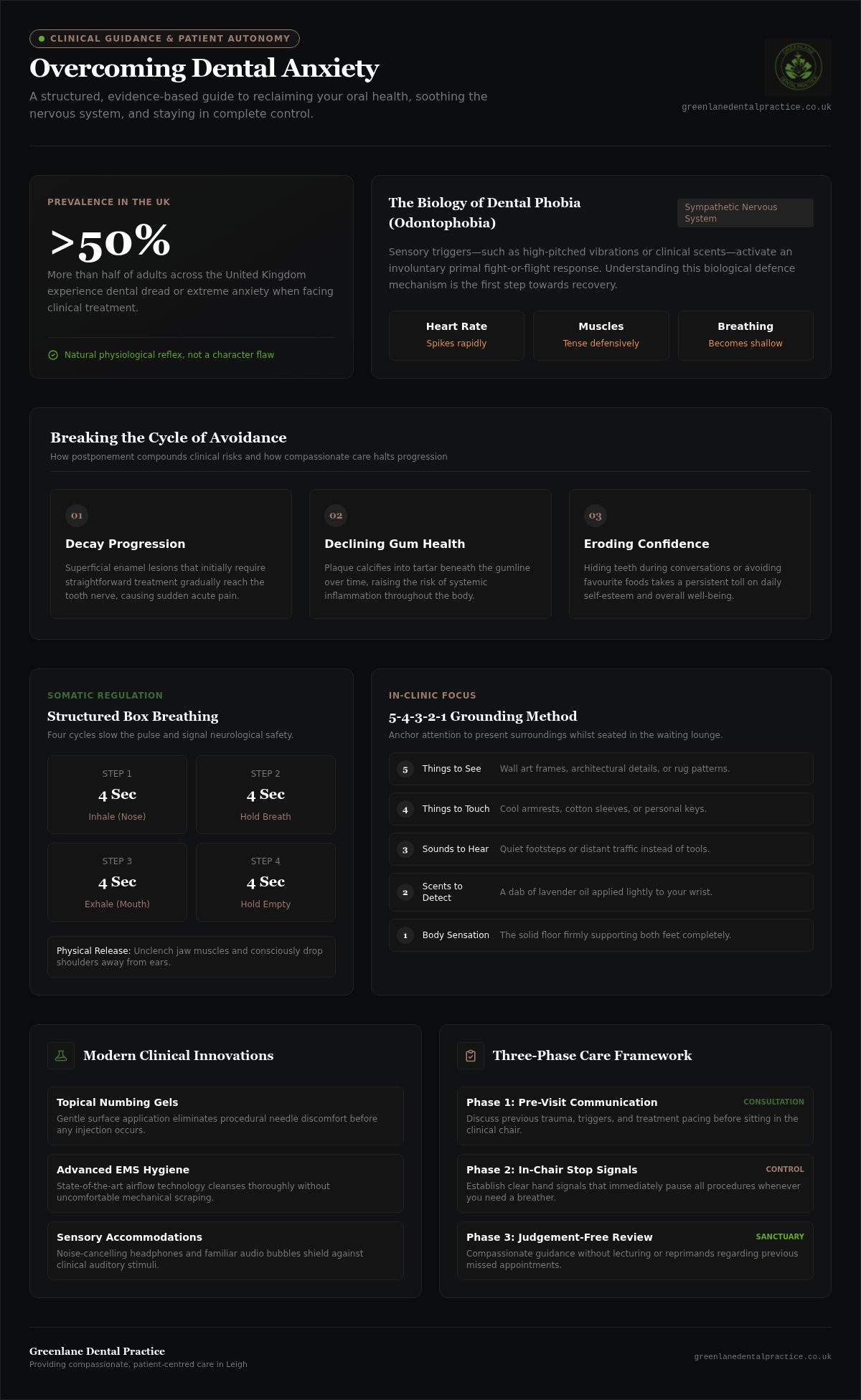
Dental phobia isn’t a character flaw or a personal failing; it’s an involuntary physical reaction. When sensory cues like clinical scents or high-pitched vibrations register, your sympathetic nervous system instantly triggers a primal fight-or-flight response. Heart rates spike, muscles tense, and breathing turns shallow. For detailed background into these physiological reactions, Understanding Dental Anxiety reveals that extreme dread, clinically known as odontophobia, affects millions of adults across Britain. Acknowledging that these visceral sensations are genuine biological defence mechanisms is the crucial first step to see your fear of dentist overcome.
The Psychology Behind Dental Phobia and Past Trauma
Most dental fears don’t appear out of nowhere. Often, they stem from an uncomfortable childhood visit where you felt unheard, trapped, or hurt. Lying flat on your back in a reclined chair places you in a deeply vulnerable physical position, surrounded by unfamiliar equipment and bright overhead lighting. Modern dentistry actively respects this psychological dynamic. Contemporary practices intentionally trade clinical detachment for domestic warmth, listening closely to past experiences so you never feel powerless again.
The Hidden Cost of Avoidance: Breaking the Shame Cycle
When anxiety keeps you away from routine care, an insidious shame cycle quickly takes hold. You miss an appointment, worry that your oral health has deteriorated, and dread being reprimanded by a practitioner. That embarrassment turns months of avoidance into years, allowing easily manageable issues to quietly worsen:
- Minor decay progresses: Superficial enamel lesions that require straightforward treatment can gradually reach the tooth nerve, causing sudden acute pain.
- Gum health declines: Plaque calcifies into tartar beneath the gumline, raising the risk of systemic inflammation throughout the body.
- Social confidence erodes: Hiding your teeth during conversations or avoiding your favourite foods takes a persistent toll on daily self-esteem.
Here is the reality: compassionate clinicians will never lecture or scold you about missed appointments. Seeing a deep-seated fear of dentist overcome isn’t about enduring uncomfortable treatment; it’s about finding a supportive team that meets you exactly where you are today without an ounce of judgement.
Practical Coping Strategies You Can Practise Before Your Visit
You can actively soothe your nervous system long before entering the surgery. Dental dread frequently hijacks the body before conscious logic can intervene; learning targeted somatic tools allows you to intercept that adrenaline surge. When exploring clinical insights into understanding dentophobia, psychologists often point to grounding exercises as an effective first-line defence. By calming physical tension in advance, seeing a lifelong fear of dentist overcome shifts from an overwhelming hurdle into an entirely manageable process.
Grounding and Controlled Diaphragmatic Breathing
Panic feeds on shallow, rapid breathing. You can counteract this reflex by practising structured box breathing: inhale deeply through your nose for four seconds, hold for four seconds, exhale smoothly through your mouth for four seconds, and hold empty for four seconds. Repeating this cycle four times slows your pulse and signals your brain that you are safe.
While sitting in the waiting area, keep yourself tethered to the present moment using the 5-4-3-2-1 sensory method:
- Acknowledge five things you see: Look for subtle details like wall art frames or the weave of a rug.
- Touch four physical textures: Notice the cool armrest, your cotton sleeve, or your keys.
- Identify three distinct sounds: Focus on quiet footsteps or distant traffic rather than surgical tools.
- Detect two subtle scents: Focus on a dab of lavender oil applied to your wrist.
- Focus on one positive sensation: Feel the solid floor supporting your feet completely.
Follow this by consciously unclumping your jaw muscles and dropping your shoulders away from your ears, releasing physical tension stored in the body.
Sensory Management and Pre-Appointment Preparation
Taking practical charge of your environment restores personal autonomy. Pack a pair of noise-cancelling headphones loaded with an absorbing podcast, an engaging audiobook, or gentle ambient music. This creates a familiar auditory bubble that blocks out clinical sounds. Bringing a supportive friend or family member also dispels feelings of isolation; their presence provides steady reassurance while you wait.
Timing your visit wisely can make a substantial difference. Request a quiet mid-morning slot so you avoid lingering in anticipation all day, and skip morning espressos or energy drinks that artificially spike your heart rate. If you’d value taking that first reassuring step in a genuinely relaxed setting, exploring the calm atmosphere at Greenlane Dental Practice offers an unhurried, listening ear tailored entirely around your comfort.
How Modern Gentle Dentistry Eliminates Clinical Discomfort
Modern clinical care has advanced far beyond the cold, rigid methods of past decades. If your dread is rooted in memories of harsh metal picks scraping against sensitive enamel or sudden pinches without warning, today’s innovations offer a welcome transformation. Contemporary clinical practice prioritises absolute physical comfort, pairing cutting-edge equipment with refined pharmacology. Experiencing this evolution firsthand is often the turning point where patients finally see their fear of dentist overcome.
Advanced Airflow Cleaning: Goodbye to Manual Scraping
Traditional dental cleanings frequently triggered severe anxiety due to the high-pitched vibrations and pressure of manual scaling tools. Today, progressive clinics eliminate that discomfort entirely. An advanced EMS hygiene treatment uses a precision spray of warmed water, compressed air, and micro-fine powder to clear plaque and deep stains gently. There is no aggressive scraping against tooth surfaces, no cold water shocks, and no lingering gum soreness. This soothing approach turns routine preventive appointments into an effortless, spa-like experience that rebuilds trust.
Painless Anaesthetic Delivery and Topical Numbing
Fear of needles remains one of the most widespread phobic barriers, yet modern anaesthetic techniques make injections virtually imperceptible:
- High-strength topical gels: Clinicians apply pleasantly flavoured numbing gels directly onto the gum tissue before any syringe is introduced, fully desensitising the surface.
- Micro-fine bevelled needles: Modern equipment utilizes exceptionally thin needles designed to glide smoothly through tissue without blunt pressure.
- Controlled delivery rates: By administering the solution slowly, the clinician prevents the uncomfortable stinging sensation caused by rapid fluid expansion.
Crucially, treatment never begins until both you and your practitioner confirm that the surrounding area is completely, utterly numb.
Empowering Patients Through Non-Judgemental Support
True clinical comfort relies just as heavily on human empathy as it does on advanced technology. Forward-thinking practices cultivate an unhurried environment where you dictate the pace. If lying flat feels claustrophobic or triggers panic, your clinician can adjust the treatment chair to a comfortable semi-upright angle. Every stage is explained in plain, accessible terms beforehand, leaving no room for unpleasant surprises. When you are treated as an equal partner rather than a passive observer, the fear of dentist overcome becomes an achievable reality grounded in absolute dignity and mutual respect.
Step-by-Step Guide to Booking and Navigating Your Appointment
Stepping back into a clinic after years away feels daunting when you view it as a single, monumental hurdle. In reality, seeing a persistent fear of dentist overcome becomes entirely possible when you break the experience down into three manageable, predictable stages. By asserting your boundaries from the very first phone call, you maintain total control over your care.
Phase 1: Transparent Communication at Initial Contact
Your journey begins the moment you reach out. When speaking with the reception team, let them know immediately that you feel nervous or haven’t attended an appointment for some time. Friendly receptionists routinely allocate longer slots for anxious visitors so nobody feels rushed. If speaking about specific phobias aloud feels overwhelming, consider jotting down your triggers on a small card to hand over upon arrival. Request an introductory, consultation-only slot dedicated strictly to conversation rather than clinical examination.
Phase 2: The Meet-and-Greet Without Treatment
You don’t need to climb into the dental chair during your initial visit. Instead, treat this step purely as an informal meet-and-greet to familiarise yourself with the environment, the team, and the atmosphere. You can sit comfortably across a desk from your clinician to discuss your medical history and concerns. No dental mirrors or instruments will touch your teeth without your explicit consent. Establishing human rapport first helps demystify the surroundings and replaces clinical dread with mutual understanding.
Phase 3: Setting Up Stop Signals and Pacing
Once you feel ready for a basic check-up, establish a clear stop signal with your practitioner beforehand. The most common method is simply raising your left hand:
- Immediate pause: The moment your hand lifts, your dentist stops whatever they are doing right away.
- A quick rehearsal: Practise the gesture together before clinical tools are even picked up, confirming that your clinician responds instantly.
- Gradual pacing: Break procedures into small milestones, pausing whenever you need a breather or a sip of water.
Every small success matters. Whether your first victory is simply walking into the waiting room or completing a gentle examination, celebrating these milestones turns having your fear of dentist overcome into an empowering, repeatable habit. If you are ready to take that first step at your own pace, book a gentle consultation with our patient-focused team today.
Reclaiming Your Smile: Compassionate Dental Care in Leigh
Finding the right clinical home changes everything. For patients across Greater Manchester, stepping away from impersonal healthcare chains and entering an established neighbourhood practice makes feeling heard an everyday reality. When you are supported by an attentive local team that truly understands dental dread, seeing your fear of dentist overcome becomes a shared, gentle journey rather than an uphill battle.
What Makes an Empathetic Local Practice Different
A reassuring dental visit begins long before you sit in the treatment chair. Having served the Leigh community for several decades, Greenlane Dental Practice provides an approachable sanctuary designed to put you at ease. Calming décor, relaxed reception spaces, and genuinely friendly staff replace the sterile, rushed atmosphere of conventional clinics. Continuity of care matters deeply here; seeing the same familiar clinician at each visit fosters genuine trust, allowing you to discuss your health without feeling judged, pressured, or hurried.
Your First Gentle Step Toward Confident Oral Health
Reclaiming your smile does not require committing to extensive procedures on day one. A simple, unhurried check-up lets you set the boundaries, assess your teeth, and prevent minor issues from becoming complex emergencies. If acute toothache does strike before you’ve had time to prepare, booking a dedicated appointment with an emergency dentist Leigh ensures sudden pain is relieved swiftly, calmly, and without distress.
Partnering with a compassionate community team delivers clear benefits for your well-being:
- Complete procedural control: You determine the schedule and decide exactly which steps you are ready to take.
- Preventive protection: Regular, low-stress examinations protect your natural teeth and prevent unexpected dental emergencies.
- Restored lifestyle ease: Enjoy dining out, laughing openly, and smiling in photos with renewed daily confidence.
Seeing your fear of dentist overcome starts with a single, relaxed conversation. When you’re ready to prioritise your health in a tranquil, non-judgemental environment, a supportive local team is waiting to welcome you.
Take the First Gentle Step Toward Lasting Confidence
You don’t have to let past clinical trauma dictate your future oral health. Combining proactive grounding techniques, personal stop signals, and gentle clinical technology puts you firmly back in charge. Seeing a deep-seated fear of dentist overcome isn’t about enduring stress; it’s about partnering with clinicians who protect your emotional peace just as attentively as your smile.
Having served the Leigh community for several decades, our dedicated team provides an empathetic neighbourhood sanctuary tailored specifically for anxious patients. From whisper-quiet cleanings using advanced EMS airflow hygiene systems to relaxed introductory appointments where no dental tools touch your teeth without consent, we always listen before we act. Whenever you feel ready to take that initial step, book a gentle, pressure-free consultation with Greenlane Dental Practice to begin your care entirely on your own terms. A calm, healthy smile is well within your reach.
Frequently Asked Questions
Can I overcome severe dental phobia if I haven’t seen a dentist in ten years?
Yes, absolutely. A prolonged gap between visits is common, and modern gentle protocols are designed specifically to help reset past negative experiences. Clinicians understand that long absences stem from genuine anxiety rather than neglect. By starting with simple conversations and unhurried appointments, you can see your fear of dentist overcome regardless of how many years have passed since your last check-up.
Will the dentist judge me if my teeth are in poor condition?
No, an empathetic dental team will never lecture or scold you about the state of your teeth. Clinicians in community-focused practices see neglected oral health every single day and view your visit as a brave, positive step forward. Their professional focus remains entirely on relieving current discomfort, protecting your health, and helping you feel completely respected throughout your care.
What happens if I panic during my dental treatment?
If panic strikes, everything stops instantly. Your clinician will pause treatment, remove instruments, and gently raise the dental chair so you can breathe freely. Modern practices actively prepare for anxious moments, giving you all the time you need to sip water, regulate your breathing, or simply regroup. You remain in control, and nothing continues until you say you feel ready.
Are there painless alternatives for routine dental cleanings?
Yes, modern airflow technology offers a gentle alternative to traditional manual scraping. Advanced systems like EMS hygiene use a delicate spray of warm water, compressed air, and superfine powder to remove plaque and surface stains effortlessly. This approach eliminates sharp sensations, vibrations, and cold-water sensitivity, transforming your hygiene appointment into a comfortable, thoroughly relaxing maintenance visit.
Can I visit the dental surgery just to talk without having an examination?
Yes, you can schedule an introductory consultation dedicated purely to conversation. During this visit, you sit comfortably in a consultation room without any dental tools or clinical mirrors touching your mouth. It provides a relaxed opportunity to meet the team in Leigh, discuss past worries, and ask questions before deciding whether to take further clinical steps.
How do I signal the dentist to stop immediately if I feel overwhelmed?
You can agree on a clear non-verbal signal beforehand, most commonly raising your left hand. Before starting any treatment, your clinician will confirm this signal with you. Whenever you lift your hand, the practitioner pauses right away. Knowing that this simple motion gives you complete authority helps make having your fear of dentist overcome a predictable reality.
What should I do if I have severe tooth pain but feel terrified of visiting?
Contact the surgery right away to request a dedicated emergency dental appointment, making sure to mention your anxiety to the receptionist. Greenlane Dental Practice provides scheduled emergency slots to relieve acute discomfort swiftly and gently. The team will focus purely on diagnosing the immediate ache and soothing your pain in a calm setting, without pressuring you into complex restorative procedures.