What if your treatment changes after you’ve agreed monthly finance? Repayments are based on the amount and terms in your finance agreement, so a revised treatment plan may affect what you pay. If you’re considering monthly payments for dental work in Leigh, understand how any change affects the total and agreement before treatment continues.
It’s sensible to get a clear picture of the fees before deciding how to pay.
This guide explains how dental fees and payment plans work, what to consider when spreading the cost of implants or orthodontics, and what to clarify if your treatment plan changes. You’ll also learn how NHS charges differ from private treatment costs, helping you approach payment discussions with greater confidence.
Key Takeaways
- Understand how NHS charges differ from private dental fees and which factors shape the cost of treatment.
- Learn what to look for in an interest-free payment option, including the repayment terms and total amount due.
- See how monthly dental plans can help spread routine care costs and what their benefits may include.
- Find out what to clarify if implant or orthodontic treatment changes after you’ve agreed a payment arrangement.
Dental treatment fees in Leigh, Greater Manchester
In England, NHS dental charges are grouped by treatment band, while private fees depend on the care proposed. These charges apply to NHS treatment, not private care.
Age and clinical eligibility affect access to free NHS dental treatment. According to the NHS, dental care is free in England for people under 18. NHS braces may also be free for children under 18 who meet clinical eligibility criteria. For other patients, NHS charges vary according to the treatment provided.
A dental membership plan differs from finance for a specific course of treatment. Routine plan inclusions may cover dental examinations, hygiene appointments, X-rays, clinically necessary fillings, root canal treatment, crowns, bridge work and routine oral cancer screening. The plan’s terms set out what is covered. Care outside those inclusions, including some cosmetic treatment, may need to be paid for separately.
There is no single deposit for dental finance across Leigh practices. The amount depends on the finance agreement and treatment cost. Before accepting an offer, read the agreement to check any upfront payment, the amount financed and the repayment schedule.
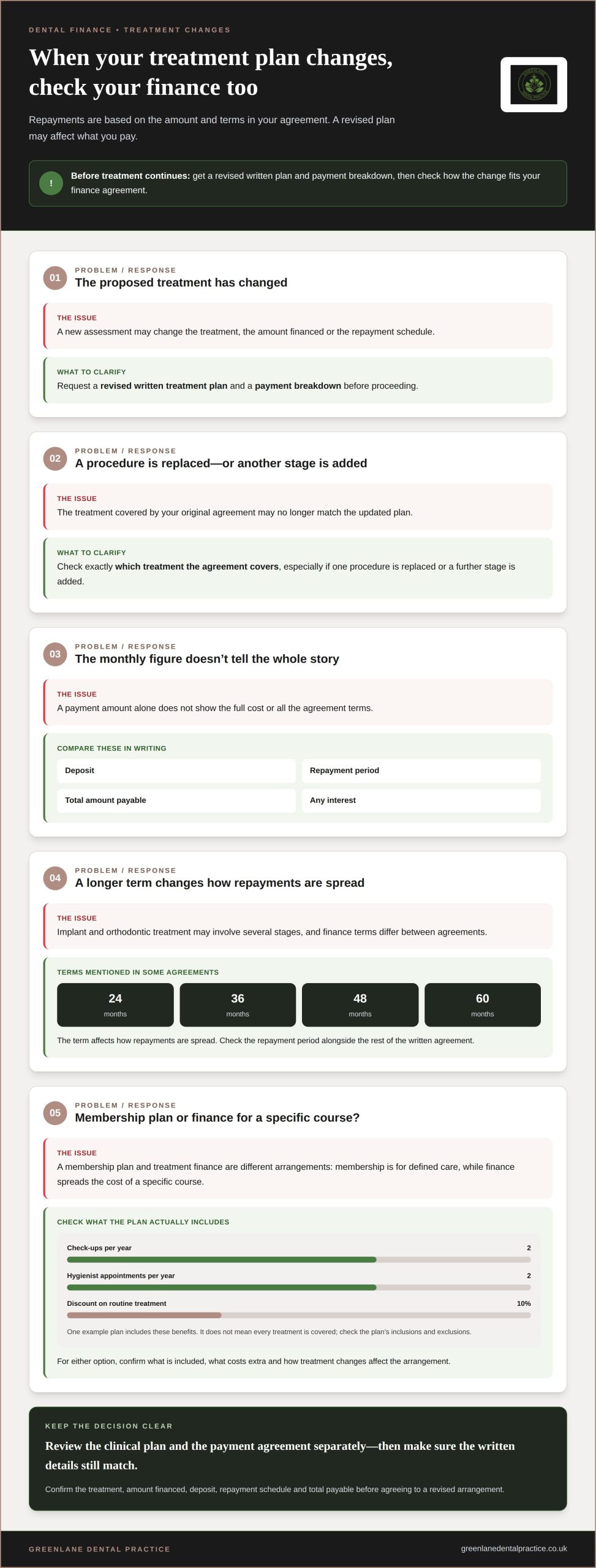
If an assessment changes the proposed treatment, request a revised written plan and payment breakdown before proceeding. The new plan may affect the amount financed or repayment schedule. Check which treatment the agreement covers, particularly if one procedure is replaced or another stage is added.
Deferred payment credit, often known as buy now, pay later, is also subject to regulation. According to the Financial Conduct Authority, it is due to start regulating deferred payment credit in the UK on 15 July 2026. Read the agreement’s repayment, charge and cancellation terms before using this option.
What is a dental payment plan?
A payment plan spreads dental care costs across scheduled payments instead of requiring the full amount upfront. NHS instalments are a separate arrangement: whether you can pay an NHS charge in instalments depends on the payment terms the practice accepts.
Interest-free monthly payment options
Interest-free finance divides an agreed treatment amount into repayments without adding interest, as set out in the agreement. Check the total repayable, deposit, payment dates and what happens if you miss a payment. Read the agreement’s inclusions before accepting it.
For credit agreements, Citizens Advice says consumers usually have 14 days to cancel after signing. Read the cancellation terms and follow the agreement’s process if you decide not to proceed.
Comparing payment options
Compare payment options with the care you need. A membership plan may suit routine examinations and hygiene, while finance can spread the cost of a larger course. Check whether fillings, root canal treatment or other planned dentistry are included, excluded or charged separately. Then compare the deposit, repayment period, total payable and any interest in writing.
An NHS treatment plan and a private clinic’s plan may cover different services. Consider the clinical proposal separately from the payment method: confirm which treatment each payment covers, and whether later changes affect the amount or schedule.
Private dental care can include treatment beyond NHS provision, but the fee depends on the treatment plan and what it contains. Ask for the proposed stages and costs in writing before agreeing to finance; this makes it easier to understand how a revised plan affects repayments. For a clear starting point, a routine dental examination can help assess your needs before discussing suitable care.
Monthly dental plan payments
A dental membership fee is a regular payment for defined care and benefits, rather than borrowing for a specific course of treatment. The plan’s terms determine what the monthly payment includes and which treatments cost extra.
Plan categories can differ in their monthly fee and included appointments. One example includes two check-ups and two hygienist appointments per year, alongside 10% off routine treatment. That structure may suit patients who attend regularly and want predictable payments for ongoing care. It doesn’t mean every treatment is covered, so read the plan’s inclusions and exclusions before joining.
Consider the practical benefits, not just the monthly amount. Check whether examinations, hygiene visits and routine treatment are included, then look for limits or separate fees. Cosmetic care such as whitening may fall outside routine benefits, depending on the plan terms. Understand how missed appointments, changing treatment needs and amendments to the plan affect your cover.
Before joining, work through these details:
- Included care: Match the stated appointments and routine treatment benefits to the care you expect to use.
- Additional treatment: Find out how fillings, crowns or other work are charged when excluded from the plan.
- Leaving: One dental membership-plan example allows a member to leave with one month’s notice.
- Discounts: An example offers 10% off routine treatment, but that discount doesn’t automatically apply to every procedure.
A plan can make routine dental spending easier to organise, but it is not the same as finance for implants or another larger course. Compare the value of included appointments with total membership payments, any registration fee and likely extra treatment. This helps you judge whether the benefits suit your needs and budget.
Payment plans for implants and orthodontics
Implant and orthodontic treatment may involve several stages, so compare the finance terms with the full treatment plan. Consider monthly payments for dental work in Leigh alongside the proposed care and how the agreement handles changes.
Practices offering monthly payment plans
Payment options differ between dental practices in Leigh, Greater Manchester, and not every practice offers every option. For monthly payments for dental work in Leigh, compare the written agreement’s repayment period, interest, deposit and total amount payable. Some finance agreements allow repayment over 24, 36, 48 or 60 months. The length of the term affects how repayments are spread.
Treatments payable for monthly
A dental finance agreement may cover a specific private treatment plan, such as dental implants or Invisalign Clear Aligners, if those treatments are included in its terms. The written plan should identify the treatment being financed and the repayment schedule. A private dental membership plan is different: it may cover routine care or hygiene appointments rather than implants, crowns or cosmetic treatment.
Emergency appointments may be handled separately from planned treatment. Check which care the agreement covers. If your clinical plan changes, get revised treatment and payment details in writing before proceeding.
Applying for a dental payment plan
Start with an assessment and a written treatment plan. Compare the finance agreement with the proposed care, including the repayment term, interest, deposit and total payable. If you’re moving from a membership plan to treatment finance, check how the existing plan ends and whether the new agreement covers the revised course.
Read the agreement before signing. Citizens Advice says consumers usually have 14 days to cancel after signing a credit agreement. For guidance on implant or Invisalign treatment options, explore implant and Invisalign care.
Greenlane Dental Practice
Greenlane Dental Practice can help you understand the dental treatment behind your payment decision. If you’re considering implant or orthodontic care, first clarify the proposed treatment and how its stages fit your needs. The practice offers Dental Implants and Invisalign Clear Aligners, as well as Porcelain Veneers and Professional Teeth Whitening.
Use the discussion to separate the clinical plan from any payment agreement. Ask what treatment the written estimate covers, how proposed changes would be handled and which finance terms apply. This gives you a clearer basis for deciding whether to proceed and how to manage the cost.
Contact Greenlane Dental Practice to discuss your dental treatment needs and payment questions.
Take your next step with confidence
Choosing how to pay is part of planning your care, but it need not define the decision. Start with the outcome you want, then consider how the proposed treatment fits your priorities and budget. If the plan changes, pause to understand the revised care and payment terms before deciding how to proceed.
For monthly payments for dental work in Leigh, a thoughtful conversation can help you weigh your options alongside your dental needs. Greenlane Dental Practice offers Invisalign Clear Aligners, Porcelain Veneers and Professional Teeth Whitening. Discuss the treatment you’re considering and what information will help you make an informed, comfortable choice.
Contact Greenlane Dental Practice to talk through your dental treatment questions and next steps. A clear understanding of your options can help you move forward at a pace that feels right for you.
Frequently Asked Questions
What if treatment changes after finance is agreed?
Ask for a revised treatment plan and written breakdown before agreeing to extra or different care. For example, if an assessment changes the proposed stages of implant treatment, check whether the original finance agreement still covers them. Don’t assume a change is automatically added to existing credit. Confirm the revised amount, repayment schedule and any new agreement before authorising further treatment.
What interest rates and APR do Leigh dentists charge for monthly payment plans?
There is no single interest rate or APR across dental practices in Leigh. The rate, if any, is stated in the specific finance offer and agreement. Compare the APR with the total amount repayable, deposit, repayment period and any charges. A low monthly instalment can still cost more overall if interest or fees apply.
Are interest-free dental payment plans available in Leigh, and what are the terms?
Interest-free dental finance is one possible payment arrangement, but its terms vary. The agreement should explain which treatment is covered, along with the deposit, instalment amount, payment dates and total repayable. Check whether the offer applies to the whole treatment plan or only part of it. If you’re considering cosmetic care or implants, make sure the treatment stated matches your proposed plan.
What credit checks and eligibility rules apply to dental finance in the UK?
Finance eligibility rules are set by the provider, so there is no single test for every dental agreement. The application should explain what information is needed and whether a credit or affordability assessment is part of the decision. Read the criteria before applying, and check that the repayment schedule fits your budget alongside regular household commitments.
What happens if you miss a monthly dental finance payment?
The agreement explains what happens if you miss an instalment, including how to report a payment problem and whether charges may apply. Contact the finance provider promptly using the details in your agreement, rather than waiting for the next payment date. Ask how to bring the account up to date and keep a written record of any revised arrangement.