If you’re asking yourself, “I hate my smile, what can I do?”, the right option depends on what bothers you. Veneers or composite bonding can improve the appearance of chips, Invisalign can address some alignment concerns, and professional teeth whitening may help if colour is your main concern.
It’s understandable to feel self-conscious about your smile, especially if you find yourself hiding it in photographs or social situations. You don’t have to dismiss those feelings, but there’s no need to rush into treatment either. Start by identifying what you’d like to change.
This article explains how veneers, bonding, braces and clear aligners can address common smile concerns, and how dental insecurities may affect confidence and social life. You’ll learn what each option is designed to improve, helping you consider what feels right for you.
Key Takeaways
- Pinpoint what makes you self-conscious about your smile to help clarify which changes matter most to you.
- Match the concern to the option: veneers can address visible chips and discolouration, while whitening focuses on tooth colour.
- For misaligned teeth, compare braces with clear aligners and consider how discreet you’d like treatment to be.
- Explore Invisalign Clear Aligners at Greenlane Dental Practice if you’re considering a more discreet approach to straightening your teeth.
How dental insecurities affect confidence and social life
If you’re asking what you can do about disliking your smile, start by identifying what feels uncomfortable. A chipped front tooth, visible gaps or a missing tooth can each affect how you smile, speak or pose for photographs. One writer described spending twenty years training his face not to move when smiling. A couple of years ago, colleagues said he smiled with his eyes rather than his face.
Everyday habits can support a healthier-looking smile: brush with fluoride toothpaste, clean between your teeth daily, and limit sugary snacks and drinks. Notice practical triggers, too, such as avoiding certain foods because a tooth feels sensitive. A routine dental examination can help identify oral health concerns alongside cosmetic ones.
At work, feeling conscious of your teeth may lead you to hide your smile in meetings, photographs or conversations. That can make it harder to express warmth or feel at ease when speaking. For example, if you cover your mouth during a presentation, consider whether a specific concern, such as staining or a chip, is behind it. Identifying the concern can help you decide what to address.
Dating can feel exposing when you’re worried about how your teeth look. You might hold back during a first-date conversation or avoid smiling in a photograph. A partner’s kind response may offer a different perspective, but your own concerns still deserve attention. Write down what bothers you most, then distinguish appearance concerns from discomfort or difficulty chewing.
For a small chip or uneven edge, composite bonding can reshape the visible area with tooth-coloured material. If one or more teeth are missing, dental implants are an option for replacing them. These treatments address different concerns: bonding changes the appearance of an existing tooth, while an implant replaces a missing tooth. Start by identifying which issue affects your daily life most.
Exploring the reasons behind your dislike can be part of rebuilding confidence. Compare a posed photograph with a candid one, or notice whether you feel more relaxed around particular people. These observations can help you describe your concern clearly and consider an appropriate next step.
Cosmetic Dentistry: What Are Your Options?
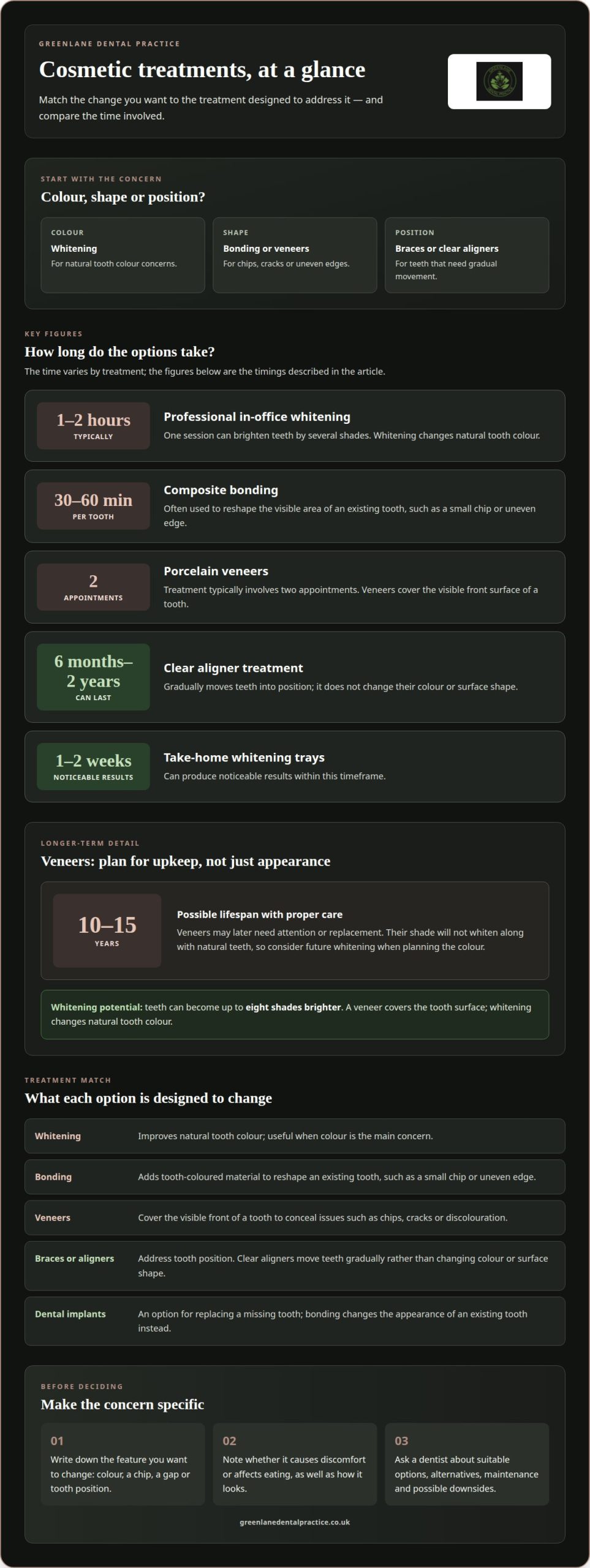
The right option depends on whether you want to change tooth colour, shape or position. A dentist can help you compare those goals with your oral health and priorities.
Comparing whitening, bonding, veneers and orthodontics
These treatments address different concerns, so matching the method to the issue matters. Professional in-office whitening typically takes one to two hours, while bonding often takes 30 to 60 minutes per tooth. Veneer treatment typically involves two appointments. Clear aligner treatment can last from six months to two years, as it gradually moves teeth rather than changing their colour or surface shape.
Identifying concerns about your smile
People may dislike their smile because of colour, chips, uneven edges, gaps or tooth position. To identify what matters most, look at photographs and notice when you feel self-conscious: is it when smiling broadly, speaking or showing your teeth? Write down the specific feature and whether it causes discomfort or affects eating. This helps distinguish a cosmetic preference from a concern that also needs oral health attention.
A dentist’s help with smile concerns
A dentist can examine your teeth, discuss the changes you want and explain suitable options, including alternatives and limitations. When considering a cosmetic dentist, ask about relevant qualifications and experience with the treatment you’re considering. Request clear explanations of the proposed approach, expected maintenance and possible downsides. A helpful discussion gives you room to ask questions and make an informed choice, rather than feeling hurried into treatment.
Payment arrangements differ between practices. Ask for a written treatment plan and quote showing the cost factors, such as the treatment type, number of teeth involved and any preparation required. Before agreeing, ask what payment methods or staged arrangements are available and what terms apply. You can explore cosmetic dental treatment options as part of considering your next step.
Porcelain veneers for chips, cracks and discolouration
Porcelain veneers can conceal cosmetic issues such as chips, cracks and discolouration. They cover the visible front surface of a tooth, making them relevant when a particular tooth’s appearance bothers you. For example, a veneer may address a chipped front tooth, while whitening is intended to improve tooth colour. The choice depends on whether you want to change one tooth’s shape or brighten your smile more broadly.
Veneer treatment typically involves two appointments. At the planning stage, discuss which teeth concern you, the appearance you want and how the veneer shade will sit alongside neighbouring teeth. This is especially useful if you’re considering whitening as well. Planning the colour first can help avoid veneers that look noticeably different from the teeth around them.
Professional in-office teeth whitening can brighten teeth by several shades in one session, which typically takes one to two hours. Take-home whitening trays can produce noticeable results within one to two weeks. Whitening changes natural tooth colour, while porcelain veneers cover the tooth surface. If discolouration affects several teeth, whitening may address the wider colour concern; a veneer can change the appearance of a specific tooth.
One long-term consideration is lifespan: porcelain veneers can last 10 to 15 years with proper care. They may then need attention or replacement, so consider the ongoing commitment as well as the initial appearance. Whitening can make teeth up to eight shades brighter, but a veneer’s shade won’t whiten along with natural teeth. This difference matters if you expect to whiten later.
Before deciding, list the teeth you want to change and the concern for each, such as a crack, chip or discolouration. Then compare whether whitening, veneers or a combination best matches your goals. Ask the dentist to explain the treatment plan, expected maintenance and how the shade will look beside your natural teeth. These points help you weigh the visual change against the longer-term care involved.
Braces and clear aligners for misaligned teeth
Misaligned teeth can affect how your smile looks and how your teeth meet. Orthodontic treatment gradually moves teeth into a different position rather than covering their surface. Match the approach to the alignment concern: braces are often considered for moderate to severe misalignment, while clear aligners may suit people seeking a more discreet treatment.
Clear aligners are transparent trays designed to move teeth through a planned series of changes. Treatment can last anywhere from six months to two years, and many people notice improvements within a few months. The overall duration depends on the movements needed and how consistently treatment is followed. A small gap and more involved crowding are different starting points, so timelines vary.
Braces use fixed components to guide tooth movement and are often considered for more complex alignment needs. Clear aligners are less noticeable, which may suit someone who feels self-conscious about wearing a visible appliance at work or in social settings. A discreet appearance alone doesn’t determine suitability. The amount and direction of movement needed also matter.
Before choosing, name the change you want: closing a gap, reducing crowding or improving how your teeth meet. Then discuss your bite, tooth positions and treatment goals with a dentist. These details help establish which method may address the concern and what treatment involves. Ask how progress is assessed and what care the plan requires, so you understand the commitment as well as the likely visual changes.
Orthodontics focuses on position, not tooth colour or chips. If uneven alignment and discolouration both concern you, those are separate issues to discuss rather than assuming one treatment addresses both. A clear plan connects each concern to its intended treatment. To explore whether aligners suit your alignment goals, arrange a clear aligner discussion.
Greenlane Dental Practice: Invisalign Clear Aligners
Greenlane Dental Practice in Leigh offers Invisalign Clear Aligners for people considering a discreet way to address misaligned teeth. If gaps, crowding or uneven alignment make you self-conscious, discuss the changes you’d like and how aligners may fit your goals. Treatment needs vary with tooth position and the movements involved, so sharing your priorities helps shape the conversation.
Bring specific examples, such as a gap you notice in photographs or teeth that feel difficult to clean. You can also discuss whether your main concern is alignment or another feature, since aligners move teeth rather than whiten them or cover chips. A clear discussion helps you understand how this option relates to your concerns. Contact Greenlane Dental Practice in Leigh to discuss Invisalign Clear Aligners.
Take the next step towards a smile that feels like yours
If you’re wondering, “I hate my smile, what can I do?”, begin with one clear priority. It might be feeling more comfortable in photographs, changing a feature that catches your attention, or understanding whether treatment suits your goals. You don’t have to decide on a procedure before starting a conversation. A considered discussion can help you explore your preferences and understand the options available to you.
Greenlane Dental Practice in Leigh offers Invisalign Clear Aligners, Porcelain Veneers and Professional Teeth Whitening for different smile concerns. Sharing what you’d like to change can focus the conversation on an approach that feels relevant to you. Your concerns are worth discussing, whether you’re ready to explore treatment or simply want to understand your choices.
Contact Greenlane Dental Practice to discuss your smile goals. Take the next step at your own pace, with a clearer idea of what matters to you.
Frequently Asked Questions
What Can I Do If I Don’t Like My Smile?
Start by identifying one specific concern and how it affects you day to day. If you’re thinking, “I hate my smile, what can I do?”, note whether you’re worried about a tooth’s appearance, missing teeth or how your teeth meet. A dental examination can help distinguish appearance preferences from problems needing care. You can then discuss suitable options without committing to treatment straight away.
What cosmetic dental treatments are available in the UK for improving a smile?
UK cosmetic options include professional whitening for tooth colour, composite bonding for small changes to tooth shape, and veneers to alter the appearance of visible teeth. Invisalign clear aligners can address some alignment concerns, while implants replace missing teeth. These treatments serve different purposes, so a useful starting point is to name the change you want, such as brightening several teeth or closing a visible gap.
How much do cosmetic dental treatments cost in the UK, and does the NHS cover them?
There’s no single UK price for cosmetic dentistry. The cost depends on the treatment, how many teeth are involved and any preparation needed; a quote sets out the proposed care and its cost. NHS treatment is based on clinical need rather than appearance alone, so purely cosmetic work is generally not covered. Ask about NHS eligibility if a concern also affects your oral health.
What should I do if feeling unhappy with my smile is affecting my confidence or mental health?
If worry about your smile is affecting relationships, work or daily activities, tell someone you trust and speak with your GP. You can also explain the impact to a dentist, especially if you’re avoiding photographs, meals or conversations. Focus on support for your wellbeing as well as any dental concern. If distress feels overwhelming or you feel unsafe, seek urgent help from local health services.
What are the risks and long-term effects of whitening, veneers and other cosmetic dentistry?
Porcelain veneers can last 10 to 15 years with proper care, then may need attention or replacement; their shade will not whiten along with natural teeth. Whitening changes natural tooth colour, while veneers cover the tooth surface. Ask a dentist about expected maintenance and possible downsides.