Dental visits can feel more manageable when you use calming techniques, tell the team what worries you and agree how to pause if you feel overwhelmed. Learning how to stop being afraid of the dentist can start with slow breathing, mindfulness and practical ways to build confidence. Adapt these approaches to suit children and adults.
Dental fear can be hard to explain, especially if it has stopped you booking an appointment. You’ll find ways to use mindfulness before and during a visit, ideas for children and adults, and guidance on seeking dental or psychological support when self-guided techniques aren’t enough. The aim isn’t to dismiss your worries, but to help you feel safer and more in control of your care.
Key Takeaways
- Breathing and grounding techniques can be adapted for children and adults, making it easier to practise calming strategies together.
- Mindfulness can help you stay present; talking openly with your dentist and agreeing a pause signal can also support a greater sense of control.
- If fear continues to prevent dental care, psychological support such as cognitive behavioural therapy may help you build coping skills.
- Knowing what to expect at a first appointment and sharing your concerns can make the visit feel more manageable.
Do these techniques work on both adults and kids?
Yes. Adults and children can use breathing, grounding and mindfulness, adapted to their age and comfort. A child might name things aloud with a trusted adult, while an adult may practise quietly on the way to the appointment.
Grounding on the way to an appointment
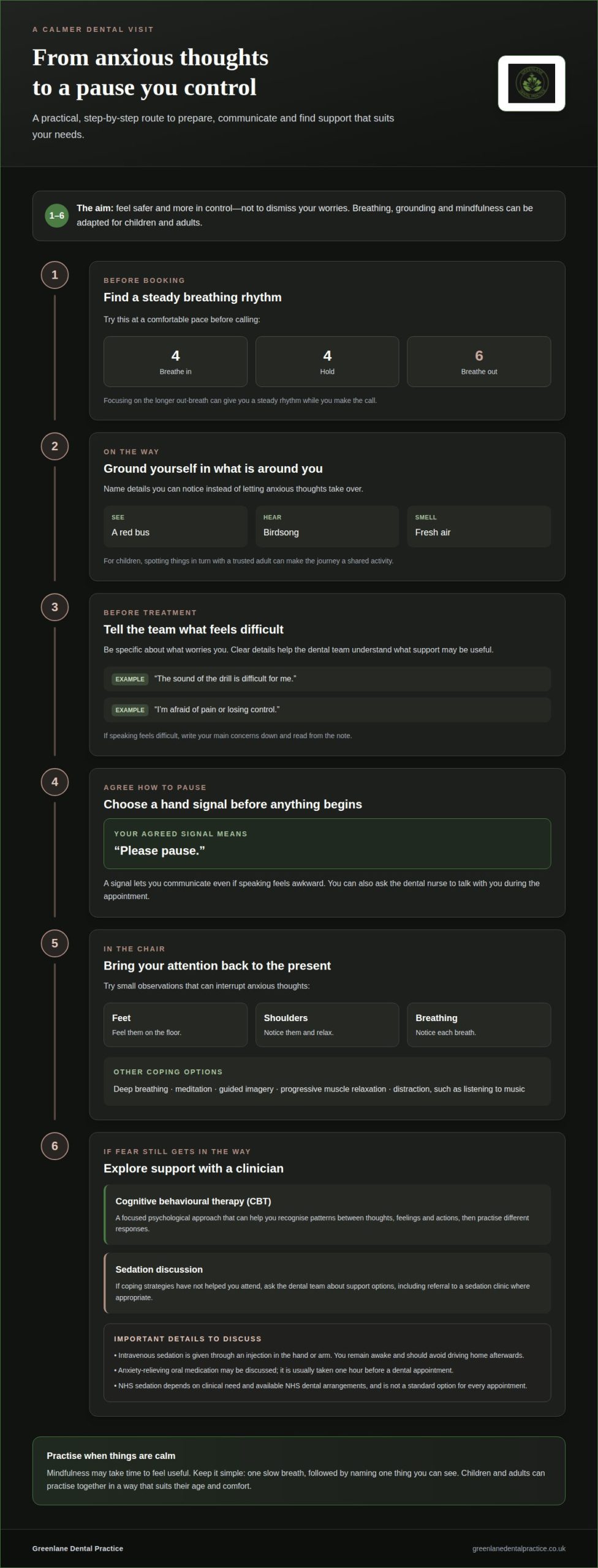
Grounding brings your attention to what you can notice around you, rather than letting anxious thoughts take over. On the way to the practice, name things you can see, hear and smell, such as a red bus, birdsong or fresh air. These specific details give your mind a focus. Children can take turns spotting things with an adult, making the journey a shared activity instead of a countdown to the appointment.
Relaxation and psychological coping
Relaxation and coping techniques can help you respond to fear with deliberate actions. Before calling to book, try breathing in for four, holding for four, then breathing out for six. Repeat at a comfortable pace. Focusing on the longer out-breath can give you a steady rhythm while you make the call.
During a visit, adults and children can try deep breathing, meditation, guided imagery, progressive muscle relaxation or distraction. Picture a familiar, safe place, listen to music, or gently tense and release a muscle group. Mindfulness means paying attention to the present without judging it. Practise together with a short breathing exercise or by noticing everyday sensations, such as warm water while brushing your teeth.
Regular practice matters; mindfulness may take time to feel useful, so begin during calm moments, not only before appointments. A parent has described teaching breathing techniques to their child from age five, showing how the exercise can be introduced early and practised together. Keep it simple: one slow breath, followed by naming one thing you can see. But see a GP or dentist if you have a mouth ulcer that lasts longer than 3 weeks, according to the NHS.
How can mindfulness help a nervous/anxious dental patient?
Mindfulness brings your attention to the present without judging what you notice. In the dental chair, feel your feet on the floor, relax your shoulders and notice your breathing. These small observations can interrupt anxious thoughts. If you’re considering how to stop being afraid of the dentist, practising grounding before treatment can help you recognise what you’re feeling.
Tell the dentist what worries you before treatment begins. Explain, for example, that the sound of a drill is difficult or that you’re afraid of pain. Agree on a hand signal that means “please pause”, so you can communicate even if speaking feels awkward. You can also ask the dental nurse to talk with you during the appointment.
Dental anxiety can affect children and adults. Worries may involve pain, loss of control, sounds or past experiences. Signs can include dread before an appointment, trouble sleeping, a racing heart or putting off booking. These reactions can make routine care harder to attend, but they don’t mean your concerns are unreasonable.
Fear varies in intensity. Dental anxiety describes distress around treatment; dental phobia is a more severe fear that can make attending feel impossible. If mindfulness alone doesn’t help, cognitive behavioural therapy can provide focused psychological support. A clinician may also discuss anxiety-relieving oral medication, usually taken one hour before a dental appointment. Learning how to stop being afraid of the dentist may involve exploring support beyond mindfulness.
Private dental sedation fees depend on the method, treatment and assessment. The fee is provided after a quote request. NHS sedation depends on clinical need and available NHS dental arrangements, and isn’t a standard option for every appointment.
To make a first conversation feel more manageable, write down your concerns and bring the note with you. A routine dental examination can provide an opportunity to discuss worries before treatment is considered.
Finding dental and psychological support
Support can come from the dental team or a mental health professional. Dental staff are trained to care for nervous patients, so tell them what makes appointments difficult. You could mention a previous experience, a particular sound, or worry about losing control. Clear details help the team understand what support may be useful.
If you have a dental problem, phone the practice you normally attend first. Explain the problem and your anxiety when you call. You can say you need time to discuss your concerns before treatment starts. If speaking feels difficult, write down your main worries and read from the note. This gives the conversation a clear starting point.
If severe fear remains difficult to manage, consider these support routes:
- Ask about referral to a sedation clinic if coping strategies haven’t helped you attend.
- Discuss cognitive behavioural therapy, a focused approach that can help change anxious thoughts and responses.
- Tell the dental team which part feels hardest, such as arriving, sitting in the chair or beginning treatment.
Cognitive behavioural therapy can be a successful, short, targeted approach to dental anxiety. It helps you recognise patterns between thoughts, feelings and actions, then practise different responses. For example, you might explore how imagining a painful procedure affects your decision to book. A therapist can help you work through that fear in a structured way.
For some patients, a dentist may discuss conscious sedation as part of their care. Intravenous sedation is given through an injection in the hand or arm. It can help you feel calm and relaxed, and you may not remember the procedure. You remain awake and should avoid driving home afterwards. Discussing the options with the dental team helps match support to your treatment needs and concerns.
What happens during a first dental appointment in the UK?
A first appointment usually begins with a conversation about your dental history, current concerns and any anxiety. Explain what feels difficult, such as lying back or hearing equipment. Sharing this before an examination helps the dentist understand your needs and explain what comes next.
The dentist may examine your teeth, gums and mouth, then explain any findings in plain language. When appropriate for your care, X-rays can help identify problems that aren’t visible during an examination. Ask what each part involves before it begins, so you’re not left trying to follow an unfamiliar process.
If you feel nervous, make your preferences clear at the start. For example, you can:
- Ask the dental nurse to talk with you or sit beside you during the appointment.
- Agree a hand signal to show you need a pause or explanation.
- Ask the dentist to describe each step before carrying it out.
If treatment includes an injection, numbing gel can be applied to the gum beforehand. Ask the dentist when they’ll apply it and what sensation to expect. Knowing the next step can make the procedure feel less unfamiliar, while a pause gives you time to regain composure.
Your first visit may focus on assessment and discussion rather than treatment. The dentist can explain whether a concern needs attention and what options may follow. If you’ve delayed care, mention it without embarrassment. Details such as sensitivity, discomfort or a change you’ve noticed can help guide the conversation.
Prepare a short note with your main concern and any questions, then bring it along. You can arrange a first dental appointment and share what would help you feel more comfortable at the visit.
Greenlane Dental Practice: Invisalign Clear Aligners
Greenlane Dental Practice offers Invisalign Clear Aligners for people considering a change to their smile. If dental anxiety has made it harder to think about treatment, raise that concern along with your questions about aligners. A conversation can cover what you hope to change and what you’d like to understand before deciding on your next step.
Feeling nervous doesn’t mean you have to put every dental goal aside. Explain what would make appointments more manageable and discuss your concerns before proceeding. Take time to describe your priorities, whether you’re considering Invisalign or simply want to talk through your options. Clear questions can help you feel prepared to choose what suits your needs.
For a calm conversation about your smile goals, contact Greenlane Dental Practice in Leigh.
Take your next step at your own pace
Feeling more at ease can begin with one small decision: choosing what you’d like to discuss at your next visit. You don’t need to resolve every concern before taking that step. Learning how to stop being afraid of the dentist is a personal process, and asking to talk about your needs can help you approach care with greater confidence.
If you’re also considering changes to your smile, Greenlane Dental Practice offers Invisalign Clear Aligners, Porcelain Veneers and Professional Teeth Whitening in Leigh. Raise your goals alongside any worries about dental appointments, then consider what feels right for you. A conversation doesn’t commit you to treatment.
Whether you want to discuss a dental concern or explore a cosmetic option, start with the topic that matters most to you. Contact Greenlane Dental Practice to begin a conversation. A thoughtful first step can make future care feel more approachable.
Frequently Asked Questions
What technique can I use if I’m nervous about calling up for an appointment?
Write a short opening sentence before you dial, such as, “I’m feeling anxious and would like to talk about what my appointment involves.” Keep a note nearby with your reason for booking and any questions. You don’t need to explain everything at once. One clear request can make the call more manageable and help the receptionist understand what you need.
What technique can I use if I’m nervous when I’m in the dentist chair?
Ask for a clear explanation before each new part of the appointment. For example, say, “Please tell me what you’re doing before you begin.” This gives you information in smaller pieces instead of leaving you guessing. If you start to feel overwhelmed, use the pause signal you agreed on, then tell the dentist what you need before continuing.
Where does dental anxiety come from?
Dental anxiety can develop after an upsetting appointment, but it may also stem from uncertainty or feeling exposed in the chair. A family member’s frightening story can shape your expectations too. For example, someone who feels self-conscious about neglected teeth may worry about being judged. Identifying what lies behind your fear can help you describe it clearly and focus support on what matters to you.
What causes dental anxiety and fear of the dentist?
Triggers vary from person to person. You might fear needles, discomfort, unfamiliar sounds or not being able to speak easily during treatment. A difficult past experience can make a later visit feel threatening before it even begins. Notice which moment brings the strongest reaction, such as entering the room or seeing an instrument, and share that detail with the dental team.
How can I manage dental anxiety before an appointment?
Reduce uncertainty by asking what the appointment is for and what it may involve. Keep the appointment details somewhere easy to find, plan your journey and choose a calming activity for afterwards, such as listening to a familiar podcast. If you take regular medicines or have a relevant health concern, make a note for the dentist. A simple plan can make the day feel less unpredictable.
What should I tell my dentist if I am afraid of treatment?
Explain the specific part you fear, rather than only saying you’re nervous. Tell the dentist, for example, that you’re worried about injections, sounds or not knowing what happens next. Mention any past experience that still affects you and what would help, such as explanations before treatment. You can also say whether you prefer quiet, conversation or pauses between stages, so the team understands your preferences.