If a cold drink or a bite of food suddenly makes you wince, it’s understandable to wonder how to reduce tooth sensitivity after whitening and whether the discomfort means something is wrong. Sensitivity can happen after whitening and may settle, but it can have other causes too. Persistent, severe or worrying symptoms deserve individual dental advice.
The right next step depends on how your teeth feel, how severe the sensitivity is and which whitening method you used. A gentler routine and a pause from whitening may help you avoid aggravating discomfort. Continuing to whiten or trying unverified remedies could make irritation worse.
This guide explains why teeth may feel sensitive after whitening, practical steps that may ease discomfort and what to avoid. You’ll also find out when to contact a dentist, including if you’re in Leigh and would like advice based on your teeth and whitening history.
Key Takeaways
- Whitening can leave teeth temporarily sensitive, but sensitivity alone doesn’t confirm a dental problem.
- Gentle brushing, pausing whitening and avoiding triggers may help you manage discomfort.
- When choosing between dentist-supervised whitening and a home product, consider the instructions and the access you have to individual advice.
- Pause whitening if it causes discomfort, and notice whether symptoms are easing, staying the same or worsening.
- Severe, worsening or persistent symptoms call for personalised advice from a dentist.
Why can teeth feel sensitive after whitening, and what is normal?
A sudden twinge when you sip cold water or brush can feel worrying, especially if it starts after whitening. Sensitivity is a recognised possible response, but it shouldn’t automatically be assumed to be harmless or caused by whitening alone. Your symptoms, dental history and the whitening method all matter.
Post-whitening sensitivity is a temporary increase in tooth discomfort, often triggered by temperature or touch, after a whitening treatment. It describes a symptom, not a diagnosis. People respond differently, so there’s no single timeline that applies to everyone. To work out how to reduce tooth sensitivity after whitening, first consider what may be behind it and whether your symptoms need attention.
What might cause sensitivity after teeth whitening?
Whitening ingredients, including peroxide-based agents, can pass through tooth structure and may temporarily make the tooth’s inner tissues more responsive. For a simple explanation of how tooth whitening works, including how whitening agents act on stains, see this overview.
Under the hard outer enamel is dentine, which contains tiny channels called dentinal tubules. When dentine is exposed, temperature or touch may stimulate nerves inside the tooth. Whitening-related sensitivity can involve this response, but similar discomfort may also have other causes, such as decay, a crack, gum recession or existing sensitivity. Symptoms alone can’t identify the cause.
How can you tell when sensitivity needs attention?
Mild discomfort that comes and goes with a trigger, such as cold water, may be less concerning than intense pain or pain that occurs without a clear trigger. There isn’t a universal time limit for what is normal, though. Notice whether the feeling is easing, staying the same or becoming more troublesome.
Contact a dentist if pain is severe, worsening, focused in one tooth or persistent, or if you’re unsure what’s causing it. Swelling, a tooth injury or other unusual symptoms also warrant prompt professional advice. A dentist can assess your teeth and gums, ask about your whitening history and consider other possible causes. This helps guide a response suited to you, rather than relying on a general rule.
How to reduce tooth sensitivity after whitening: practical relief options
Start with gentle steps rather than trying several remedies at once. If you’ve received dental advice or aftercare instructions, follow those first. The American Dental Association lists temporary sensitivity among the common adverse effects of whitening, but that doesn’t mean every product or approach suits every person.
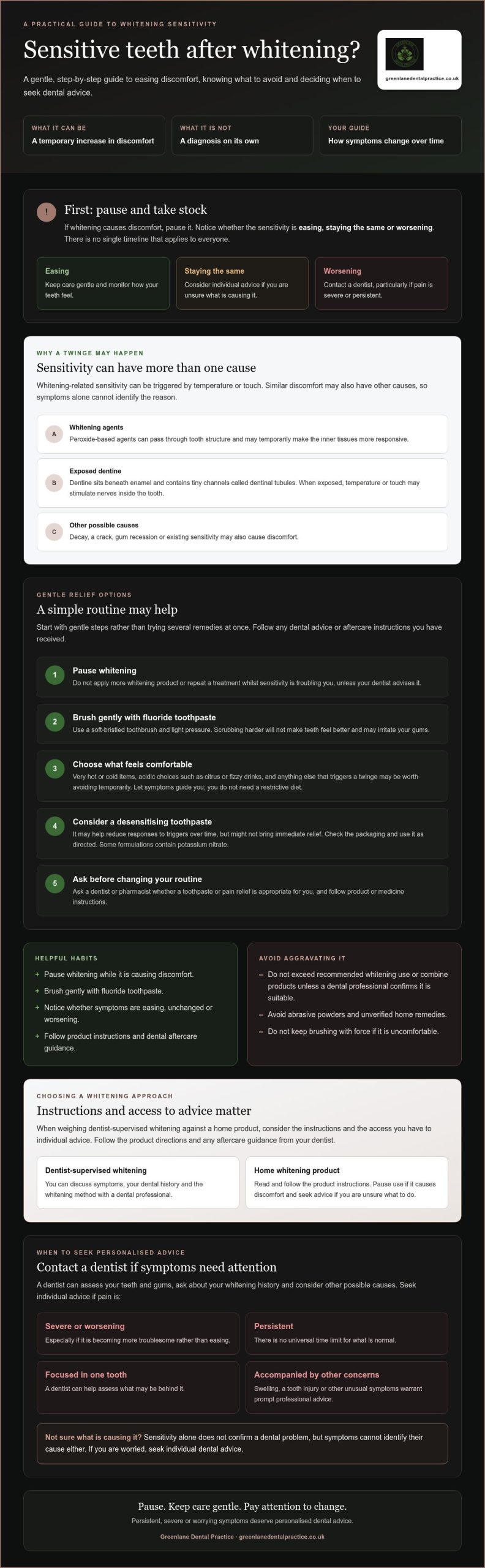
Pause whitening, avoid foods and drinks that trigger discomfort, and keep brushing gently with fluoride toothpaste. Ask a dentist or pharmacist before using pain relief or changing your oral-care routine.
Which toothpaste and oral-care habits may help?
A desensitising toothpaste may help reduce the response to triggers over time, but it might not bring immediate relief. Some formulations contain ingredients such as potassium nitrate. Check the packaging and use the product as directed. If you have existing dental concerns or aren’t sure which toothpaste to choose, ask your dentist or pharmacist whether it’s appropriate for you.
Continue routine brushing with fluoride toothpaste unless your dentist has advised otherwise. Use a soft-bristled toothbrush and light pressure. Scrubbing harder won’t make teeth feel better and may irritate your gums. If brushing is uncomfortable, keep the action gentle and tell your dentist if the problem continues.
What should you avoid whilst your teeth feel sensitive?
For now, choose foods and drinks that feel comfortable. Very hot or cold items, acidic choices such as citrus or fizzy drinks, and anything else that provokes a twinge may be worth avoiding temporarily. You don’t need to follow a restrictive diet. Let your symptoms guide you, and reintroduce triggers as comfort allows.
- Don’t apply more whitening product or repeat a treatment whilst sensitivity is troubling you, unless your dentist advises you to do so.
- Avoid abrasive powders and unverified home remedies. They may irritate teeth or gums and aren’t a substitute for finding out what’s causing persistent discomfort.
- Follow the product instructions and your dentist’s aftercare guidance. Don’t exceed recommended use or combine products unless a dental professional has confirmed it’s suitable.
If you’re considering pain relief, check with a dentist or pharmacist about what’s appropriate for you, and follow the medicine’s instructions. If you’re unsure how to reduce tooth sensitivity after whitening, or the discomfort is severe or worsening, seek personalised dental advice rather than continuing to experiment at home. You can also learn more about professional teeth whitening and discuss whether it’s suitable for you.
Home whitening or professional whitening: does sensitivity care differ?
The first response is similar with either approach: don’t continue whitening through uncomfortable sensitivity, and pay attention to how your symptoms change. The next step can differ. Dentist-supervised treatment comes with professional instructions and a practice you can contact, whilst home products may offer less individual guidance. Sensitivity isn’t inevitable, and your response depends on the product, your symptoms and your dental history.
The American Dental Association’s guidance on whitening describes tooth sensitivity as a possible effect. This is a reminder that discomfort can occur, but it doesn’t show what’s causing your symptoms or determine the right response for you.
| Whitening approach | If sensitivity starts |
|---|---|
| Dentist-supervised whitening | Follow the individual instructions provided, and contact the treating practice before changing the schedule. |
| Home whitening product | Pause further use if it’s uncomfortable, check the instructions and seek dental advice if symptoms persist, worsen or feel unusual. |
What should you do if sensitivity starts after dentist-supervised whitening?
Use the product only as instructed by the dental professional overseeing your care. If sensitivity makes the plan difficult to follow, contact the practice before changing when or how often you whiten. They can consider the product, your symptoms and your dental history before advising on the next step. For more context on dentist-led treatment, see this professional teeth whitening guide.
What if sensitivity starts after a home whitening product?
If your teeth feel uncomfortable, stop applying the product for now and read its instructions carefully. Don’t leave it on for longer or use it more often to speed up results. Products and directions vary, and extra exposure isn’t a safe way to manage sensitivity. If pain persists, gets worse or seems unusual, ask a dentist for individual advice.
How to reduce tooth sensitivity after whitening depends on more than whether you used a home kit or professional treatment. Consider what you used, how your teeth feel and any existing dental concerns. If you’re unsure, check with a dentist rather than adjusting your routine by guesswork.
A step-by-step plan for sensitive teeth after whitening
A clear plan can help you respond calmly without guessing at the cause. These steps are a starting point, not a diagnosis, and should sit alongside any instructions from the dentist who provided your whitening treatment.
- Pause whitening. Don’t apply another dose or restart a schedule whilst your teeth feel uncomfortable. If a dentist supplied the treatment, contact the practice before changing the advised plan.
- Reduce triggers. Choose foods and drinks that feel comfortable. Temporarily avoid very hot, cold or acidic items if they set off sensitivity.
- Keep care gentle. Brush with a soft-bristled toothbrush and fluoride toothpaste, using light pressure. Follow product directions and professional aftercare advice. Check with a dentist or pharmacist before taking pain relief.
- Assess the symptoms. Notice whether the discomfort is easing, worsening or staying the same, and whether it affects one tooth or several. Contact a dentist if pain is severe, persistent, worsening or interfering with eating or drinking.
This sequence can guide you as you consider how to reduce tooth sensitivity after whitening. Avoid trying several new products or remedies at once, as that can make it harder to judge what’s affecting your teeth. If you have swelling, have injured a tooth or notice another unusual symptom, seek prompt professional advice.
What information should you have ready before asking for advice?
A few details can help the clinician understand what’s happening. Note which whitening method or product you used, when you last applied it and whether you followed the instructions. Describe where you feel sensitivity, what brings it on and whether it comes and goes or is present without a trigger. Mention previous sensitivity, relevant dental treatment and any other symptoms. You don’t need to work out the cause yourself.
When is it time to contact a dentist?
Ask for individual advice if pain persists, intensifies or makes eating and drinking difficult. A description can’t confirm whether the cause is whitening or another dental concern, so don’t try to diagnose a cavity, crack or gum problem at home. Severe or urgent symptoms should be assessed by a dental professional. The emergency dental care guide explains what to consider, but it doesn’t imply 24/7 walk-in availability.
If you’re worried about your symptoms, contact Greenlane Dental Practice for individual dental advice.
When should you seek personalised advice about whitening sensitivity in Leigh?
If sensitivity is mild, occurs only with a particular trigger and seems to be easing, gentle home care and avoiding what provokes it may be reasonable. Don’t rely on home measures alone if the pain is severe, worsening, persistent, focused in one tooth or making it difficult to eat or drink. Swelling, an injury or other unusual symptoms are also reasons to seek professional advice promptly.
There isn’t one timeline that suits everyone. If you’re unsure whether symptoms are settling, or you’re concerned about them, a dentist can take account of the whitening product and schedule, your oral health and any previous sensitivity. That can help distinguish a possible whitening response from another cause that needs attention. Symptoms are useful to describe, but they can’t confirm a diagnosis by themselves.
What can a dentist check if sensitivity does not settle?
A clinician may ask about your whitening history and examine your teeth and gums, including any existing fillings, crowns or other restorations. They’ll consider what you’ve noticed, such as whether one tooth or several are affected and what triggers the discomfort. Examination findings help determine whether further care is appropriate. The next step depends on your individual situation, so don’t assume a particular treatment or outcome before an assessment.
How can you plan a more comfortable whitening experience?
Before whitening, tell your dentist if you’ve experienced sensitivity before, have had relevant dental treatment or have concerns about your teeth or gums. Ask what instructions to follow, what to do if discomfort develops and how to get advice if you have questions. Clear guidance can help you understand the plan without guessing or changing how you use a product.
Greenlane Dental Practice is an established practice in Leigh offering professional teeth whitening alongside routine dental examinations and hygiene appointments. A dentist can discuss whether whitening is suitable for you and consider your individual circumstances, without promising a particular result or that sensitivity can be prevented.
If you’re considering whitening or would like to talk through sensitivity concerns, discuss professional teeth whitening with Greenlane Dental Practice. Personalised guidance can help you make a considered plan, including what to do if symptoms arise.
Take a gentle, informed approach to whitening sensitivity
Tooth sensitivity after whitening can have different causes, so the right response depends on your symptoms and dental history. Pause whitening if it’s uncomfortable, keep your oral care gentle and follow the product or dentist’s instructions. If pain is severe, worsening, persistent or affecting eating and drinking, seek personalised dental advice rather than relying on home care alone.
Knowing how to reduce tooth sensitivity after whitening starts with taking symptoms seriously without jumping to conclusions. A dentist can consider your whitening history and oral health, then help you decide what to do next. If you’re in Leigh, Greenlane Dental Practice offers professional teeth whitening alongside routine dental care.
Discuss your whitening questions with Greenlane Dental Practice if you’d like to talk through your concerns or consider professional whitening. Get in touch to discuss your options and make an informed plan for your smile.
Frequently Asked Questions
How long does tooth sensitivity last after whitening?
There’s no set duration that applies to everyone. Sensitivity may ease, but how long it lasts can depend on the whitening product, how it was used and your dental health. Notice whether it’s improving or becoming more troublesome. If it persists, worsens, affects one particular tooth or worries you, contact a dentist rather than relying on a general timeframe to decide whether it needs attention.
What is the quickest way to reduce tooth sensitivity after whitening?
First, pause further whitening and avoid very hot, cold or acidic foods and drinks if they trigger discomfort. Brush gently with a soft-bristled toothbrush and fluoride toothpaste. These steps may help you avoid aggravating sensitive teeth, but they can’t guarantee immediate relief or treat every cause. If pain is severe or getting worse, contact a dentist for individual advice.
Can I use sensitive toothpaste after teeth whitening?
You may be able to use a desensitising toothpaste after whitening, but follow the product instructions and ask a dentist or pharmacist if you’re unsure whether it’s right for you. It may help reduce sensitivity, though it might not work immediately. Continue brushing gently with fluoride toothpaste unless a dental professional has advised a different routine, and seek advice if your symptoms persist or worsen.
Should I stop whitening if my teeth become sensitive?
Yes, pause further whitening if your teeth become uncomfortable. If a dentist provided or prescribed your whitening product, contact the practice before changing or restarting the schedule. For a home product, check and follow its instructions, and don’t use it more often or for longer than directed. If discomfort continues, gets worse or feels unusual, ask a dentist to assess what may be causing it.
Is tooth sensitivity after whitening a sign of damage?
Not necessarily. Sensitivity can occur after whitening, but the symptom alone can’t confirm whether there’s damage or identify another dental problem. Pay attention to its severity, pattern and whether it’s improving. Pain that is severe, worsening, persistent or localised to one tooth should be discussed with a dentist. They can consider your whitening history and examine your teeth and gums to decide whether further care is appropriate.
What should I avoid eating or drinking when my teeth are sensitive after whitening?
Temporarily avoid foods and drinks that trigger discomfort, which may include very hot or cold items and acidic choices such as citrus or fizzy drinks. Choose options that feel comfortable rather than following a restrictive diet. There’s no need to avoid a food if it doesn’t bother you. If sensitivity makes eating or drinking difficult, or doesn’t settle, contact a dentist for personalised advice.
When should I contact a dentist about sensitivity after whitening?
Contact a dentist if the pain is severe, worsening, persistent, focused in one tooth or interfering with eating or drinking. Seek prompt professional advice if you also have swelling, a tooth injury or other unusual symptoms. In Leigh, Greenlane Dental Practice offers routine dental care and professional teeth whitening. A clinician can consider your symptoms, oral health and whitening history before advising you on appropriate next steps.