The best way to help prevent teeth staining isn’t to give up every colourful food: limit frequent exposure to coffee, tea, red wine and deeply coloured sauces, and rinse with water afterwards. According to the National Health Service, brush your teeth at least twice a day for at least two minutes each time, and floss daily to help reduce surface discolouration. Some stains come from inside the tooth, too, including changes linked to certain medicines.
It’s understandable to want a brighter smile without giving up the foods and drinks you enjoy. This guide explains how to prevent teeth staining by understanding common causes and making practical changes to your diet and oral-care routine. It also covers when a colour change may need a dentist’s assessment and when professional whitening could be appropriate.
Key Takeaways
- Notice which foods and drinks leave colour on your teeth, and use simple habits such as rinsing with water to reduce contact.
- Tooth colour changes can have causes beyond diet, including certain medicines and conditions affecting the tooth from within.
- Consistent brushing and daily flossing help remove plaque and reduce the risk of surface discolouration.
- Whitening products suit some stains better than others, so understand what they can do and seek dental advice before using them.
Foods and drinks that stain teeth
Dark pigments can cling to teeth and gradually change their colour. Red wine, tea and coffee contain tannins that contribute to staining, and espresso can cling particularly readily. Cola and cranberry juice may also leave colour over time. Deeply coloured foods can stain too, including blueberries, beetroot, tomato-based sauces, balsamic vinegar and soy sauce. Turmeric in curry sauce may leave visible marks.
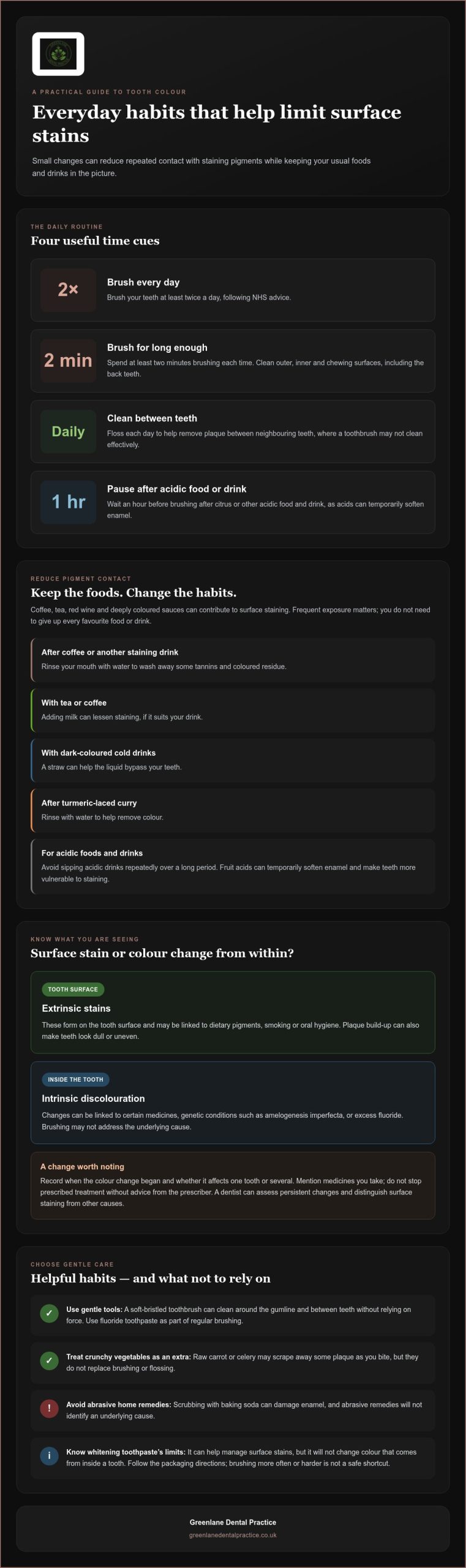
You don’t need to avoid every favourite food or drink. Having staining drinks less often limits repeated contact with your teeth. Adding milk to tea or coffee can lessen staining. For dark-coloured cold drinks, a straw can help the liquid bypass your teeth. After coffee or another staining drink, rinse your mouth with water to wash away some tannins and coloured residue.
- After coffee: Swish water around your mouth, then spit it out to clear some residue.
- With cold drinks: Use a straw for cola or dark-coloured juice to limit contact with teeth.
- With tea or coffee: Add milk if it suits your drink, as this can lessen staining.
- After curry: Rinse with water after turmeric-laced food to help remove colour.
Acidic foods and drinks need consideration, too. Fruit acids can temporarily soften enamel, leaving teeth more vulnerable to staining. Citrus fruit and acidic drinks may therefore contribute indirectly, even if they aren’t dark in colour. Enjoy them as part of a varied diet, but avoid sipping acidic drinks repeatedly over a long period. Notice which foods and drinks leave colour, reduce frequent exposure, and rinse with water afterwards. These habits can help limit surface stains without giving up tea, coffee or richly coloured meals.
Illnesses and medicines that affect tooth colour
Not every colour change starts with food or drink. Extrinsic stains form on the tooth surface and may be linked to smoking, oral hygiene and dietary pigments. Intrinsic discolouration begins inside the tooth, so brushing may not address its cause. Genetic conditions such as amelogenesis imperfecta can affect tooth colour, as can reactions to certain medicines. The distinction matters because surface stains and changes inside a tooth may need different advice.
Tobacco can leave marks on teeth, while plaque build-up can make the surface look dull or uneven. Plaque is a film that collects on teeth; if it remains, it can contribute to tooth decay. Decay may change a tooth’s appearance, so don’t assume a dark spot is merely a cosmetic stain. Regular cleaning helps remove plaque, but a dentist can assess changes that persist or appear in one area.
Excess fluoride is another possible cause of tooth-colour changes to discuss with a dentist. They can consider the pattern of discolouration alongside your dental history and distinguish it from surface staining. Avoid abrasive home remedies: they won’t identify or address an underlying cause.
Can mouthwash or fluoride treatments prevent tooth staining? Mouthwash can support oral hygiene, but it won’t remove pigments already attached to teeth. Fluoride treatments help protect teeth against decay; they don’t directly prevent stains from tobacco or food.
Note when a colour change began and whether it affects one tooth or several. Mention any medicines you take, and don’t stop prescribed treatment without advice from the prescriber. A dental examination can help distinguish lifestyle staining from a condition affecting the tooth itself and guide appropriate care.
Oral hygiene and plaque removal
Daily cleaning helps prevent plaque from building up and dulling the tooth surface. The National Health Service advises brushing at least twice a day for at least two minutes each time, and flossing daily to reduce the risk of surface discolouration. A soft-bristled toothbrush can clean gently around the gumline and between teeth. Use fluoride toothpaste as part of your regular brushing routine.
Clean each area rather than brushing only the front surfaces. Move the brush along the outer, inner and chewing surfaces, including the teeth at the back of your mouth. Floss reaches between teeth where a toothbrush may not clear plaque effectively. If floss is difficult to handle, ask a dental professional about suitable ways to clean between your teeth.
- Brush consistently: Follow the NHS advice for brushing twice daily for two minutes.
- Clean between teeth: Floss each day to help remove plaque between neighbouring teeth.
- Choose gentle tools: A soft-bristled brush helps clean without relying on force.
- Don’t scrub with baking soda: Its abrasive action can damage enamel.
Raw carrot or celery may scrape away some plaque as you bite, but these foods don’t replace brushing or flossing. They’re an addition, not a cleaning routine. Brushing immediately after every meal isn’t always appropriate either: after citrus or other acidic food and drink, wait an hour before brushing. Acids can temporarily soften enamel, so brushing straight away may cause damage.
Even careful home cleaning can leave hard-to-reach areas. Regular dental examinations and hygiene appointments allow a professional to assess plaque build-up and clean teeth thoroughly. A hygienist can also discuss practical ways to improve your brushing or interdental cleaning technique. If surface marks remain despite a consistent routine, an examination can help distinguish staining from plaque or another change. This makes ongoing care more targeted than brushing harder or using abrasive household products.
Can whitening toothpaste prevent stains, and how often is it safe to use?
Whitening toothpaste can help manage surface stains, but it won’t change colour that comes from inside a tooth. Keeping teeth clean also helps maintain a polished enamel surface, where stains are less likely to stick. Use whitening toothpaste according to its packaging directions; brushing more often or harder isn’t a safe shortcut to a brighter smile. A dentist can advise whether the product suits your teeth and usual oral-care routine.
There isn’t one frequency that suits every whitening toothpaste. Check the instructions for the specific product and don’t exceed them. Ask a dental practitioner before starting an over-the-counter whitening product, particularly if you have sensitive teeth, visible enamel changes or existing dental concerns. Some products can damage enamel, increasing vulnerability to cavities and erosion.
- Check the ingredients: Avoid whitening products containing activated charcoal or citric acid.
- Follow directions: Use the product as its packaging instructs, rather than adding extra brushing sessions.
- Get advice first: A dentist can help assess whether surface stains or another cause explains the colour change.
Toothpaste is not the same as professional bleaching. Professional teeth whitening uses hydrogen peroxide or carbamide peroxide to break up and lift stains, and works best on surface, or extrinsic, discolouration. Intrinsic stains come from inside the tooth, so the source and type of colour change matter when choosing an approach. Rather than repeatedly switching toothpastes to treat a persistent mark, have an examination to help identify its cause.
If you’re considering a more noticeable change, discuss professional teeth whitening with a dental practitioner. They can assess the type of staining, explain suitable options and guide you towards an appropriate approach for your teeth.
Greenlane Dental Practice: Invisalign Clear Aligners
Greenlane Dental Practice offers routine dental examinations to help you understand changes in tooth colour and discuss suitable care. If surface stains are your concern, professional teeth whitening may be appropriate after an assessment. Whitening addresses tooth shade, while Invisalign Clear Aligners are for people considering a change to their teeth’s alignment, not a way to prevent staining.
A dental examination can help distinguish surface discolouration from changes that need a different approach. Discuss your oral hygiene and staining concerns, and whether whitening or another option is appropriate for your needs.
Contact Greenlane Dental Practice in Leigh to discuss your teeth and your next step.
Choose a next step that suits your smile
Knowing how to prevent teeth staining gives you a practical starting point, but a change in colour can also be a reason to look more closely at your dental health. If stains persist or you’re considering a brighter smile, a dental examination can help clarify the cause and inform your options.
Greenlane Dental Practice offers Professional Teeth Whitening for patients considering a change in tooth shade, alongside Porcelain Veneers and Invisalign Clear Aligners for other smile goals. These treatments address different concerns, so begin by discussing what you’d like to change and having your teeth assessed. You don’t need to settle on a treatment before talking through your priorities.
Take a calm, informed next step by contacting Greenlane Dental Practice to discuss your smile. A clear plan can help you feel more confident about the care ahead.
Frequently Asked Questions
What causes teeth stains?
Tooth stains can come from coloured food and drink, tobacco, plaque, medicines or changes within a tooth. Coffee, tea and red wine can leave surface marks, while intrinsic discolouration has an internal cause. Ageing can also wear enamel and reveal the yellower dentine beneath. If a mark appears on one tooth or changes noticeably, its location and appearance can help a dentist assess what may be causing it.
Can I prevent this?
You can reduce the chance of surface staining, though everyday habits can’t prevent every change in tooth colour. A practical way to prevent teeth staining is to limit repeated exposure to dark drinks, keep up with daily cleaning and follow product directions for whitening toothpaste. Keep a note of any persistent change, especially if it affects one tooth, and mention it at a dental examination rather than trying to scrub it away.
What is tooth discolouration?
Tooth discolouration means a change in the colour or appearance of a tooth. It may be extrinsic, affecting the outside surface, or intrinsic, coming from inside the tooth. For example, a surface mark after a coloured drink differs from a change linked to a medicine or condition. At Greenlane Dental Practice in Leigh, a dental examination can help identify which kind of change you’re noticing.
What foods and drinks stain teeth most, and which are less likely to stain?
Dark, strongly coloured items such as coffee, tea, red wine, blueberries, beetroot and tomato sauce can leave surface stains. Plain water has no dark pigments, while adding milk to tea or coffee can lessen staining. Hard cheese may help clean teeth as you chew, while gooey cheese can cling to them. These are practical differences, not a guarantee that a particular food will leave teeth completely mark-free.
How can you reduce tooth staining when drinking tea, coffee or red wine?
Have staining drinks less often, and avoid sipping them continually over a long period. Adding milk to tea or coffee can lessen staining. After coffee, rinse your mouth with water to help remove some tannins. A straw can reduce contact between dark-coloured cold drinks and your teeth, but isn’t practical for hot tea or coffee. Choose water between occasions when you drink them.
How often should you brush and floss to help prevent staining?
The National Health Service advises brushing at least twice a day for at least two minutes each time, and flossing daily to reduce the risk of surface discolouration. Use gentle movements rather than pressing hard, and clean the inner, outer and chewing surfaces of each tooth. After citrus or other acidic foods and drinks, wait an hour before brushing because acids can temporarily soften enamel.