A small procedure may mean you can return to work the next day: after a single implant or up to three implants, some patients do. Knowing how to prepare for dental implant surgery means following your dental team’s instructions, planning soft meals and allowing time to rest; after sedation, arrange a lift home and don’t drive for 24 hours.
It’s natural to wonder how much time off you’ll need and what recovery will feel like. Your plans depend on the extent of treatment and whether you’ll have local anaesthetic or sedation, so preparation involves more than clearing your diary. This guide explains how to look after your oral health before surgery, prepare meals and organise time off, then care for yourself during recovery. You’ll have a clearer idea of what to expect and how to make the first days at home more manageable.
Key Takeaways
- Follow your dental team’s pre-surgery instructions and share relevant changes to your health or medication.
- Plan soft meals ahead so you can rest without needing to shop during early recovery.
- Build time off around the extent of your treatment and how you feel, rather than assuming every recovery follows the same timetable.
- Follow the aftercare plan closely; Guy’s and St Thomas’ NHS Foundation Trust recommends holding chlorhexidine mouthwash in your mouth for 1 minute, 2 times a day.
Recovery after local anaesthetic or sedation
Plan the first day around rest, your aftercare instructions and the type of anaesthetic used. NHS implant treatment is assessed according to clinical need, so implants aren’t a routine option for every missing tooth.
-
Understand healing and osseointegration time
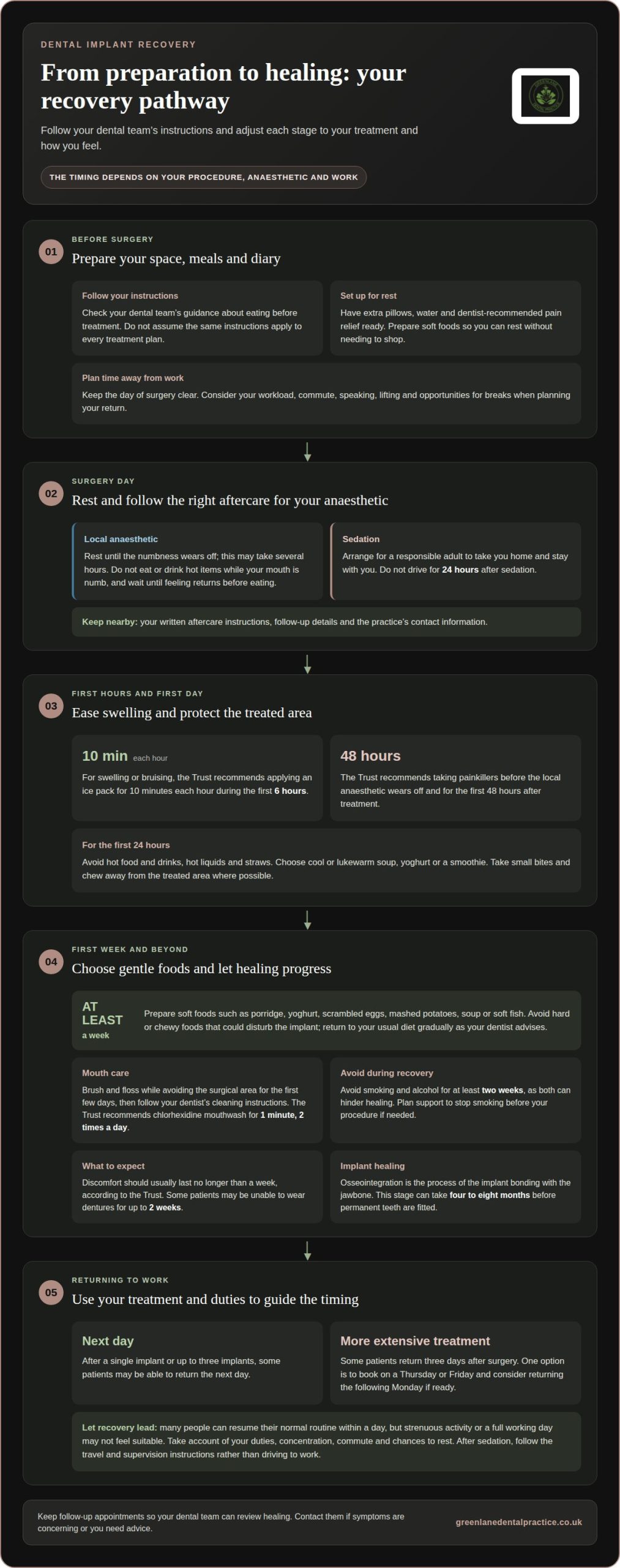
Give your jaw time to heal after implant placement. Osseointegration is the process in which the implant bonds with the jawbone over the following weeks. This stage can take four to eight months before permanent teeth are fitted. Guy’s and St Thomas’ NHS Foundation Trust says discomfort should usually last no longer than a week. Keep your follow-up appointments so healing can be reviewed.
-
Prepare a comfortable recovery space
Set up a resting area before treatment with extra pillows, water and your dentist-recommended pain relief. Guy’s and St Thomas’ NHS Foundation Trust recommends taking painkillers before the local anaesthetic wears off and for the first 48 hours after treatment. For swelling or bruising, apply an ice pack for 10 minutes each hour during the first 6 hours, as the Trust recommends. Some patients may be unable to wear dentures for up to 2 weeks after treatment, according to the Trust, so plan for this possibility.
-
Avoid smoking and alcohol during recovery
Avoid smoking and alcohol for at least two weeks after surgery, as both can hinder healing. If stopping smoking feels difficult, plan support before your procedure rather than relying on willpower during recovery. Protect the healing area from irritation, and follow your dentist’s advice about oral hygiene. Guy’s and St Thomas‘ NHS Foundation Trust recommends holding chlorhexidine mouthwash in your mouth for 1 minute, 2 times a day daily after dental implant treatment.
-
Follow instructions for local anaesthetic or sedation
After local anaesthetic, rest until the numbness wears off, which may take several hours. Don’t eat or drink hot items while your mouth is numb, and follow your written aftercare instructions. If you have sedation, arrange for a responsible adult to take you home and stay with you. Don’t drive for 24 hours after sedation. Keep your follow-up details and the practice’s contact information nearby in case you need advice.
Eating and soft foods after treatment
During implant surgery, the dentist makes an incision in your gum, places the implant post in your jawbone and stitches the gum. Discomfort, swelling and minor bleeding can follow. Follow your aftercare instructions and contact your dental team about any concerning symptoms.
- Follow your dentist’s instructions about eating before the procedure. A meal beforehand can help maintain your blood sugar during the first few hours of healing, unless you’ve been told to stop eating. Don’t assume the same instructions apply to every treatment plan; follow the specific directions you receive.
-
Choose soft foods during healing
Prepare soft foods for at least a week after surgery, when chewing may be uncomfortable and biting the surgical site could injure delicate tissue. Options include porridge, yoghurt, scrambled eggs, mashed potatoes, soup or soft fish. Keep meals nourishing and return to your usual diet gradually, as your dentist advises. Avoid hard or chewy foods that could disturb the new implant.
-
Eat after surgery
Wait until the numbness has worn off before eating, so you don’t accidentally bite your cheek or tongue. For the first 24 hours, avoid hot food and drinks; choose cool or lukewarm soup, yoghurt or a smoothie instead. Avoid straws and hot liquids for a full day after surgery. Take small bites and chew away from the treated area where possible.
- Care for your mouth gently after meals. Brush and floss while avoiding the surgical area for the first few days, then follow your dentist’s instructions for cleaning it. A dentist may recommend an antimicrobial mouthwash to support oral hygiene. If discomfort, swelling or bleeding is more than expected, use your aftercare instructions to decide when to seek advice. Your implant treatment planning can include guidance tailored to your procedure.
Returning to work
Plan your diary around the number of implants placed and the demands of your work. A shorter procedure may require less time away than more comprehensive treatment.
-
Plan time off work
Choose a date that gives you time to rest rather than scheduling surgery just before a demanding shift. After placement of a single tooth or up to three implants, you may be able to return the next day. Allow more recovery time if your work involves strenuous activity, prolonged speaking or limited flexibility for breaks. Both the extent of treatment and your day-to-day duties matter.
- Match your first workday to the tasks you’ll need to manage. A desk-based role may feel different from a job involving lifting, travel or constant conversation. Swelling or discomfort can affect concentration and confidence, even when you’ve returned to your usual routine. If you wear dentures, plan for any changes to wearing them according to your dental team’s instructions.
-
Rest before returning to work
Keep the day of surgery clear for rest and avoid strenuous activity as you recover. Many people can resume their normal routine within a day, but that doesn’t mean every task will be suitable. Consider your commute, workload and opportunities to take breaks. If you have sedation, follow the separate travel and supervision instructions rather than planning to drive to work.
- For more comprehensive treatment, consider booking on a Thursday or Friday, resting over the weekend and returning the following Monday if you feel ready. Some patients return three days after surgery. Judge whether a full working day feels manageable by how you’re recovering, not by the calendar alone. A gradual return can help you balance work and rest while the implant heals and osseointegration progresses.
Oral health before surgery
Knowing how to prepare for a dental implant surgery starts with following your dental team’s instructions, sharing any health or medication changes, and attending an examination with X-rays and scans. These assessments help evaluate your jawbone and plan implant placement; your medical history also helps determine whether treatment is suitable.
-
Complete dental scans and tests
Attend the examination and imaging appointments arranged as part of your treatment planning. X-rays and scans help assess your jawbone and plan where the implant post can be placed. They also give the dental team information about the area around the missing teeth. Ask about any preparation instructions for an appointment and follow them carefully, so the assessment can inform your treatment plan.
-
Check suitability and relevant health conditions
Share your medical history before treatment, including diabetes or heart conditions, so the dental surgeon can consider these alongside your oral health. Tell the team if your medication has changed since your last visit. If you take blood-thinning medication or aspirin, follow the clinic’s specific instructions; don’t stop or change your medication on your own. Suitability depends on an assessment of your jawbone, mouth and health.
- Keep your usual routine where possible, while making time to rest before surgery. Tell the dental team if you smoke, as smoking can affect healing, and aim to stop before treatment and in the long term. Good preparation means giving the team accurate information, not trying to manage health conditions or medicines alone. A clear picture of your oral health helps inform decisions about replacing missing teeth and planning for permanent teeth.
If you’re considering how to prepare for a dental implant surgery, start with a clear discussion of your health, scans and treatment goals. Arrange a dental implant assessment to discuss your missing teeth and treatment planning.
Greenlane Dental Practice: Dental Implants
Greenlane Dental Practice in Leigh provides dental implants for people considering a long-term way to replace missing teeth. If you’re weighing up treatment, a conversation about your oral health, goals and daily routine can help clarify the next steps and what preparation may involve.
Use your appointment to ask about implant placement, healing, eating and time away from work. Sharing relevant health conditions and medication changes helps the dental team understand your circumstances as treatment is planned. Dental implants may not suit every situation, so an individual assessment is an important starting point.
If you’re ready to explore whether dental implants could suit you, contact Greenlane Dental Practice in Leigh to discuss your needs.
Take your next step with confidence
Planning treatment is also a chance to think about what you want your smile to do for you, from making eating comfortable to feeling more at ease when you speak. Your questions about how to prepare for a dental implant surgery can start a practical conversation about your goals, health and the treatment journey ahead.
Greenlane Dental Practice offers Dental Implants alongside Invisalign Clear Aligners, Porcelain Veneers and Professional Teeth Whitening. These options address different needs, so a discussion can focus on what matters to you rather than rushing into a decision. Raise any concerns about healing, appearance or everyday routines, and take time to understand the plan before moving forward.
If you’re ready to talk through your next step, contact Greenlane Dental Practice. A thoughtful conversation can help you feel prepared to make a choice that suits your smile and your life.
Frequently Asked Questions
Can I go to work the next day?
You may be able to, especially after a smaller procedure, but consider your role and how you feel. Desk work with flexible breaks differs from lifting, driving or speaking continuously. If you’ve had sedation, don’t drive for 24 hours. Plan a lighter first day if possible, and avoid strenuous activity whilst you recover.
Can I shower after surgery?
You can wash after surgery, but avoid very hot showers or baths on the first day. Choose comfortably warm water and take care if you still feel numb or unsteady. If sedation has left you drowsy, follow your discharge instructions and have your responsible adult nearby rather than showering alone.
How long is the recovery time for implants?
Your gum may feel sore for several days, while the implant’s integration with the jawbone takes longer. Guy’s and St Thomas’ NHS Foundation Trust says discomfort should usually last no longer than a week. Bone integration can take four to eight months before permanent teeth are fitted. Follow-up appointments help assess progress through these different stages of healing.
What happens after the surgery?
After placement, you’ll receive instructions for caring for the treated area and managing discomfort. Swelling or bruising can develop during the first 72 hours, and minor bleeding may occur. Your dental team may arrange a review to check the wound and remove stitches, often around seven to 10 days after placement. Keep the aftercare instructions accessible at home.
What can you expect during the recovery period?
Soreness, swelling and bruising can occur, and the surgical area needs gentle care as it heals. Contact your dentist if bleeding continues after 30 minutes of pressure, numbness remains beyond 12 hours, or pain or swelling persists beyond 10 days. These signs need advice rather than being managed by changing your aftercare routine yourself.
How long before surgery should I stop eating and drinking?
Follow the specific instructions about when to stop eating before your procedure; there isn’t one fasting time for every patient. Advice can depend on your treatment plan and medical history, including whether sedation is planned. If you’re unsure what your instructions mean, clarify them before your appointment rather than fasting for longer or eating against the directions.