A smile change should come with a clear view of the cost, not a guess. If you’re wondering how much composite veneers cost in Leigh, the fee depends on how many teeth are treated and the work involved. You’ll receive a personalised price in a quote. Composite is usually more affordable upfront than porcelain, but the right option also depends on your teeth and what you’d like to change.
It’s understandable to think about the budget as well as the result, including whether you can spread the cost. This guide explains what shapes treatment fees and what to consider when reviewing payment arrangements, without assuming one option will suit everyone.
You’ll also learn when composite veneers may suit minor imperfections, how they compare with porcelain veneers, and what can affect their longevity. We’ll cover everyday care and occasional maintenance to help you make an informed decision about your smile.
Key Takeaways
- Your personalised fee reflects the number of teeth treated and the work involved; compare the treatment plan as well as the upfront cost.
- Composite veneers can look good for several years, with their lifespan influenced by your bite, habits and oral hygiene.
- Regular care and avoiding habits that put pressure on your front teeth can help reduce chipping, staining and repair needs.
- Composite may suit minor cosmetic changes, but healthy teeth and gums are important; understand the benefits and limitations before choosing.
Dental fees and individual treatment plans
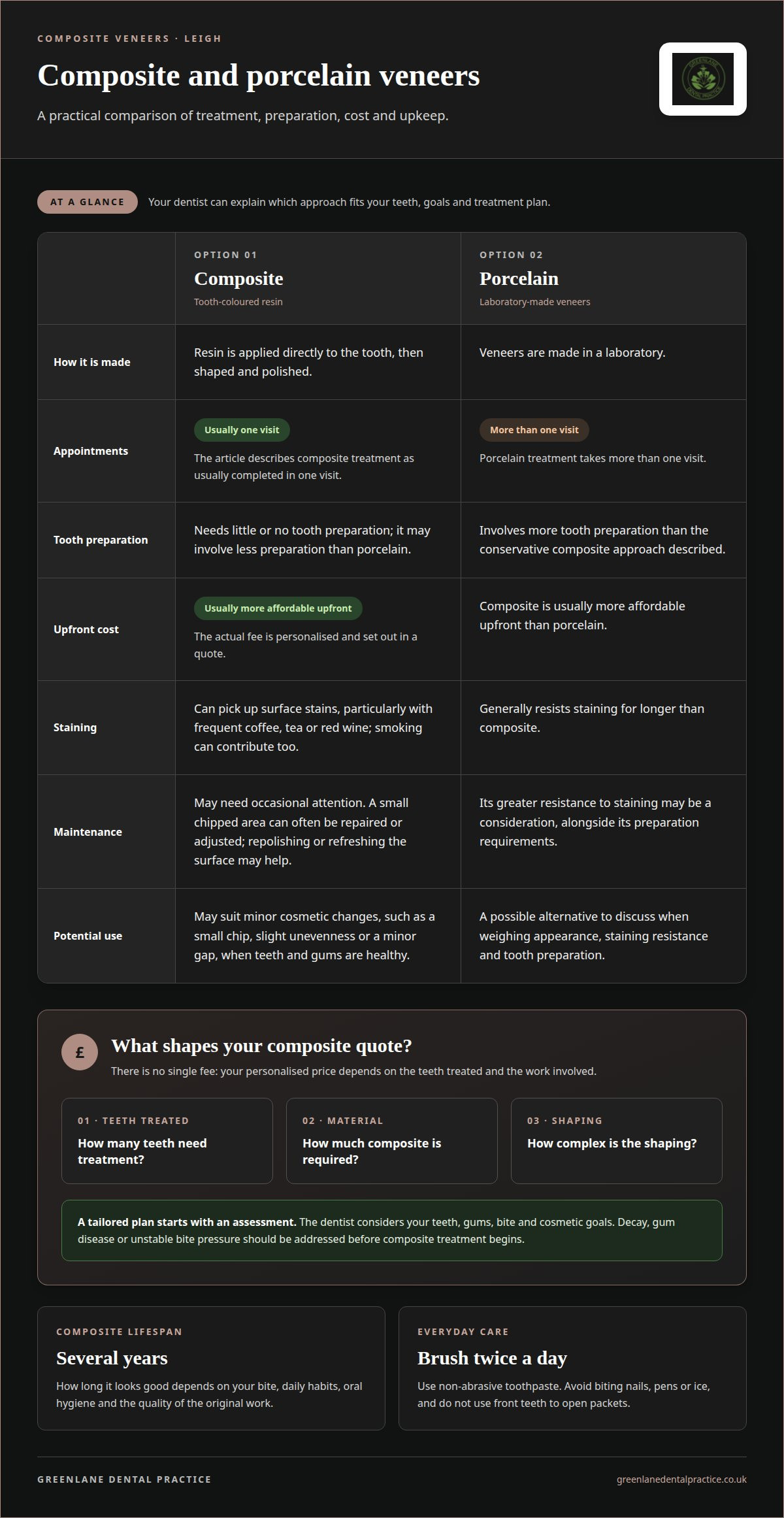
If you’re asking how much composite veneers cost in Leigh, the fee depends on the teeth treated and the work involved. Your case-specific price is provided in a quote. Factors include how many teeth need treatment, how much composite is required and the complexity of the shaping. A small repair to one chipped edge involves a different plan from reshaping several front teeth.
At a consultation, the dentist assesses your teeth, gums, bite and cosmetic goals. This helps determine whether bonding could address a concern such as a small gap, chipped edge or uneven shape. Composite veneers may suit minor imperfections, but decay, gum disease or unstable bite pressure should be addressed before treatment begins. The assessment informs a tailored plan rather than a one-size-fits-all fee.
Composite bonding uses tooth-coloured resin applied directly to the tooth, then shaped and polished. It’s usually completed in one visit and needs little or no tooth preparation. Porcelain veneers are made in a laboratory and take more than one visit; composite is usually more affordable upfront. Your treatment plan should explain which teeth will be treated, the intended changes and what the fee covers.
If spreading treatment costs matters, use your written quote to plan your budget and review any payment schedule provided. Don’t assume instalments are available. Consider the full planned treatment, not just the first appointment, and allow for possible upkeep over time. The consultation, assessment, proposed procedure and quote provide a clearer basis for deciding whether to proceed. For example, a single chipped tooth may need a more limited plan than several teeth with shape or spacing concerns.
Expected longevity
Composite veneers can look good for several years. Their lifespan depends on your bite, daily habits, oral hygiene and the quality of the original work. These factors interact: pressure concentrated on one edge may affect it differently from even contact across several teeth. When reviewing how the resin is holding up, a dentist considers your bite and the areas under greatest pressure.
You can help protect the result with consistent care and attention to changes. Notice whether an edge feels rough, the surface looks different or the shape no longer feels comfortable. These observations give your dentist useful details at a review. If a small area has chipped or worn, composite can often be repaired or adjusted rather than replacing the entire veneer.
Clenching or grinding can shorten the time composite remains intact by increasing pressure on its surface. Mention these habits during an assessment, even if you notice them only occasionally. The dentist can consider how your bite loads the treated teeth and whether a protective night guard may be advisable. This helps make the care plan relevant to your circumstances.
Consider the order of any other smile treatments, too. If you’re thinking about whitening or Invisalign aligners, discuss this before composite is matched and shaped. Timing matters because the planned appearance should work with the position and colour of your teeth. Your dentist can explain how the different goals fit into one treatment plan.
Longevity also informs budgeting. The exact fee depends on the teeth treated and planned work, with your case-specific figure set out in a quote. Ask how the plan accounts for future review or possible repair, so you understand what maintenance may involve. A personalised dental care plan can help you consider the treatment and its upkeep together.
Limitations and maintenance
Composite resin has practical limits after treatment. It can pick up surface stains, particularly with frequent coffee, tea or red wine; smoking can contribute too. Porcelain generally resists staining for longer, although porcelain veneers involve more tooth preparation. These differences can help you weigh appearance and upkeep when considering cosmetic dentistry.
Daily cleaning matters. Brush twice a day with a non-abrasive toothpaste to care for the material without unnecessarily wearing its surface. A gentle routine helps prevent plaque from collecting around the edges, where the resin meets natural tooth. Keep regular dental hygiene appointments and mention any roughness or colour change you notice while brushing.
Small habits can place extra pressure on treated teeth. Avoid biting your nails, pens or ice, and don’t use your front teeth to open packets. For example, cut packaging with scissors rather than gripping it between veneered teeth. These simple changes reduce avoidable strain on composite edges and help protect their shape.
Staining or wear doesn’t always mean the whole veneer needs replacing. A dentist can assess whether a small chipped area can be repaired, or whether repolishing or refreshing the surface would help. If you notice a chip, book an assessment rather than picking at the edge. The dentist can examine the resin and surrounding tooth together.
Choose care that fits your habits and expectations. If coffee or tea is part of your daily routine, consider how surface staining may affect maintenance over time. If you prefer porcelain’s greater resistance to staining, discuss its preparation requirements too. Composite may need occasional attention, so include possible repairs and polishing in your longer-term treatment planning.
What are the benefits and risks of composite veneers?
Composite veneers can suit people with healthy teeth and gums who want cosmetic changes. They may improve the appearance of a small chip, slight unevenness or a minor gap. Because the resin is built directly onto the tooth, the dentist can shape it to match the surrounding teeth. This approach may involve less tooth preparation than porcelain veneers.
That conservative approach has limits. Composite is not a substitute for treating dental decay or gum disease, and bite pressure can affect its suitability. If your front teeth meet heavily, resin may experience more strain. The dentist assesses tooth health and how your teeth meet before recommending cosmetic treatment. This helps distinguish a cosmetic concern from an issue that needs other care.
Composite can also be adjusted or repaired later. That flexibility may help if the shape needs refinement or a small area chips. However, repairability doesn’t mean the material stays unchanged: surface staining, wear and chips can affect its appearance. Consider your habits, such as frequent coffee or tea, alongside the look you hope to maintain.
Porcelain offers a different balance. It generally resists staining for longer, but requires more tooth preparation and is made in a dental laboratory. Composite may suit you if you value a less invasive approach for a modest change; porcelain may better match priorities around stain resistance. Neither choice suits every smile, so weigh tooth health, bite, maintenance and your desired appearance together.
Before deciding, ask the dentist to explain the planned changes, preparation involved and likely upkeep for your teeth. If you’re considering a subtle cosmetic adjustment, discuss composite bonding options as part of your assessment.
Greenlane Dental Practice: Invisalign Clear Aligners
Greenlane Dental Practice can help you consider cosmetic options in light of your smile goals. If tooth position affects the result you want, Invisalign Clear Aligners may be relevant; Porcelain Veneers and Professional Teeth Whitening offer other approaches to discuss. The suitable option depends on the concern you want to address, such as alignment, colour or tooth shape.
Use your assessment to discuss priorities, treatment choices and the care each option involves. This can help you decide whether to focus on a minor imperfection or consider a broader change to your smile.
For a personalised discussion of your options, contact Greenlane Dental Practice in Leigh or visit greenlanedentalpractice.co.uk.
Take the next step towards a smile plan that suits you
Your next step is to turn your preferred outcome into a practical plan. Before an appointment, note what you’d like to change, whether you’re focused on a small correction or a broader smile change, and what ongoing care feels manageable. This gives the conversation a clear starting point, centred on your priorities.
If you’re still considering how much composite veneers cost in Leigh, use a personalised discussion to understand the proposed treatment and how it fits your goals. Greenlane Dental Practice can help you explore cosmetic options, including aligners, veneers and whitening, in relation to the changes you’d like to make. You can contact Greenlane Dental Practice to start that conversation and take your next step with confidence.
Frequently Asked Questions
Can I spread the cost?
Whether you can spread the cost depends on the payment arrangements for your treatment. Use your written quote to plan for the full amount, and budget for instalments only if a payment schedule is offered. Before agreeing to treatment, make sure you understand when payments are due and what work the quoted amount covers.
Composite or porcelain?
Choose based on your priorities, tooth condition and willingness to maintain the result. Composite can be shaped directly onto teeth and is usually more affordable upfront, while porcelain generally resists staining for longer. Porcelain veneers are made in a laboratory and involve more tooth preparation. For example, discuss composite if you want a repairable option, and porcelain if stain resistance matters most to you.
What are composite veneers?
Composite veneers are made from tooth-coloured resin applied to the front of teeth, then shaped and polished by a dentist. The material can change the appearance of a chipped edge, small gap or uneven shape. Unlike a removable cover, it is built onto the tooth. The dentist assesses your teeth and bite to decide whether this cosmetic approach suits your needs.
What is the average cost of composite veneers per tooth in Leigh, Greater Manchester?
There isn’t one per-tooth average that represents every treatment in Leigh. The fee depends on the tooth’s condition, the amount of resin and shaping required, and the complexity of the planned change. Your case-specific price is provided in a quote. A single tooth with a small chip may need a different plan from one requiring more extensive reshaping.
How much do composite veneers cost for a full set in Leigh?
A full-set fee depends on which teeth are included and the work planned for each one. “Full set” can describe different treatment scopes, so it helps to identify the teeth and changes you have in mind. Ask for the plan to clearly show which teeth are included, so you can understand what the total covers.
Which dentists in Leigh offer composite veneers and what are their prices?
Greenlane Dental Practice offers Composite Bonding in Leigh. The fee depends on the treatment plan, including the teeth involved and the work needed; Rather than relying on a broad price comparison, consider whether the proposed treatment addresses your concern and whether the plan explains the intended changes and care involved.