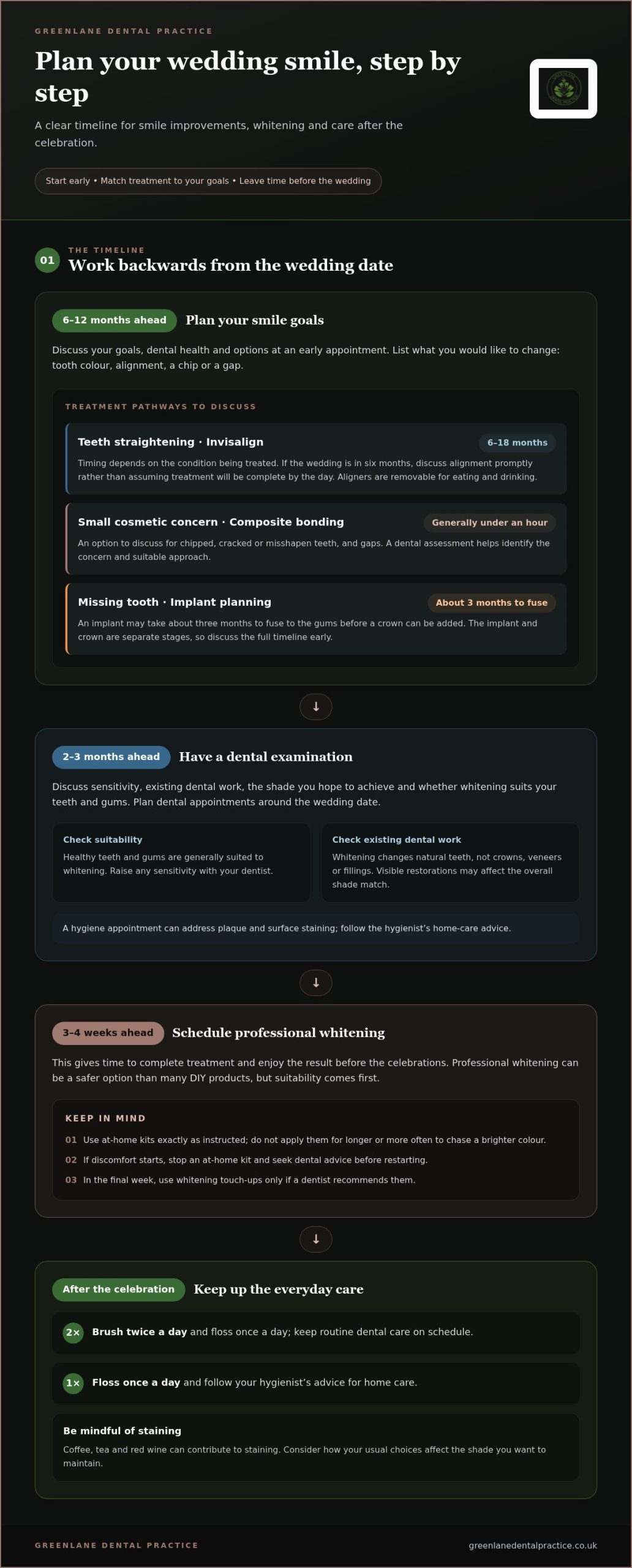
To get a brighter smile for my wedding, start planning smile improvements 6–12 months ahead, and arrange a dental examination around 2 to 3 months before the day. Professional teeth whitening is generally best scheduled 3 to 4 weeks before the wedding, giving you time to plan around your own dental needs. A brighter smile doesn’t have to be just for the photographs; everyday care can help you maintain it afterwards.
It’s natural to focus on the wedding date, but the weeks and months that follow matter too. This guide explains when to plan whitening and other smile improvements, what to consider if your timeline is tight, and how to care for your smile after the celebration. You’ll also learn how brushing, flossing and mindful choices around staining foods and drinks can help keep your smile looking bright.
Key Takeaways
- Match smile improvements to your wedding plans, allowing enough time for treatments such as teeth straightening or repairing a chipped tooth.
- Consider whether whitening suits your teeth and gums, and remember it changes natural teeth rather than crowns, veneers or fillings.
- Plan dental treatment around your wedding date so you have time to complete care and settle into your results.
- Keep your smile bright after the celebration with consistent oral care and thoughtful habits around foods and drinks that can stain teeth.
1. When should you start planning your smile makeover?
Start planning your wedding smile 6–12 months before the date. This gives you time to discuss your goals, dental health and treatment options before setting a schedule. At an early appointment, note what you’d like to change: tooth colour, alignment, a chip or a gap. A clear priority list helps focus the plan, whether you want a brighter shade or a more even-looking smile. Couples often consider whitening because they want to feel confident in close-up photographs and during the celebrations.
Teeth straightening needs an earlier start than whitening. Invisalign treatment can take between six and 18 months, depending on the condition being treated. That range means a couple planning their wedding in six months should discuss alignment promptly, rather than assume it will be complete by the day. The dentist assesses the position of the teeth and the change needed, then considers how the treatment timeline fits the wedding date. Invisalign aligners are removable for eating and drinking, which can make them easier to manage around meals and events.
For a small cosmetic concern, composite bonding may be an option to discuss. It can improve the appearance of chipped, cracked or misshapen teeth, as well as gaps between teeth. Treatment is generally completed in under an hour. A chipped front tooth, for example, may need a different approach from a crooked smile caused by overcrowding or an overbite. A dental assessment can identify the concern before you choose a treatment, rather than treating every change as a whitening issue.
Plan professional teeth whitening nearer the wedding, generally 3 to 4 weeks beforehand. This leaves time to complete the treatment and enjoy the result before the celebrations. Whitening changes the colour of natural teeth, so crowns, veneers and fillings won’t lighten in the same way. Mention existing dental work during planning, especially if it’s visible when you smile. In the weeks before the wedding, coffee, tea and red wine can contribute to staining, so consider how your usual choices affect the shade you’re aiming for.
2. Is Professional Teeth Whitening Right Before Your Wedding?
Professional whitening can be a safer option than many DIY products, but suitability comes first. A good candidate generally has healthy teeth and gums. At a dental examination, discuss sensitivity, existing dental work and the shade you hope to achieve. This helps you understand whether whitening suits your needs and wedding plans.
Book the examination around 2 to 3 months before the wedding, then plan professional whitening for 3 to 4 weeks beforehand. This gives time to consider the treatment plan before the celebration. Whitening changes natural tooth enamel, not veneers, crowns or fillings. If visible restorations sit beside natural teeth, discuss how a shade change could affect the overall appearance of your smile.
Professional care and at-home whitening differ in the level of guidance. A dentist can assess your oral health and advise on a suitable approach. Use at-home kits exactly as instructed. Don’t extend the application or use the product more often to chase a brighter colour. Overdoing a DIY routine can cause problems close to the wedding, when there’s less time to adjust your plans.
To reduce sensitivity during whitening, tell your dentist if your teeth already feel sensitive, and follow their guidance and the product instructions carefully. If discomfort starts, stop using an at-home kit and seek dental advice before restarting. In the final week, use whitening touch-ups only if a dentist recommends them. A last-minute change leaves little time to discuss sensitivity or reconsider your approach.
Whitening works on natural teeth, so it won’t change the colour of veneers. For example, if a veneer is visible beside teeth you want to brighten, raise this during your consultation. An examination about 2 to 3 months ahead also leaves room to discuss hygiene and whether whitening is suitable. A dental examination can help you plan around your oral health and wedding timeline.
3. How can I maintain my bridal smile after the wedding?
Before the wedding, keep routine dental care on schedule, brush twice a day and floss once a day. Book a hygiene appointment for a professional clean, then follow the hygienist’s instructions for home care. These steps support healthy gums and help you feel prepared for wedding photos. If you’re reviewing your routine, note any bleeding, sensitivity or areas that are difficult to clean before your appointment.
Plan dental treatment around the wedding date, especially if your goals involve more than a brighter colour. Write down your priorities, such as replacing a missing tooth or improving your smile in photographs. A dental examination can help distinguish routine care from cosmetic dentistry and identify treatments that need more time. Discuss the order of appointments early, so one treatment does not disrupt another close to the celebration.
A hygiene appointment can also help you prepare for photographs by addressing plaque and surface staining. Ask about suitable cleaning and home-care steps, particularly if you have tender gums or areas that are hard to reach. Someone with crowded teeth, for example, may benefit from tailored brushing advice, while a person with a missing tooth may want to discuss replacement options. Keep following your usual brushing and flossing routine between appointments.
Dental implants need especially careful planning. A dental implant may be one option for replacing a missing tooth. It can take about 3 months to fuse to the gums before a crown can be added, so this treatment needs to be considered well ahead of wedding plans. If you’re thinking about an implant, raise it during an early dental appointment and discuss how its stages fit your calendar. A missing front tooth may affect wedding photos, but the implant and crown are separate stages. Allowing time for both helps you plan around the treatment rather than leaving decisions until the final weeks.
4. Maintaining a bright smile after the wedding
Your wedding smile can last beyond the photographs, but daily habits matter. Professional teeth whitening results may last several months to a year, depending on habits and oral hygiene. Coffee, tea and red wine contain tannins that can discolour teeth. Caffeine, sugary drinks, smoking and certain medications can also contribute to staining. If you’re hoping to get a brighter smile for my wedding, consider which of these choices feature in your routine and how you might limit their contact with your teeth afterwards.
Keep the basics consistent: brush twice a day and floss once a day. After coffee, tea or red wine, rinse your mouth with water, brush well when practical, or chew sugar-free gum. These steps can reduce the risk of staining. If you sip tea throughout the day, for example, rinsing after a cup is more useful than waiting until bedtime. Good dental care supports oral health as well as the colour you see in the mirror.
Think of maintenance as a routine, not a quick fix. Everyday choices can affect tooth colour, so note when staining becomes more noticeable and adjust your habits. Keep regular dental appointments and follow personalised hygiene advice. If you’ve had whitening, ask how your oral-care routine can help maintain the results. If you’ve had braces or another smile treatment, follow the instructions provided for ongoing care. Consistency can help you feel confident long after the wedding.
Whitening only changes natural teeth; veneers, crowns and fillings retain their existing colour. If you have visible dental work, discuss the difference at an appointment before arranging future whitening. A dentist can also help identify whether a change in colour needs routine care or a closer look. If you still want to get a brighter smile for my wedding, discuss your long-term goals and ongoing care at a dental appointment.
Greenlane Dental Practice: Invisalign Clear Aligners
Greenlane Dental Practice offers Invisalign Clear Aligners for people considering straighter teeth as part of their wedding smile plan. If alignment is one of your goals, an early discussion can help you understand how treatment may fit your timeline. Invisalign treatment can take between six and 18 months, depending on the condition being treated, so starting well ahead of the wedding gives you more room to plan.
Your goals may involve more than alignment. Greenlane Dental Practice in Leigh offers Professional Teeth Whitening, Porcelain Veneers and Dental Implants, with each option addressing different concerns. A dental appointment can help you talk through what you’d like to change and which treatment best fits your smile and plans.
To discuss Invisalign Clear Aligners and your wedding smile goals, contact Greenlane Dental Practice in Leigh.
Make your next step a confident one
Your wedding can be a starting point for caring for your smile, not the finish line. Think about what you’d like to feel more confident about in everyday life, whether that’s tooth colour, alignment or the shape of your smile. If you want to get a brighter smile for my wedding, a conversation about your goals can also help you consider what feels right beyond the celebrations.
Greenlane Dental Practice in Leigh offers Invisalign Clear Aligners, Porcelain Veneers and Professional Teeth Whitening. Each addresses different smile goals, so the best next step is to discuss what you’d like to change and how it fits your wider dental care. Bring questions about treatment, timing and maintaining your smile to your appointment.
Contact Greenlane Dental Practice to talk about your smile goals. A thoughtful plan can help you move forwards feeling comfortable and confident.
Frequently Asked Questions
How can I maintain my bridal smile after the wedding?
Keep up with routine dental care and notice changes in your teeth or gums after the celebrations. If your smile seems darker despite your usual care, consider whether coffee, tea, smoking or a change in medication might be contributing. Mention the change at your next dental appointment. A dentist can assess your teeth and gums and help you decide whether you need tailored advice or further care.
Is Professional Teeth Whitening Right Before Your Wedding?
Whitening may suit you if your teeth and gums are healthy, but plan it with a dentist rather than trying a new approach at the last minute. Whitening affects natural teeth, not veneers, crowns or fillings, so visible restorations can remain a different shade. Follow all instructions for at-home products, and only use a final-week touch-up if your dentist recommends it.
Will teeth whitening make a noticeable difference?
Whitening can make natural teeth look brighter, though the visible change depends on their starting shade and the cause of discolouration. Surface staining from tea, for example, may respond differently from colour changes linked to certain medicines. Existing veneers, crowns and fillings won’t whiten alongside natural teeth, so consider how restorations appear in your smile before choosing treatment.
When should you start planning your smile makeover?
Begin planning 6–12 months before the wedding, particularly if you’re considering Invisalign, which can take six to 18 months depending on the condition being treated. For whitening, arrange a dental examination around 2 to 3 months before the date. This gives you time to discuss oral health, treatment suitability and your desired result before settling on the schedule.
Which treatments are available?
Options include Invisalign Clear Aligners, Porcelain Veneers, Professional Teeth Whitening, Dental Implants and Composite Bonding. Each addresses different concerns: alignment, tooth appearance, colour or missing teeth. Routine dental examinations and hygiene appointments support ongoing care. If you live in Leigh, Manchester, an appointment at Greenlane Dental Practice can help you explain your priorities and discuss which options suit your smile.
Why choose bridal smile treatment?
Planning dental treatment for your wedding can give you time to address a concern that affects how you feel about smiling in photographs or meeting guests. It also lets you consider oral health alongside appearance, rather than focusing on colour alone. Start with the change that matters most to you, then discuss suitable options and timing with a dental professional.