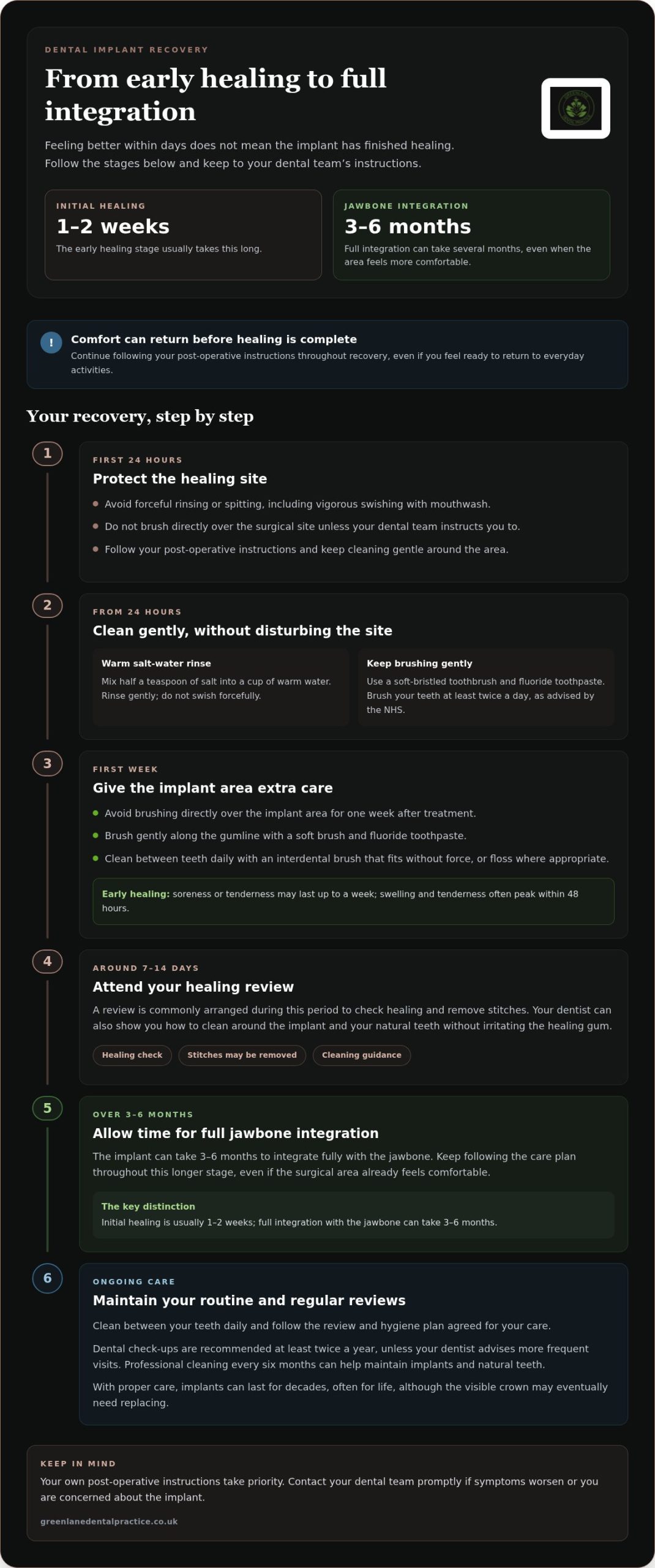
Feeling better within days doesn’t mean an implant has finished healing. Initial healing usually takes 1-2 weeks, while full integration with the jawbone can take 3-6 months. Knowing how to look after dental implants during this longer process helps you protect the healing site.
It’s natural to wonder how long recovery will take and whether tenderness or swelling is normal. Recovery involves more than waiting: gentle cleaning, following your post-operative instructions and choosing suitable foods all help care for your mouth as it heals.
Learn what to expect during recovery, how to keep the area clean and which foods to choose in the early days. We’ll also explain how healing progresses, when to gradually return to firmer foods and how everyday routines can help protect your implants over time.
Key Takeaways
- Initial healing usually takes 1-2 weeks, but full integration with the jawbone can take 3-6 months. Swelling, tenderness and bruising may be part of the early recovery process.
- Keep your mouth clean as the site heals, following your dental team’s instructions and brushing your teeth at least twice a day, as advised by the NHS.
- Smoking can increase the risk of implant failure and gum or bone problems; avoiding it for at least two months after surgery helps protect healing.
- Choose soft, cool foods for the first few days, then gradually reintroduce harder foods as recovery progresses.
1. Expected soreness, swelling, bleeding and bruising
Some soreness, tenderness and light bleeding can follow implant surgery. Minor bleeding may occur during the first 24-48 hours, while discomfort usually lasts up to a week. Swelling and tenderness often peak within 48 hours; facial swelling can peak at 48-72 hours. Mild bruising of the gums or skin usually settles within a week.
If bleeding starts, sit upright and bite gently on gauze for about an hour after surgery. If bleeding continues, apply firm pressure over the wound for at least 30 minutes. Replace the gauze and bite down for another 30 minutes if needed. Bleeding that still won’t stop needs urgent attention at your nearest A&E.
For swelling, apply a wrapped ice pack to the outside of your cheek for 10 minutes each hour during the first six hours. Keep the pack off your skin, and stop if it feels uncomfortable. Take prescribed or suitable over-the-counter pain relief before the anaesthetic wears off, then follow the instructions you were given. Regular painkillers are recommended for the first 48 hours after treatment.
Protect the forming clot during the first 24 hours. Avoid forceful rinsing or spitting, including vigorous swishing with mouthwash. From 24 hours after surgery, rinse gently with warm salt water: mix half a teaspoon of salt into a cup of warm water. Gentle cleaning helps manage bacteria, but don’t brush directly over the surgical site unless instructed.
What are the signs of infection or implant failure, and when should you seek urgent care? Pain or swelling that worsens instead of settling, persistent bleeding or movement around the implant needs prompt dental assessment. If bleeding does not stop despite applying pressure, go to your nearest A&E.
These steps can support recovery, but your own post-operative instructions take priority. Keep the area clean while protecting the healing site, and contact your dental team promptly if symptoms worsen or you’re concerned about the implant.
2. How long does it take for dental implants to heal?
Healing has an early stage and a longer integration stage. Initial healing usually takes 1-2 weeks, but the implant can take 3-6 months to integrate fully with the jawbone. You may feel ready to resume daily activities before that deeper process is complete. Follow your post-operative instructions throughout recovery, even as the area feels more comfortable.
Keep your routine gentle around the surgical site. The NHS advises brushing your teeth at least twice a day; avoid brushing directly over the implant area for one week after treatment. From 24 hours after surgery, gentle warm salt-water rinses can help keep the mouth clean. Don’t scrub the site or rinse forcefully, as this may irritate healing tissue.
For daily cleaning, use a soft-bristled toothbrush and fluoride toothpaste, brushing gently along the gumline. Clean between your teeth daily with an interdental brush that fits without force, or floss where appropriate. Your dentist can show you how to clean around the implant and natural teeth without catching or irritating the healing gum.
A review is commonly arranged 7-14 days after treatment to check healing and remove stitches. After recovery, regular reviews and hygiene appointments help spot plaque or gum changes early. Dental check-ups are recommended at least twice a year, unless your dentist advises more frequent visits. Professional cleaning every six months can help maintain implants and natural teeth.
Does NHS dentistry cover implant check-ups or maintenance in the UK? NHS dental care can include routine examinations, but there is no standard NHS implant-maintenance schedule. Brush twice daily and follow the review and hygiene plan agreed for your care.
Which toothbrush, toothpaste and interdental brushes are safe to use? Choose a soft brush, fluoride toothpaste and an interdental brush that fits gently without pressure. With proper care, implants can last for decades, often for life, although the visible crown may eventually need replacing.
Regular hygiene appointments help keep the implant area clean and support ongoing checks.
3. Protecting implants from smoking, grinding and impact
Smoking can increase the risk of implant failure and gum and bone problems around the implant. Avoid smoking for at least two months after surgery to protect the healing area. If stopping feels difficult, speak with your GP or a stop-smoking service about support. Protecting the implant during this early period is an important part of recovery.
Avoid alcohol for at least 72 hours after the procedure. Follow the aftercare instructions you received, and don’t restart drinking simply because discomfort has eased. Healing continues beneath the gum after the surgical site feels more comfortable. If your dental team gave you different instructions about alcohol or medication, follow their advice for your treatment.
Grinding or clenching can place repeated pressure on your teeth and implants. If you notice yourself clenching during the day, relax your jaw and keep your teeth apart. Tell your dentist if you grind at night, wake with jaw discomfort or feel strain on your teeth. They can assess your bite and discuss whether a protective mouthguard is suitable.
Protect your mouth from direct knocks, especially during activities where impact is possible. A properly fitted sports mouthguard can help cushion a blow. Ask your dental team which type is right for your teeth and implant. Don’t test the implant by biting hard objects or repeatedly pressing it with your tongue or fingers, as this adds unnecessary force around the healing site.
Keep your usual cleaning routine gentle around the implant, and avoid smoking even if the rest of your mouth feels normal. If you have concerns about pressure, a knock or ongoing discomfort, contact your dental team for advice. Smoking cessation, avoiding alcohol during the recommended period and reducing strain all help protect the implant while it heals.
4. Foods and nutrients that support implant health
For the first few days after surgery, choose soft, cool foods that need little chewing. Try yoghurt, porridge cooled before eating, scrambled eggs, mashed vegetables or smooth soups. These options can make eating more comfortable while reducing pressure near the healing site. Let hot foods cool, and chew away from the implant where possible.
Choose nourishing foods from different food groups as your appetite returns. Soft eggs, mashed beans or lentils can provide protein, while yoghurt is another easy-to-eat option. Add well-cooked vegetables or mashed fruit for variety. These are practical meal ideas, not a substitute for brushing or following your dentist’s care instructions.
Texture matters as much as ingredients. During early healing, avoid crunchy foods such as nuts, crusty bread and raw carrot near the surgical area. As your mouth settles, gradually reintroduce firmer foods. Most patients return to a normal diet within a couple of weeks, introducing harder foods gradually after implant surgery.
For the first 24 hours after surgery, don’t rinse or spit forcefully, as this can disturb the healing site. After that, gentle warm salt-water rinses can help clear food debris. Brush your natural teeth as instructed, taking care around the implant; once your dentist says it’s suitable, clean between teeth with correctly sized interdental brushes.
Plan easy meals before treatment, such as cooled soup with mashed beans or yoghurt with soft fruit. Keep a drink nearby and avoid chewing directly on the implant while tenderness remains. Food supports everyday nourishment, while careful cleaning and follow-up appointments remain essential parts of implant care. For help planning care around your dental implant treatment, arrange an appointment with the practice.
Greenlane Dental Practice: Invisalign Clear Aligners
Greenlane Dental Practice provides Dental Implants for people looking to replace missing teeth. If you’re considering treatment or already have an implant and want advice on caring for it, a conversation with a dental professional can help you understand the process and suitable next steps.
Long-term care includes daily cleaning and regular dental reviews. Your dentist can assess your gums, check the implant and visible crown, and discuss a hygiene routine that suits your needs. If you’re exploring tooth replacement, Greenlane Dental Practice can talk you through its Dental Implants service and what treatment involves in Leigh.
For personalised guidance on dental implants, contact Greenlane Dental Practice in Leigh.
Make implant care part of your long-term routine
Healing is one stage of living comfortably with an implant. Keep your oral care consistent and bring questions to your dental appointments, especially if something changes or a routine feels difficult. Small, steady habits can help you care for your mouth with confidence over time.
Learning how to look after dental implants is also an opportunity to consider your wider dental goals. Greenlane Dental Practice in Leigh offers Invisalign Clear Aligners, Porcelain Veneers and Professional Teeth Whitening, alongside dental care tailored to your needs. To discuss implant care or an appropriate next step, contact the practice.
Contact Greenlane Dental Practice to talk through your dental care. A considered next step can help you feel at ease and supported.
Frequently Asked Questions
How long does it take for dental implants to heal?
Gum healing and integration with the jawbone happen on different timelines. The surgical area’s initial healing usually takes 1-2 weeks, whilst the implant’s integration can take 3-6 months. You might feel ready for everyday activities before integration is complete. Keep following your care instructions during that interval, and attend planned reviews so healing can be assessed at each stage.
How do I keep my implant teeth looking white?
Brush gently twice daily and clean between your teeth to limit plaque and deposits. The NHS advises people with dental implants to brush at least twice a day. If you’re concerned about the shade of your implant crown, ask your dentist to assess it alongside your natural teeth before choosing whitening. Your dentist can discuss how your existing restoration may affect your desired result.
How do you clean under an All-on-4 or All-on-6 bridge?
Clean beneath the bridge at least once a day, concentrating on the gap where food and plaque can collect. An All-on-4 or All-on-6 bridge is fixed to the implants, so you don’t remove it at home for cleaning. Ask your dental team to demonstrate a suitable cleaning technique for your bridge’s shape, and use the method they recommend consistently.
How often should dental implants be professionally checked and cleaned?
Plan dental check-ups at least twice a year, unless your dentist recommends more frequent visits. Professional cleaning every six months helps maintain implants and natural teeth. Your review schedule may need to account for gum health, plaque build-up and the condition of the implant restoration. Keep appointments even when the implant feels comfortable, since changes around it may not cause obvious symptoms at first.
How long does healing take after dental implant surgery, and how should I care for the site?
Initial healing usually takes 1-2 weeks, while full integration with the jawbone takes 3-6 months. For how to look after dental implants during recovery, follow your post-operative instructions, keep the rest of your mouth clean and avoid disturbing the surgical area. Contact your dental team if symptoms worsen or the implant feels loose, rather than trying to adjust it yourself.
What foods and drinks should I avoid after dental implant surgery, and for how long?
Choose soft, cool foods for the first few days, such as yoghurt, scrambled eggs or mashed vegetables. Avoid alcohol for at least 72 hours after the procedure. Reintroduce firmer foods gradually; most patients return to a normal diet within a couple of weeks. Avoid chewing hard foods directly over the healing area until you can do so comfortably and your care instructions allow it.