Six months is a common interval for a dental hygienist appointment, but it isn’t right for everyone. If you’re wondering how often you should see a dental hygienist, your gum health and risk of future problems matter. A history of gum disease may mean appointments every three to four months. More visits aren’t automatically better: the aim is to choose an interval that suits your oral health.
It’s understandable to assume everyone needs the same routine, especially when six-monthly visits are often recommended. But your needs can change over time. Previous gum problems or ongoing tartar build-up may call for a different schedule.
This guide explains how oral health, personal risk and a history of gum disease can affect appointment timing. You’ll also learn how a hygienist visit differs from a dental check-up, and why your care schedule may not match someone else’s.
Key Takeaways
- Hygienist visits are often six-monthly, but gum health and personal risk can make a different interval more suitable.
- According to the NHS, dental check-ups can be spaced from 3 months to 2 years, depending on oral health and future risk.
- A history of gum disease may call for more frequent hygiene appointments to help maintain progress and monitor gum health.
- A dental check-up and a hygienist appointment have different purposes, so one doesn’t automatically replace the other.
- Understanding what affects your appointment schedule can help you discuss a routine that fits your oral health.
Dental check-up frequency based on oral health and risk
Dental check-up timing depends on your oral health and risk of future problems, not one fixed timetable. Hygienist appointments are related, but focus on cleaning and gum care.
Oral health and risk factors
Oral health and risk factors are the signs and habits that influence how closely your mouth needs monitoring. Healthy gums and consistent home care may support longer gaps, whilst recurring gum concerns or tartar build-up can call for closer attention. The NHS says dental check-ups in the UK can be spaced from 3 months to 2 years, depending on oral health and future risk. That range shows why a single six-month schedule doesn’t suit everyone.
Hygienist appointments may be more frequent when your gum health or deposits need regular attention. There isn’t one interval that is “too frequent” for everyone; a useful schedule depends on what needs monitoring and cleaning. Appointments without a clear oral-health need may take time without offering the same value as a tailored routine.
Your needs can change. A new gum concern or changes to your home-care habits may affect an interval that previously worked well. Plaque and tartar build-up, gum condition and how thoroughly you can clean all help shape the decision.
Dental check-ups and hygienist appointments
A dental check-up and a hygienist appointment are separate visits with different purposes. At a check-up, the dentist examines your teeth, gums and mouth. A hygienist appointment focuses on professional cleaning and supporting gum care. Knowing the difference helps you avoid treating one appointment as a substitute for the other.
For example, a clean feeling after a hygiene visit doesn’t replace the dentist’s examination. Equally, a check-up doesn’t automatically include the same focused cleaning. Keeping both appointments in your routine supports different aspects of oral care, with timing guided by your needs.
For people under 18, the check-up interval has a clear limit. According to the NHS, there should be no more than 1 year between dental check-ups. Children’s check-up timing should therefore stay within that interval, even when their teeth appear healthy. A hygienist appointment does not replace this dental examination.
What are the risks of going too long without a dental hygienist visit? Plaque and tartar can accumulate, and early gum changes may go unnoticed between appointments. Ongoing concerns can become harder to manage if they aren’t identified and addressed promptly.
How can I maintain oral hygiene between hygienist appointments? Brush twice daily with fluoride toothpaste and clean between your teeth as part of your routine. Limit frequent sugary or acidic foods, which can contribute to plaque build-up, and keep your dental check-ups within the interval recommended for your oral health.
How Often Should You See a Dental Hygienist?
A six-monthly visit is a common starting point, not a universal rule. If you’re asking, “how often should I see a dental hygienist?”, your gum health, tartar build-up and history of oral-health problems all matter.
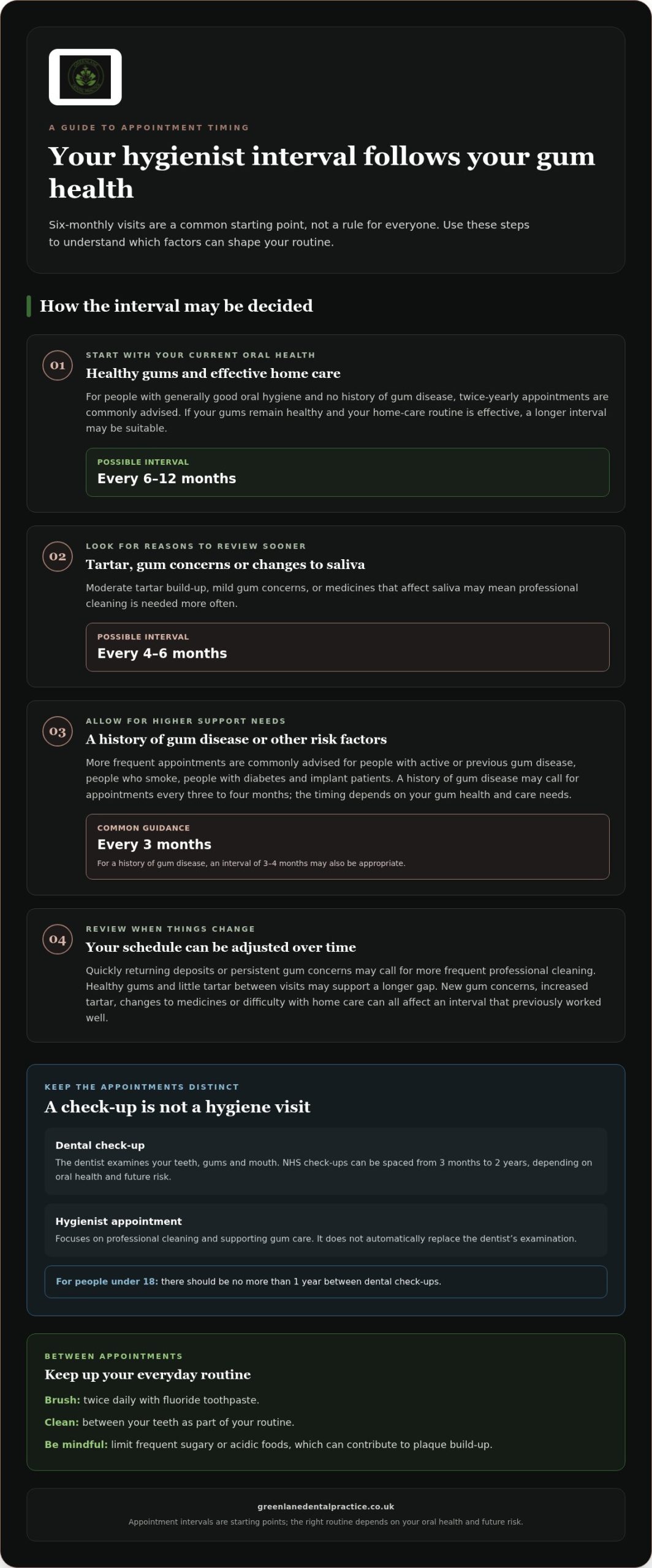
For people with generally good oral hygiene and no history of gum disease, twice-yearly appointments are commonly advised. If your gums remain healthy and your home-care routine is effective, visits every 6-12 months may be suitable. These intervals offer useful guidance, but they don’t mean everyone needs exactly the same schedule.
A shorter interval can provide closer support where specific risk factors apply. Appointments every three months are commonly advised for people with active or previous gum disease, smokers, people with diabetes and implant patients. People with moderate tartar build-up, mild gum concerns or medicines that affect saliva may need visits every 4-6 months.
These timings are starting points. If your gums stay healthy and little tartar collects between visits, a longer gap might suit your ongoing care. If deposits return quickly or gum concerns persist, more frequent professional cleaning can help address those needs. Inconsistent brushing or cleaning between teeth may also mean you need more support.
Routine dental check-ups follow a separate timetable. In the UK, people with good oral health may have check-ups every 12-24 months. That differs from the common six-month interval for a hygienist visit. Your dentist recommends the next check-up date based on your oral health, so don’t assume both appointments should happen together.
Keeping the schedules distinct helps you understand the purpose of each appointment. A check-up assesses your teeth, gums and mouth, while a hygiene visit focuses on professional cleaning and gum care. If your dentist recommends a longer gap between check-ups, that doesn’t automatically mean your hygiene appointments should follow the same pattern.
The answer to “how often should I see a dental hygienist” can change as your oral health changes. A new gum concern, increased tartar or medication affecting saliva may alter an interval that previously worked well. Share these changes at your next appointment, along with any difficulty keeping up with home care. This gives the dental team useful context when reviewing your routine.
If professional cleaning is part of your oral-care routine, you can book a hygiene appointment.
Gum disease history and recurrence
A past diagnosis of gum disease can affect how often you need a hygiene appointment, even after treatment. Gingivitis and periodontitis can require ongoing attention, so completing treatment doesn’t always mean returning to a routine intended for people with no history of gum disease. Regular professional cleaning helps maintain treatment gains and gives the dental team opportunities to look for early changes.
People previously treated for gingivitis or periodontitis are often advised to attend hygiene appointments every three to four months. This closer schedule supports ongoing care after treatment, rather than leaving a long gap before the next review. For example, someone whose gum disease has been treated may need a different maintenance routine from someone with healthy gums and no history of disease.
Follow-up has a practical purpose: early signs of gum disease and other oral-health issues can be identified during hygiene visits. A hygienist can also give tailored advice on cleaning areas that are difficult to reach at home. This helps you see where your routine is working and where extra attention may help.
Follow the interval recommended for your gum health, and attend each planned appointment. If you miss a visit, arrange another rather than treating it as a reason to abandon ongoing care. A return of symptoms or a new concern between appointments deserves attention, particularly if you have previously been treated for gum disease.
Home care remains important between professional cleans. Brush twice daily with fluoride toothpaste, and clean between your teeth as part of your regular routine. These steps help manage plaque between appointments; they don’t replace professional cleaning or any monitoring needed after gingivitis or periodontitis.
Some people need a more in-depth clean because of gum disease, sensitive teeth or another need for extra attention. The appropriate approach depends on what the hygienist finds and your comfort during treatment. Tell them if your teeth feel sensitive or a particular area is difficult to clean, so the appointment can address your concerns.
Maintenance is ongoing, not a one-off step. If your gums remain stable after treatment, your dental team can review whether the current three- to four-month interval still suits your needs. If concerns persist, regular visits and focused home care provide opportunities to keep supporting your gum health.
Note your next appointment date and the home-care advice you receive. Bringing that information to your next visit helps you discuss what has changed since the previous clean, such as sensitivity or difficulty cleaning a particular area. This makes each follow-up more useful for maintaining progress after gum disease treatment.
What happens during a dental hygienist appointment in the UK?
A dental hygienist appointment focuses on cleaning and supporting your gum health. The care you receive depends on your mouth, previous treatment and any concerns you share. Sensitive teeth or a history of gum disease, for example, can affect the approach. Mention discomfort or questions before treatment begins so the hygienist understands what matters to you.
The appointment often starts with a conversation about your oral health and home-care routine. You might discuss bleeding gums, sensitivity, medication affecting saliva or difficulty cleaning around an implant. These details help the hygienist understand what has changed since your last visit and which areas may need closer attention.
The hygienist then assesses your teeth and gums, including areas where plaque or tartar has collected. They may explain what they find and how it relates to your brushing and between-teeth cleaning. For instance, deposits near the gumline may prompt advice on adjusting your technique in that area.
Professional cleaning is central to many hygiene appointments. The hygienist removes plaque and hardened deposits from tooth surfaces, including places that can be difficult to reach at home. The method and level of cleaning depend on your needs. A more in-depth clean may suit people with gum disease, sensitive teeth or areas needing extra attention.
During cleaning, tell the hygienist if a particular area feels uncomfortable or sensitive. This can help them adapt their approach and explain what they’re doing. You can also ask for a pause or clarification; understanding each step can make the appointment feel more manageable.
Advice is another practical part of the visit. Your hygienist may demonstrate brushing or cleaning between your teeth, then suggest ways to make your routine more effective. If you struggle to clean around an implant or reach your back teeth, for example, explain the difficulty. Specific guidance can help you focus your efforts between appointments.
Before you leave, make sure you understand any recommendations and your planned follow-up. If the hygienist has identified gum concerns or recurring deposits, ask what to look out for at home. A hygiene appointment supports cleaning and preventive care, while a dental check-up is a separate examination of your teeth, gums and mouth by a dentist.
What is the difference between a dental check-up and a hygienist appointment?
A dental check-up and a hygienist appointment have different roles in maintaining your oral health. At a UK check-up, the dentist examines your teeth, gums and mouth. A hygienist appointment focuses on professional cleaning and supporting gum care. For example, a check-up assesses your overall oral health, while a hygiene visit addresses plaque and tartar that brushing may not remove.
The dentist’s examination looks for changes that may need assessment or treatment. Mention concerns such as a sore tooth, bleeding gums or sensitivity so they can be considered during the check-up. If the examination identifies a problem, such as decay, further treatment may need a separate appointment. A clean alone doesn’t replace this assessment.
A hygienist visit centres on cleaning and practical prevention. The hygienist removes plaque and hardened deposits, then may offer advice about brushing and cleaning between your teeth. If deposits gather around a difficult-to-reach area, for instance, they can help you focus your home-care routine there. The appointment supports daily care, but it isn’t a dental examination by a dentist.
It’s useful to keep both types of appointment in mind, even if they happen at different times. A dentist may recommend a check-up interval based on your oral health, while hygiene visits address cleaning needs. The schedules don’t have to match. A longer gap between check-ups, for example, doesn’t automatically mean you need to wait just as long for professional cleaning.
Neither appointment covers every need. A hygienist can clean and support gum care, but dental treatment such as a filling or tooth removal requires a separate appointment. Likewise, a dentist’s examination doesn’t automatically include the same focused cleaning as a hygiene visit. Knowing the difference helps you understand which appointment addresses a particular concern.
Before you leave a check-up or hygiene visit, make sure you understand the next step. Ask whether the advice concerns cleaning at home, a follow-up hygiene appointment or separate dental treatment. A recommendation to improve cleaning around the gumline, for example, differs from advice to arrange treatment for a tooth. Clear next steps help you keep each part of your care organised.
If you’re due for professional cleaning, book a hygiene appointment to support your gum care and home routine.
Greenlane Dental Practice: Invisalign Clear Aligners
Greenlane Dental Practice offers Invisalign Clear Aligners for people considering a discreet way to straighten their teeth. If you’re exploring tooth alignment alongside regular oral care, this is a separate treatment decision from how often you need hygiene appointments. Keeping up with routine cleaning and dental check-ups remains part of looking after your teeth and gums.
You can also explore Porcelain Veneers, Professional Teeth Whitening and Dental Implants as distinct options for different dental goals. The right next step depends on what you’d like to address and the care involved. For a friendly conversation about Invisalign Clear Aligners, contact Greenlane Dental Practice in Leigh.
Make your next step part of your oral-care routine
Your appointment schedule is more useful when it connects with the care you can maintain at home. Note advice from your dental team, including areas to focus on and the date of your next visit. This gives you a practical reference between appointments and helps you arrive with clear questions about changes you’ve noticed.
If you’re considering how often you should see a dental hygienist, use your next appointment to discuss what’s working in your routine and what feels difficult. Talking about your priorities can help you feel more prepared and involved in your ongoing care.
For a welcoming place to discuss your oral health and next steps, contact Greenlane Dental Practice. A thoughtful routine starts with a conversation, and you can take that step at your own pace.
Frequently Asked Questions
Can You Go Too Often?
Appointments can be more frequent than your needs require, so the interval should have a clear purpose. Someone with healthy gums and little tartar, for example, may not need the same schedule as someone managing recurring gum concerns. More frequent visits may help with cleaning or monitoring, but they aren’t automatically better. Ask what the appointments address and how your oral health guides the timing.
How often should adults in the UK see a dental hygienist?
For adults with good oral hygiene and no history of gum disease, twice a year is a common recommendation. An interval of 6-12 months may suit people with good oral health and a low risk of problems. These are useful reference points, not a fixed timetable for every adult. If your needs change, such as developing gum concerns, your hygiene schedule may need adjusting.
What factors determine how often you need a dental hygiene appointment?
Your gum health, tartar build-up, home-care routine and health history all help determine appointment timing. Smoking, diabetes, dental implants and braces can mean you need closer attention. Moderate tartar, mild gum concerns or medication that affects saliva may also influence the interval. Tell the hygienist if your mouth feels drier since starting medication, as this may be relevant to your oral-care needs.
How often should people with gum disease or a history of periodontal problems see a hygienist?
People with current or previous gum disease are often advised to attend every three to four months. This includes people previously treated for gingivitis or periodontitis, as ongoing maintenance can help support treatment gains. If you’ve had periodontal treatment, bring details of your previous care and any new symptoms to your appointment. This context helps make follow-up visits relevant to your gum-health needs.
How often should smokers and people with diabetes see a dental hygienist?
Smokers and people with diabetes may need hygiene appointments every three months, as both groups can require more regular support. This is a useful interval to discuss if either applies to you, especially if you’ve noticed changes in your gums or cleaning routine. Mention smoking or diabetes when discussing your dental history, so your appointment plan reflects those factors rather than relying on a standard schedule.
Can cleaning teeth too often or too vigorously cause damage?
Professional cleaning and forceful brushing at home are different things. A hygienist tailors cleaning to needs such as sensitive teeth or gum disease; tell them if an area feels uncomfortable. At home, brush gently with fluoride toothpaste twice daily rather than pressing hard. If you notice sensitivity or irritation after changing your routine, mention the affected area and what you’re using at your next dental appointment.