Could the best way to replace one missing tooth depend as much on the teeth beside it as on the gap itself? Dental implants for single tooth replacement provide a fixed option for some people, but an implant isn’t automatically right for every mouth. Your oral health, bone support and priorities all matter.
If you’re unsure about suitability, treatment stages or how an implant compares with a bridge or removable tooth, you’re not alone. It’s natural to want a clear picture of what treatment involves, how healing may feel and what ongoing care could look like before deciding.
This guide explains how a single-tooth implant works, what your dentist may consider when assessing your mouth and how the main replacement options differ. You’ll also learn what to expect from an initial consultation at Greenlane Dental Practice in Leigh. Bring your questions about the missing tooth, your priorities and the available options, then use the discussion to understand the steps involved before making a decision.
Key Takeaways
- Learn how the implant, connecting component and crown work together to replace one missing tooth.
- Understand how your oral health and clinical assessment help shape a suitable treatment plan.
- Compare dental implants for single tooth replacement with bridges and removable teeth, including how each may affect neighbouring teeth and daily care.
- Use a practical checklist to clarify your priorities, from appearance and function to cleaning and ongoing oral care.
- Find out how a consultation at Greenlane Dental Practice in Leigh can help you discuss your goals and explore suitable options.
Dental implants for single tooth replacement: what the treatment involves
A single-tooth implant replaces one missing tooth with an implant in the jaw that supports a separate, visible crown. The implant is placed in the jaw; it isn’t the replacement tooth itself. A clinical assessment is needed to decide whether this approach is suitable for you.
For some people, dental implants for single tooth replacement can fill a visible gap and restore the missing tooth’s role in the bite. An implant is one possible approach, not an automatic recommendation. Your dentist can consider your oral health and preferences, explain the alternatives and discuss which options may suit your circumstances.
What does a single-tooth implant replace?
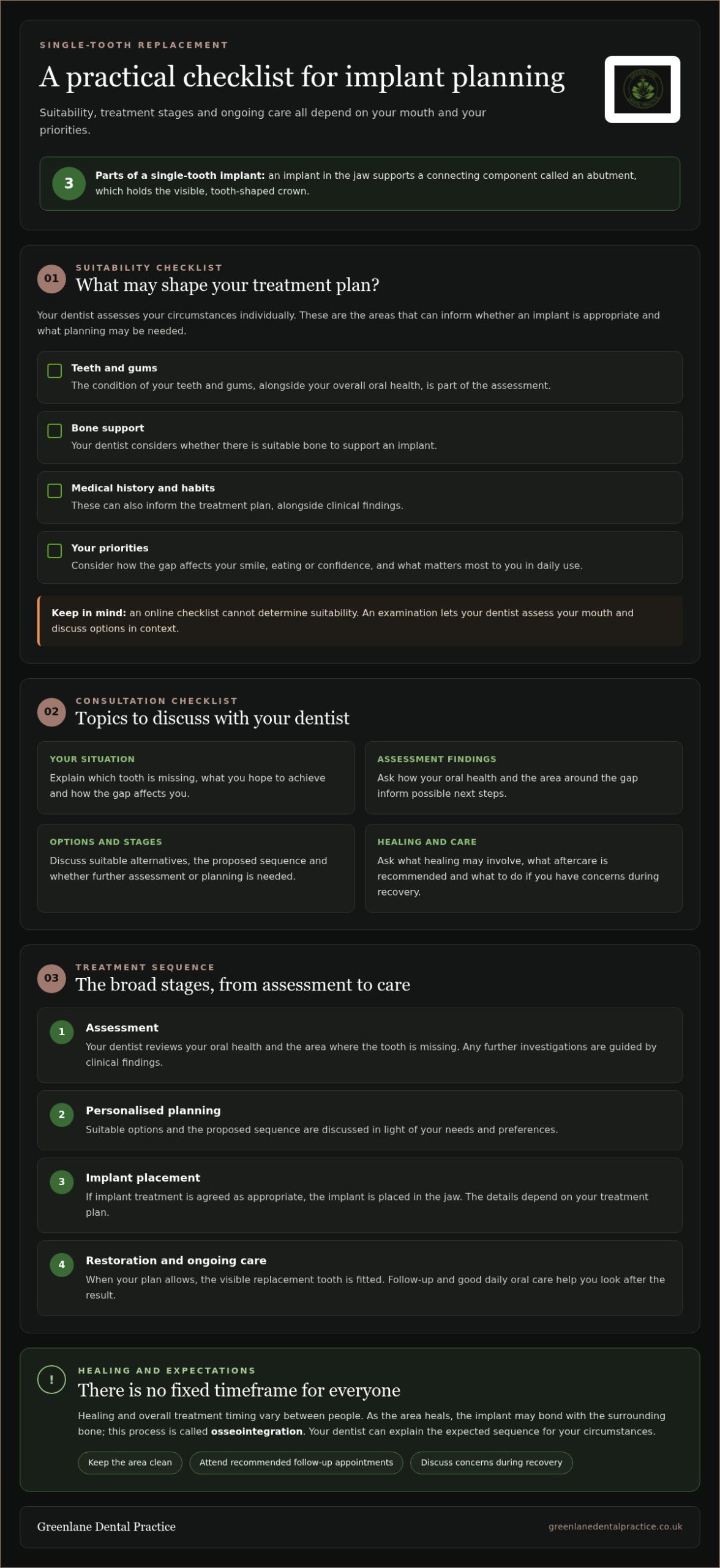
The treatment usually involves three parts: the implant, a connecting component called an abutment, and a tooth-shaped crown that sits above the gum. The crown is the visible part that fills the gap. The implant sits in the jaw and supports the crown once the components are connected.
As the area heals, the implant may bond with the surrounding bone. This process is called osseointegration. The Dental implant overview explains this biological process and describes single-tooth restorations. Your dentist can explain how the components and healing stages relate to your own plan.
What can affect whether an implant is suitable?
Suitability is assessed individually. Your dentist will consider the condition of your teeth and gums, your overall oral health and whether there is suitable bone to support an implant. These findings help determine whether implant treatment is appropriate and what planning may be needed.
Your medical history and habits can also inform your treatment plan. An online checklist cannot determine whether an implant is right for you. An examination allows your dentist to assess your mouth, understand your circumstances and discuss options in context.
At Greenlane Dental Practice in Leigh, a consultation gives you the opportunity to talk about the missing tooth, your priorities and any questions about treatment. The discussion can help you understand whether an implant may suit you or whether another approach could better match your needs.
How single-tooth implant treatment is planned and carried out
Implant treatment follows a sequence, but the details depend on your mouth, health and priorities. For dental implants for single tooth replacement, the first step is a conversation and assessment, rather than a one-size-fits-all plan. At Greenlane Dental Practice in Leigh, a consultation gives you space to explain what you hope to achieve and discuss possible options.
What happens at an implant consultation?
Your dentist will ask about the missing tooth, your general health and relevant medical history, as well as what matters most to you. You might want to explain how the gap affects your smile, eating or confidence. The dentist will assess your mouth and talk through relevant findings, so you can understand how they inform possible next steps.
Use the appointment to ask about treatment stages, healing, aftercare and practical arrangements. You can also discuss alternatives and what each may involve. A useful consultation should leave you with a clearer picture, even if further assessment or planning is needed before a decision.
What are the broad stages of treatment?
Although each plan is individual, the journey may include these broad stages:
- Assessment: Your dentist reviews your oral health and the area where the tooth is missing. Any further investigations are guided by clinical findings.
- Personalised planning: The dentist explains suitable options and the proposed sequence, taking your needs and preferences into account.
- Implant placement: If implant treatment is agreed as appropriate, the implant is placed in the jaw. The details depend on your treatment plan. Mayo Clinic’s Dental implant surgery overview describes the procedure and factors involved in planning.
- Restoration and ongoing care: When your treatment plan allows, the visible replacement tooth is fitted. Follow-up and good daily oral care are part of looking after the result.
Healing and overall treatment timing vary between people, so don’t assume there is a fixed timeframe. Your dentist can explain the expected sequence for your circumstances and what to do if you have concerns during recovery. Keeping the area clean and attending recommended follow-up appointments are important parts of care.
If you’re considering an implant, you can arrange an implant consultation to discuss your goals and receive a plan based on your clinical assessment.
Implant, bridge or removable tooth: comparing single-tooth replacement options
An implant isn’t automatically the best or only way to replace a missing tooth. The right option depends on your oral health, the teeth around the gap, clinical findings and what matters to you in daily use. Compare how each option is supported and cared for, then discuss the points that apply to your mouth with your dentist. Harvard Health Publishing also outlines key options for replacing a single tooth.
| Decision factor | Implant and crown | Bridge | Removable replacement |
|---|---|---|---|
| How it replaces the gap | An implant in the jaw supports a separate crown. | A replacement tooth is supported by neighbouring teeth, depending on the design. | A tooth-shaped replacement is designed to be taken out of the mouth. |
| Effect on neighbouring teeth | Doesn’t rely on neighbouring teeth for support, though overall suitability still needs assessment. | Uses adjacent teeth for support. Their condition can affect whether this approach is suitable. | Doesn’t use neighbouring teeth in the same way as a bridge; the dentist assesses how it fits your mouth. |
| Everyday care | Requires regular oral hygiene around the restoration and ongoing dental care. | Needs careful cleaning around and beneath the replacement tooth, as well as routine oral care. | Can be removed for cleaning, so daily handling is part of its care. |
| May suit preferences for | A fixed replacement, if clinical findings support implant treatment. | A fixed replacement supported by nearby teeth, where appropriate. | A removable option that can be taken out for cleaning. |
When might a bridge be discussed instead?
A bridge may be considered when the neighbouring teeth and the condition of the gap make it appropriate. Designs vary, and some rely on prepared adjacent teeth for support. Your dentist can explain how the health and position of those teeth affect whether a bridge is suitable. For broader information, read the Dental Implants Leigh guide.
How does a removable replacement compare?
A removable replacement may be discussed where clinically appropriate. You can take it out for cleaning, but handling and caring for it become part of your routine. Consider what feels manageable to you: a fixed restoration or the flexibility of a removable option. At an assessment, explain your priorities around comfort, function and cleaning. Your dentist can then weigh them against the clinical findings, rather than assume dental implants for single tooth replacement are right for everyone.
Your single-tooth implant decision checklist: health, care and expectations
A confident decision starts with understanding how treatment fits your health and everyday life. Before considering dental implants for single tooth replacement, use this checklist to organise what you want to know. You don’t need to arrive with all the answers. It’s a starting point for a clear, individual conversation.
- Oral health: What did the assessment show about my teeth, gums and the area where the tooth is missing?
- Options: Which replacement choices may suit me, and what clinical findings support that recommendation?
- Personal priorities: How important are appearance, function, comfort and ease of cleaning in my decision?
- Treatment stages: What steps might my plan involve, and what could change the sequence or timing?
- Risks and expectations: What should I understand about possible risks, healing and the likely outcome for my individual circumstances?
- Ongoing care: How should I clean around the replacement, and what follow-up or future reviews may be appropriate?
Questions to bring to an implant consultation
Ask your dentist to explain the options in light of your examination, rather than relying on general comparisons. You could ask what the proposed restoration involves, how to care for it each day and what to expect during healing. If your plan may change as treatment progresses, ask which findings could affect it. It’s also useful to discuss alternatives, risks and follow-up arrangements before deciding.
At Greenlane Dental Practice in Leigh, a consultation is an opportunity to share what matters to you and discuss the clinical findings in clear terms. Bringing written questions can help you cover everything, especially if you feel unsure or have several priorities to weigh.
How to think about long-term care
An implant still needs consistent oral hygiene and professional dental care. Clean carefully around the restoration and keep up with dental reviews as part of maintaining your oral health. Your dentist can advise on care that suits your mouth. Maintenance needs and outcomes vary, so don’t treat a particular lifespan as a promise.
If you’d like to understand more about preventative cleaning, read about EMS hygiene treatment and its approach to teeth cleaning. Thinking about how daily care fits into your routine can help you decide whether an option feels manageable over time.
Ready to discuss your priorities and individual suitability? Arrange an implant consultation in Leigh with Greenlane Dental Practice.
Considering a single-tooth implant in Leigh? Your next steps at Greenlane
If you’re weighing up dental implants for single tooth replacement, you don’t need to have made a decision before speaking with a dentist. Greenlane Dental Practice provides dental implant care in Leigh. Arrange a consultation to explain what you hope to achieve and discuss which options may suit your circumstances.
The appointment is a chance to explore the decision without pressure. Your dentist can consider the missing tooth and your oral health, then explain relevant findings and how they affect possible treatment choices. Your priorities matter too. Raise any preferences for a fixed replacement, questions about treatment stages or concerns about caring for a restoration.
What to expect from a personalised discussion
Your dentist will talk through your goals and clinical findings, then discuss suitable options, including alternatives where relevant. Ask about the proposed stages, healing, care and what to expect, as well as factors that could affect the plan. The aim is to help you understand the choices in the context of your own mouth, not to promise a particular outcome.
Getting ready for your first appointment
A little preparation can make the conversation easier. Bring relevant medical and dental history, and jot down questions to refer to during the appointment. Think about what matters most: appearance, function, comfort or how straightforward the replacement may be to clean. You can also mention any worries, even if you’re not sure how to phrase them.
It may help to organise your next steps like this:
- Arrange a consultation to discuss the missing tooth.
- Share your priorities and history so the dentist understands your circumstances.
- Review the findings and options, including treatment stages and ongoing care, before deciding how to proceed.
There’s no need to settle every question in advance. An open discussion can help you understand what may be appropriate and what further information you need to feel comfortable with a decision. Greenlane Dental Practice welcomes patients in Leigh who want to explore tooth replacement in a supportive, personalised setting.
Book a consultation with Greenlane Dental Practice to discuss your goals and review suitable options with a dentist.
Take the next step towards a confident tooth-replacement decision
A single-tooth implant is one option, not the automatic answer for every missing tooth. Your dentist’s assessment of your oral health, gums and bone helps determine what may suit you. Comparing an implant with a bridge or removable replacement means weighing how each is supported, cared for and fits your preferences.
Dental implants for single tooth replacement involve more than the visible crown. Treatment planning, healing and ongoing oral care all matter. A personalised discussion can help you understand the stages, consider alternatives and raise concerns before deciding how to proceed.
Greenlane Dental Practice has served the Leigh community for several decades, providing restorative care including dental implants, alongside both NHS and private dental care. To discuss your circumstances and priorities with the team, arrange a consultation with Greenlane Dental Practice. A thoughtful conversation is a positive first step towards choosing the option that feels right for you.
Frequently Asked Questions
Is a dental implant suitable for replacing one missing tooth?
A dental implant may suit some people, but a dentist needs to assess your mouth before recommending it. They’ll consider your oral health, gums, available bone and medical history, alongside your preferences and the condition of nearby teeth. Dental implants for single tooth replacement are one option, not the right choice for everyone. A consultation at Greenlane Dental Practice in Leigh can help you understand alternatives and the reasons for a personalised recommendation.
How long does a single-tooth dental implant take?
The overall process varies from person to person and may involve several stages. Assessment, treatment planning, healing and fitting the final restoration can all affect the schedule. Your dentist can explain the likely sequence after examining your mouth and discussing the clinical findings. Avoid assuming a fixed timeline applies to everyone, as individual needs may change the plan and the time between stages.
Can a dental implant replace a front tooth?
A dental implant may be considered for a front tooth, but suitability and the appearance of the final restoration depend on individual clinical factors. Your dentist can assess your oral health and discuss how you’d like the replacement to look and feel. Ask how the plan addresses the visible area, how the restoration may function and what alternatives could be appropriate for your circumstances.
What happens if I do not replace a missing tooth?
The effects of leaving a gap can depend on its position, your bite and your wider oral health. Not every missing tooth calls for the same response, so a dentist can explain the considerations for your situation. If you’re unsure whether to replace it, an assessment can help you compare the possible benefits, limitations and maintenance needs of the available options without assuming one approach suits everyone.
Is getting a single-tooth implant painful?
People’s experiences vary, so discuss comfort and what to expect with your dentist before treatment. They can explain the planned stages and how discomfort will be managed in your individual case. If dental treatment makes you anxious, mention this at your consultation. Sharing your concerns early gives the dental team the opportunity to listen, answer your questions clearly and help you feel more prepared.
How do I care for a dental implant after treatment?
Follow the personalised instructions from your dental team, and brush and clean carefully around the restoration. Regular dental care helps the team monitor your oral health and discuss any changes. Your routine may depend on the restoration and your needs, so ask for practical cleaning guidance rather than relying on a one-size-fits-all method. Consistent care is an important part of looking after your mouth after treatment.
How much does a single-tooth dental implant cost?
The cost depends on your individual treatment plan and the care involved, so one figure won’t apply to every patient. At Greenlane Dental Practice in Leigh, a consultation allows the dentist to assess your needs and explain the proposed treatment and its costs clearly. Ask what your plan includes and whether clinical findings could affect it. This helps you understand the costs alongside the treatment stages and options being considered.